
Planner Ready Event Photography Shot List, UK Brief & Same Day Heroes
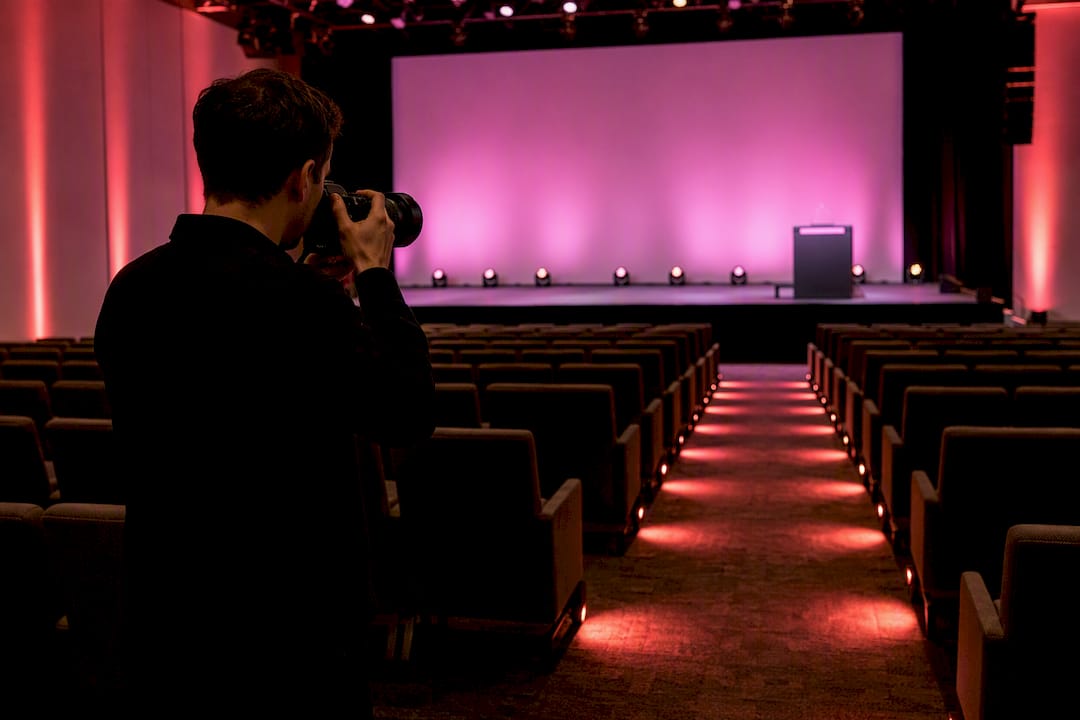
An event photography shot list is a written brief telling your photographer exactly which moments matter most, organised so nothing critical gets missed. Seven categories cover it: venue setup, arrivals, main programme, VIPs and groups, sponsor coverage, candid atmosphere, and closing shots. The rule that makes it work is simple: lock your tier-one non-negotiables into the run-of-show, so the photographer knows precisely when and where the moments that matter will happen.
TL;DR:
- A tier-one shot list should prioritize key moments linked to specific people, times, and locations to ensure critical images are captured without overloading the photographer.
- For single-stage events like conferences, a chronological plan focused on speakers and audience reactions is most effective, while multi-stage events require zone-based coverage.
- Deliverables should include a structured, well-tagged folder system, with hero images within 24 hours and the full gallery in 5 to 10 days, to meet PR and marketing needs.
- Clear sign-off on the shot list and logistical details at least a week before the event prevents missed moments caused by last-minute changes or vague instructions.
- The success of event photography relies more on a concise, prioritized shot list with strict timing than on camera equipment or technical skill alone.
Table of Contents
- What goes on an event photography shot list?
- Adapting the template for different event types
- Briefing your photographer before the day
- How photographers execute the brief on the day
- What to expect in your delivery package
- How Alex Gell puts this into practice
- Equipment and settings for different event scenarios
- Managing lighting challenges during events
- Capturing dynamic and action shots effectively
- Post-processing for event photography
- Getting shot list approval right
- Why the shot list matters more than the camera
- Book a photographer who works to this exact brief
- Sources
- FAQ
What goes on an event photography shot list?
A reliable shot list template covers seven categories, and each one earns its place because it maps to a different phase of your event. Think of it less as a wish list and more as a coverage plan, something you could hand to any competent photographer and expect the same essential results.
Venue and setup (before guests arrive). Empty room wides, signage, stage dressing, table settings, branded backdrops. Two or three frames per area is usually enough. These shots often end up in post-event reports and next year's sales deck, so don't skip them because "nobody will care."
Arrival and registration. Guests checking in, name badges, welcome desks, the first handshakes. This is where candid energy starts, so ask for a mix of posed welcome shots and genuine, unscripted moments.
Main programme (speakers, panels, keynotes). This is the meat of most corporate briefs. Ask for three distances per speaker: a wide shot showing them on stage with the room, a mid shot capturing gesture and slide context, and a tight close-up for editorial use. Include named priority subjects here, not just "the keynote" but "Sarah Chen, CEO, 10:15am session."
VIPs, leadership and group photos. Named individuals and their exact scheduled slot. If your chief executive is only free for four minutes between sessions, that slot needs to be flagged as tier-one, not left to chance.
Sponsor and brand deliverables. Logo visibility, branded step-and-repeats, exhibitor stand interactions, banner placements. Marketing teams often forget this until the sponsor asks for proof of visibility after the event, so specify it upfront.
Candid and networking moments. Genuine laughter, conversation, coffee-break energy. These are the images that make an event feel alive rather than staged, and they typically make up the bulk of a usable gallery.
Closing and wrap shots. Final applause, teardown beginning, thank-you moments with organisers. Easy to forget once everyone's tired, easy to regret missing later.
A practical way to build your own list:
- List every tier-one moment tied to a fixed time on the run-of-show.
- Add tier-two priorities that matter but have flexibility (a sponsor logo shot that can happen anytime during the afternoon).
- Note tier-three atmosphere shots as "capture if time allows."
- Attach named subjects, session titles and locations to every tier-one and tier-two item.
Send this to your photographer as a working document, not a wish list buried in an email chain.
Adapting the template for different event types
The seven-category template stays the same. What changes is which categories carry the weight, and whether the photographer should think in time blocks or physical zones.
For single-stage events like a conference or awards dinner, a chronological shot list works best. The photographer moves through the day following the run-of-show: registration, opening keynote, panels, lunch networking, closing. For sprawling events like trade shows or festivals with multiple simultaneous activities, a location-based shot list works better, assigning coverage by zone rather than by clock time.
Here's how priorities shift by format:
- Conference: heavy on speaker coverage (wide, mid, close), Q&A reactions, and audience shots during key sessions.
- Trade show: exhibitor interactions, stand traffic, product demonstrations, and badge-scanning moments take priority over any single stage.
- Awards ceremony: the reveal frame and the winner's handover close-up need to happen in the same tight window. Supply exact category order and nominee names so nothing gets missed between announcement and photo.
- Corporate dinner: table shots, toasts, and candid conversation outrank formal stage moments, unless there's a speech segment.
- Festival or multi-stage event: zone allocation matters more than timing. Assign one photographer per stage or area with a clear handoff point to avoid duplicated coverage.
For multi-photographer days, clear handoff points between zones prevent the same moment being shot twice while another goes uncovered entirely.
Briefing your photographer before the day
Send the working shot list seven days before the event and attach it to the final confirmation, not a separate email that gets buried. Include named VIPs with their scheduled slots and a floor plan showing key locations.
The tiered structure is what stops a brief from becoming an impossible checklist:
- Tier one, non-negotiables. Cap this list. If everything is critical, nothing is. Aim for the moments that would genuinely disappoint a stakeholder if missed: the CEO's welcome, the headline speaker, the award reveal.
- Tier two, priorities. Important but with some flexibility in timing or framing.
- Tier three, atmosphere. Candid and ambient shots captured opportunistically around the fixed points.
Alongside the shot list itself, share a short logistics checklist:
- Full run-of-show with timings
- On-site contact list (who to call if a VIP is delayed)
- Venue access details and any security or badge requirements
- Model releases if guest photos will be used publicly
- Delivery deadlines, especially if PR needs same-day assets
Pro Tip: Send the floor plan as an actual image, not a description. A photographer who can see the stage-to-exit distance in advance plans lens changes and positioning far more efficiently than one working from a paragraph of text.
How photographers execute the brief on the day
Coverage typically starts before doors open: venue wides, signage, stage checks, empty-room shots that can't be recreated once guests arrive. From there, the photographer works through tier-one scheduled moments first, using the run-of-show as the spine of the day.
For events with multiple stages or breakout rooms, zone assignments stop photographers duplicating effort or leaving a room uncovered while everyone clusters round the main stage.
Speaker coverage follows the wide, mid, close pattern: a wide establishing shot of the stage and audience, a mid-range shot capturing gesture and expression, and a tight close-up for editorial or website use. Q&A segments and audience reaction shots often produce some of the most usable candid images from the whole day, so photographers should stay alert during these windows rather than treating them as downtime.
A few practical notes worth passing to your photographer or asking about directly:
- A longer lens (70 to 200mm equivalent) keeps the photographer unobtrusive during formal speeches, avoiding the distraction of someone crouching in the front row.
- Moving between aisles during applause or transition moments, rather than mid-sentence, keeps disruption minimal.
- The standing-ovation wide shot from the rear of the room is often the single most-used image from a whole conference, so it's worth flagging as a tier-one moment rather than leaving it to chance.
Pro Tip: If your event has a moment you know will draw applause, tell your photographer exactly when it's coming. A ten-second heads-up is often the difference between catching the room mid-cheer and catching the back of someone's head.
What to expect in your delivery package
A clean folder structure removes hours of manual sorting for whoever handles your assets afterwards. A sensible pattern looks like: 01_Keynotes, 02_Networking, 03_Sponsors, 04_Closing, each with consistently named files rather than a single folder of a thousand images labelled IMG_0001 onward.
Tagging images with speaker names, session titles and intended use-cases at the point of delivery, rather than leaving your team to guess later, saves real time when assets need to go straight into a report, press release or social post. A simple manifest mapping filename to speaker, session and use-case means whoever handles the gallery doesn't need to open every image to work out what it is.
A single-photographer conference covering one day typically delivers 400 to 800 final edited frames, with 8 to 15 flagged as hero images for immediate use. Multi-photographer days scale up proportionally, so agree expected volume in the brief rather than discovering it after the invoice arrives.
How Alex Gell puts this into practice
I build every event brief around the tiered system: non-negotiables locked to the run-of-show, priorities noted with flexibility, and atmosphere shots captured as time allows. That structure is what lets me deliver hero images within 24 hours for PR teams working to a same-day deadline, while the fully edited gallery follows within 5 to 10 days.
For corporate events across London, Berkshire and Oxfordshire, I combine documentary observation with an editorial finish, so speaker coverage and candid networking shots sit comfortably in the same gallery without feeling mismatched.
— Alex
Reasonable delivery expectations:
- Hero-tier images within 24 hours if PR or same-day social posting depends on them
- Full edited gallery within 5 to 10 working days for most corporate events
- Metadata and folder structure applied at point of delivery, not left for your team to sort
The process starts with a pre-event walk of the venue, well before guests arrive, to map lighting, sightlines and stage positions against the run-of-show, with clients receiving a named priority sheet rather than a generic list, tying each tier-one moment to a specific time and person. You can see the kind of coverage this produces in the event photography portfolio, and usage-rights and turnaround basics are covered plainly on the FAQ page so there are no surprises after booking.
Equipment and settings for different event scenarios
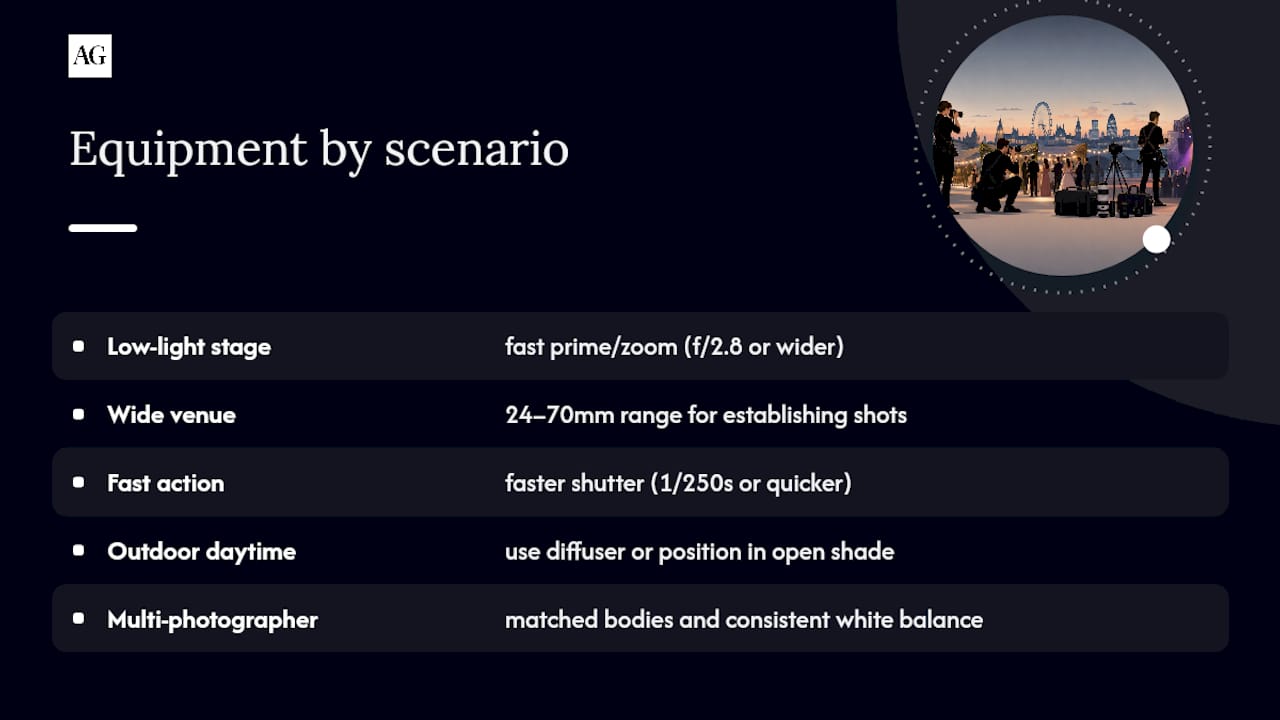
There's no single camera setup that covers every event, and that's exactly why a good shot list also functions as an equipment brief. A dim awards dinner needs a different approach to a bright daytime trade show floor, and specifying the event type in advance lets a photographer arrive with the right kit rather than adapting on the fly.
For low-light stage work, a fast prime or zoom lens (f/2.8 or wider) keeps shutter speeds usable without pushing ISO into grainy territory. For wide venue and crowd shots, a 24 to 70mm range covers most establishing and group work without a lens change. Fast-moving segments, panel discussions with lots of hand gesture, or award walks to the stage, benefit from a slightly faster shutter speed (1/250s or quicker) to avoid motion blur.
Outdoor festivals or daytime launches bring their own challenge: harsh, direct sun creates unflattering shadows under eyes and hard highlight blowouts. A photographer working outdoors often carries a diffuser or positions subjects against open shade rather than fighting the light directly.
Multi-photographer events benefit from matched camera bodies and consistent white balance settings across the team, so images from different zones sit together in the same gallery without an obvious colour mismatch. It's a small detail organisers rarely think to ask about, but it saves significant grading time afterwards.
Managing lighting challenges during events
Most event lighting is built for atmosphere, not photography, and that mismatch is the single biggest technical challenge on any shoot. Conference stages often mix cool LED wash with warm spotlights, awards dinners run near-dark for ambience, and marquees flicker between shade and direct sun depending on the hour.
The practical fix starts with a walk-through before doors open. Checking the stage lighting rig, testing white balance against the actual bulbs in use, and identifying which areas will be brightest and darkest during the programme means fewer surprises once the room fills with people.
For mixed lighting, shooting in RAW rather than JPEG gives far more room to correct colour temperature in post without visible quality loss. A small on-camera flash or bounce light helps fill shadows during close networking shots without the harsh, flat look of direct flash.
Backlit stages, common when screens or windows sit behind the speaker, are one of the trickiest scenarios. Metering off the speaker's face rather than the whole scene, and adjusting exposure compensation upward, usually rescues the shot rather than leaving the subject in silhouette.
Pro Tip: Ask your venue for the lighting rig schedule in advance.
Capturing dynamic and action shots effectively
Static portraits and posed group shots only tell half the story of any event. The moments that actually get shared, reposted and remembered tend to be the ones with genuine motion: a speaker mid-gesture, a room breaking into applause, a dance floor in full swing.
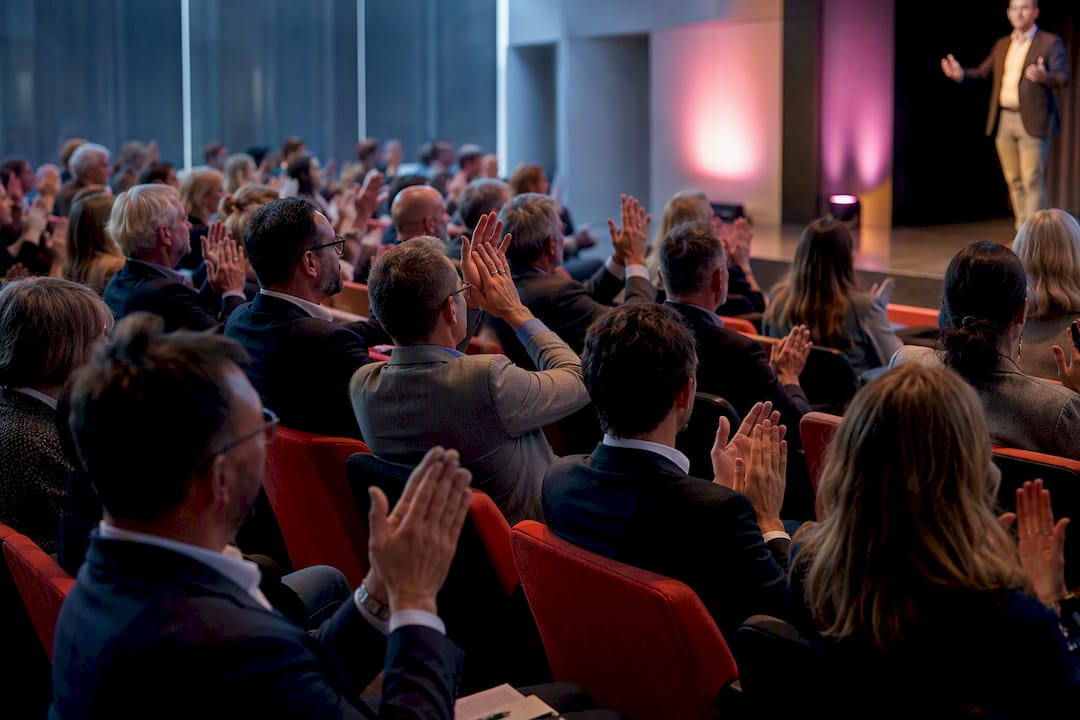
Continuous autofocus tracking (AF-C on most cameras) keeps a moving subject sharp as they walk across a stage or move through a crowd, far more reliably than single-shot focus. Burst mode, firing several frames per second around a key moment like an award handover or a big audience reaction, gives a choice of the exact peak expression rather than one gamble on timing.
Anticipation matters as much as camera settings. A photographer who's read the run-of-show knows the standing ovation is coming two sentences before the speaker finishes, and can already be repositioned for the reveal.
For dance floors, product reveals or anything genuinely fast-moving, a slightly slower shutter speed combined with a burst of flash can create a deliberate motion blur that reads as energy rather than a mistake, a technique worth discussing with your photographer if the event has a lively closing segment.
Post-processing for event photography
Event editing differs from studio or wedding work in one key respect: speed and consistency across a very large volume of images, often several hundred from a single day.
Colour and exposure consistency across the whole gallery matters more than heavy individual retouching. A guest scrolling through 500 images notices immediately if some look warm and others look cool, so batch colour grading against a handful of reference frames from the day keeps everything cohesive.
Cropping decisions matter for reuse. Delivering both a landscape and a tighter crop of key hero images gives marketing teams flexibility for social posts, print, and web banners without asking the photographer for a re-edit later.
Skin retouching stays light and natural for most corporate and event work, unlike the heavier retouching sometimes expected in glamour or beauty shoots. Sharpening and noise reduction get applied selectively, heavier on low-light candid shots, lighter on well-lit stage frames, rather than a single blanket setting across the whole gallery.
Getting shot list approval right
The shot list works best as a conversation, not a document fired off once and forgotten. Most disagreements after an event trace back to an assumption that was never actually confirmed in writing.
Share the draft list early enough that changes are still easy, and invite specific feedback rather than a vague "let me know if this looks right." Asking directly whether any named individuals have changed, whether the run-of-show has shifted, or whether a sponsor has added a new deliverable, gets a far more useful response than an open-ended request.
Confirm sign-off in writing, even if it's a short email reply saying "approved." That confirmation becomes the reference point if a dispute arises later about what was or wasn't covered.
For events with multiple stakeholders, marketing, events team, and a sponsor, agree who has final say on the shot list before the event, not during it. A brief that changes three times in the final 48 hours creates more risk of a missed moment than one locked a week out with only urgent amendments after.
Why the shot list matters more than the camera
Most advice on event photography focuses on gear and technique, and that's largely the wrong emphasis. The single biggest driver of a disappointing gallery isn't a photographer's skill with a lens, it's a shot list that was too vague, too long, or shared too late to actually guide the day.
The conventional approach treats a shot list as an exhaustive wish list, everything anyone might conceivably want, sent the morning of the event. That approach fails for a simple reason: an overloaded list gives a photographer no way to prioritise when two tier-one moments inevitably clash. A tiered structure, with a genuinely short non-negotiables list, does more to guarantee the images that matter than any amount of extra kit.
If you take one thing from this article, prioritise the tiering and the timing over the length of your list. A shot list with twelve tight, named, time-stamped priorities will outperform one with sixty vague aspirations every time. The candid, atmospheric shots take care of themselves when a skilled photographer has room to work; the named, scheduled moments only happen if someone tells them exactly when to be there.
— Alex
Book a photographer who works to this exact brief
Alex Gell covers corporate events, conferences and private functions across London, Berkshire and Oxfordshire, working from the same tiered shot list and named-priority approach described throughout this article, including same-day hero image turnaround when PR deadlines demand it. Rather than a generic package, you get a brief built around your actual run-of-show, with delivery organised into tagged folders your marketing team can use straight away, no lengthy sorting required.
 each with consistently named files rather than a single folder of a thousand images labelled
 IMG_0001 onward.
Tagging images with speaker names, session titles and intended use-cases at the point of delivery, rather than leaving your team to guess later, saves real time when assets need to go straight into a report, press release or social post. A simple manifest mapping filename to speaker, session and use-case means whoever handles the gallery doesn't need to open every image to work out what it is.
A single-photographer conference covering one day typically delivers 400 to 800 final edited frames, with 8 to 15 flagged as hero images for immediate use. Multi-photographer days scale up proportionally, so agree expected volume in the brief rather than discovering it after the invoice arrives.
