
Documentary vs Editorial Wedding Photography: Which Suits You?
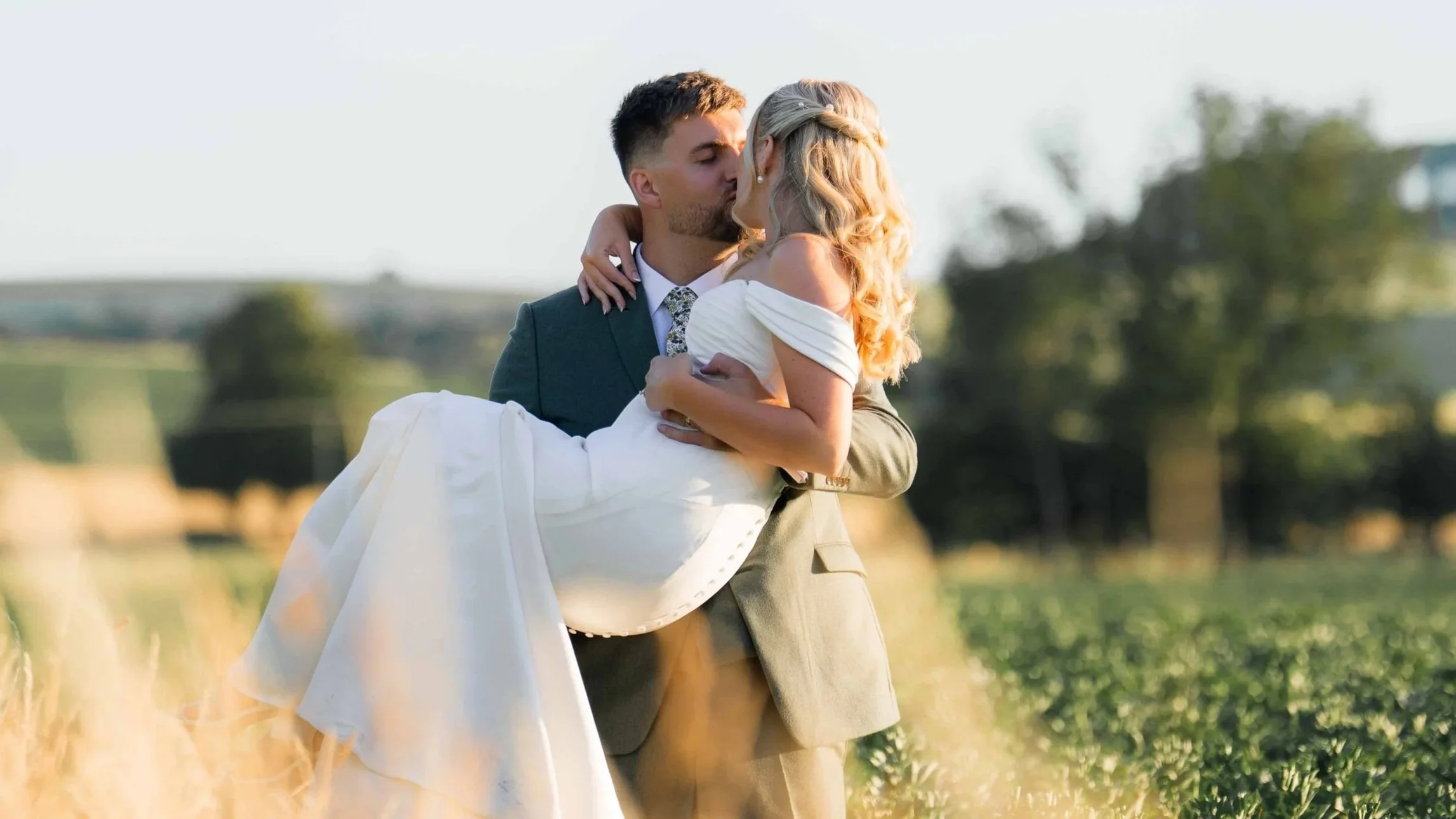
Alex Gell Photography
If you hate posing, documentary wedding photography is almost certainly your style. If you love the look of a fashion magazine and want a set of polished, directed portraits alongside your candid moments, editorial is worth the extra time it takes. Most UK couples end up somewhere in between, and that hybrid is often the most satisfying outcome of all.
Two quick ways to self-select:
- Documentary suits you if you want your photos to feel like a film of your day: real reactions, stolen glances, pure joy captured without interruption.
- Editorial suits you if you have a strong visual inspiration board and you are comfortable pausing the day to create beautiful, directed portraits.
As Vogue notes, many experienced photographers favour a hybrid approach: predominantly documentary coverage with occasional light direction to optimise portraits. That is not a compromise. For most couples, it is the smartest brief you can give. Browse the Alex Gell Photography wedding portfolio to see what that blend looks like across a full gallery.
Key takeaways
Choosing the right wedding photography style comes down to one question: do you want photos that show how your day felt, or how it looked? For most couples, the honest answer is both, and a hybrid approach delivers exactly that.
| Point | Details |
|---|---|
| Documentary vs editorial | Documentary captures authentic moments; editorial creates polished, directed portraits. |
| Hybrid is the norm | Most photographers blend both styles, with documentary coverage and a short editorial portrait session. |
| Ask for full galleries | Highlights conceal inconsistency; a full gallery shows how a photographer shoots across an entire day. |
| Portrait block timing | A 10–25 minute dedicated portrait session secures magazine-quality images without disrupting your day. |
| Alex Gell Photography | Offers tailored documentary, editorial, and hybrid wedding packages across London, Berkshire, and Oxfordshire. |
Table of Contents
- What is editorial wedding photography, and how does it work on the day?
- What is documentary wedding photography, and how does it feel on the day?
- How each style plays out across your wedding day
- Editorial vs documentary: pros, cons, and who each style suits
- How a hybrid approach works, and how to ask for one
- Questions to ask photographers before you book
- My approach: why I shoot hybrid on almost every wedding
- Alex Gell Photography: wedding packages built around your day
- Sources
What is editorial wedding photography, and how does it work on the day?
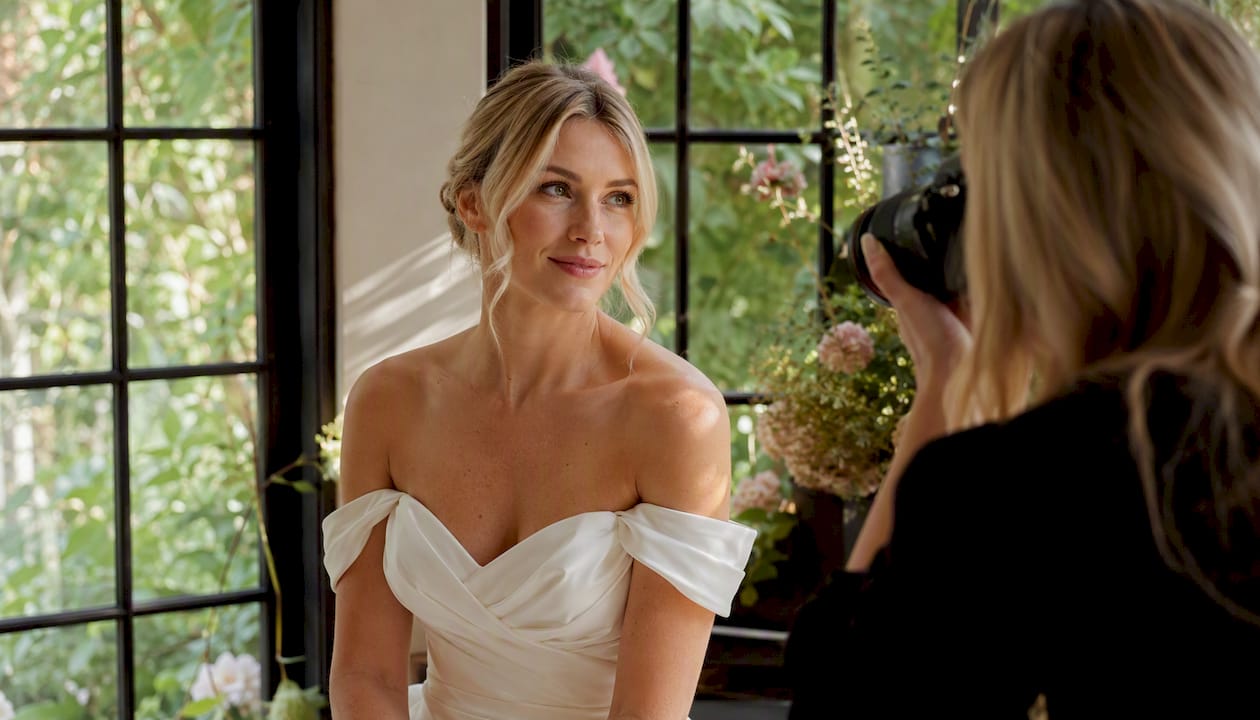
Editorial wedding photography creates magazine-style, fashion-led images through planning, direction, and deliberate art direction. Think Vogue or Brides rather than a family album. The photographer arrives with a shot list, an eye for light, and a clear aesthetic in mind.
On the day, an editorial photographer is an active participant. They will:
- Scout locations before the wedding and plan where portraits will be taken.
- Direct poses and expressions, guiding you into positions that look natural on camera even if they feel slightly unusual in person.
- Control the light, using reflectors, off-camera flash, or careful timing to achieve a consistent, polished look.
- Style the details: flat-lays of rings, shoes, and stationery are arranged and lit rather than photographed as found.
- Retouch images to a higher finish, often with a consistent colour grade that ties the whole gallery together.
The editing look tends to be polished and consistent: warm tones, clean skin, and a strong aesthetic thread running through every frame. That consistency is part of the appeal. It is also why editorial photography typically involves more pre-production and retouching than a documentary approach, which usually means a higher price point and a longer delivery timeline.
One thing worth knowing: a good editorial photographer does not make you look stiff. Gentle direction, combined with a relaxed atmosphere, can produce portraits that feel authentic while still achieving that polished look.
What is documentary wedding photography, and how does it feel on the day?
Documentary wedding photography, often called photojournalistic wedding photography, is built on one principle: capture what actually happens. The photographer's job is to remain unobtrusive, anticipate moments before they peak, and build enough trust with you and your guests that people stop performing for the camera.
The editing style reflects that philosophy. Colours tend to feel natural and true to memory rather than heavily graded. Some documentary photographers shoot on film, which yields warmer, analogue tones that many couples associate with a classic, timeless feel. Film can deliver distinct colour and tonal characteristics that digital struggles to replicate, though the right choice ultimately depends on your aesthetic priorities and the photographer's workflow.
What you get is a genuine record of how your day felt: your mother's face during the ceremony, the chaos of the dancefloor at midnight, a quiet moment between you and your partner that nobody else noticed. These are the images that tend to make people cry when they look back at them years later.
Pro Tip: Even the most committed documentary photographer will briefly direct family formals. That is normal and practical. Ask upfront how long they allocate for group shots so you can plan your timeline accordingly.
The key distinction, as one honest guide puts it, is that documentary prioritises how your wedding felt, while editorial prioritises how it looked. Neither is objectively better.
How each style plays out across your wedding day
The difference between styles becomes clearest when you map them to specific moments.
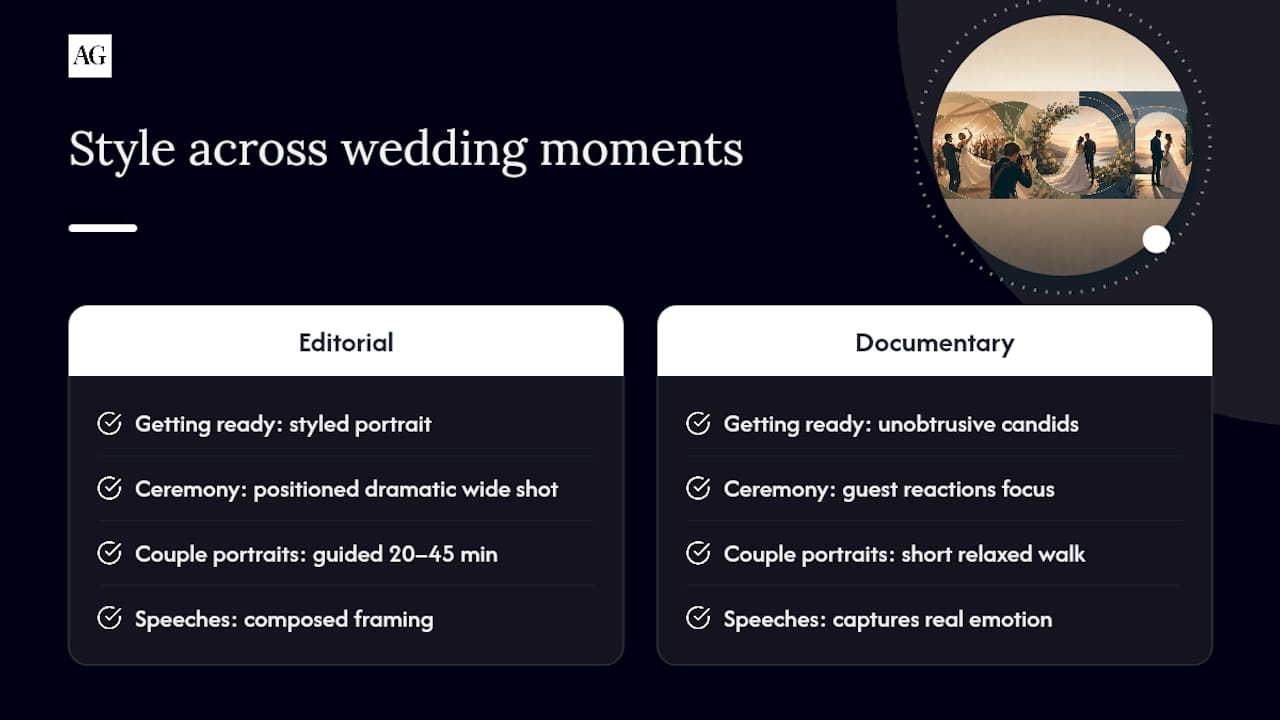
Getting ready An editorial photographer will arrange your dress on a hanger, position your shoes near natural light, and ask you to look out of the window for a portrait. A documentary shooter will hang back, watch the room, and catch your friend doing up your buttons while you both laugh at something nobody planned.
The ceremony Editorial: the photographer may position themselves for a dramatic wide shot and use a second angle to frame the exchange of rings against a specific backdrop. Documentary: they move quietly around the room, prioritising your reactions and those of your guests over any single composed frame.
Couple portraits This is where the styles diverge most sharply. Editorial portraits require time: typically 20–45 minutes of dedicated shooting where you are guided through locations and poses. Documentary couple portraits are shorter and more relaxed, often just a gentle walk while the photographer follows.
Speeches and reception Documentary photography excels here. Genuine laughter, tears, and surprise are impossible to direct. An editorial photographer will still capture these moments, but their instinct is to compose; a documentary shooter's instinct is to react.
Details and décor Editorial photographers typically style and light these shots deliberately. Documentary photographers capture them as they exist, which can be beautiful or inconsistent depending on how the venue is set up.
Venue and light matter enormously. A dark barn with no natural light is harder for a documentary shooter to work in unobtrusively. A bright, airy country house gives both styles room to breathe. If you are unsure how your West Berkshire venue will affect your photography, it is worth asking your photographer before you book.
Editorial vs documentary: pros, cons, and who each style suits
The trade-off is clear: editorial gives visual consistency and glamour but costs more time and can feel posed; documentary gives emotional memory and spontaneity but offers less guaranteed polish.
| Dimension | Editorial | Documentary |
|---|---|---|
| Best for | Couples with strong visual inspiration; fashion-led weddings | Couples who dislike posing; relaxed, informal celebrations |
| Photographer involvement | High: poses, directs, lights | Low: observes, anticipates, stays back |
| Typical moments captured | Directed portraits, styled details, composed wide shots | Candid reactions, stolen moments, natural group energy |
| Editing and look | Polished, consistent colour grade; higher retouching level | Natural, mood-led; film or digital; lighter retouching |
| Timeline and logistics | Requires 20–45 min portrait block; more pre-planning | Minimal interruption to day flow |
| Cost implications | Higher: more prep, retouching, and creative input | Often lower: less pre-production and post-processing |
A quick best-for checklist:
- You scroll Pinterest for fashion-forward couple portraits → lean editorial.
- You want your guests to forget there is a photographer → lean documentary.
- You care deeply about a consistent, gallery-ready aesthetic → editorial.
- You want photos that make you feel something rather than look perfect → documentary.
- You want both → hybrid (see below).
How a hybrid approach works, and how to ask for one
Strict photojournalism is actually rare at weddings. Most photographers blend the two styles, and Vogue's practitioner interviews confirm that an editorial photojournalism hybrid is the industry norm: documentary coverage for the majority of the day, with a short editorial portrait session built in.
Here is how a hybrid typically fits into a UK wedding day:
- Morning coverage (documentary): Getting ready, arrivals, and pre-ceremony moments captured candidly.
- Ceremony (documentary): Unobtrusive coverage of the full ceremony, prioritising reactions and emotion.
- Family formals (brief direction): 15–20 minutes of directed group shots immediately after the ceremony while everyone is together.
- Couple portrait session (editorial, 10–25 minutes): A dedicated block, often during the wedding breakfast when guests are seated, for directed couple portraits in the best available light.
- Reception and evening (documentary): Speeches, first dance, and dancefloor captured candidly.
A short dedicated portrait block of 10–25 minutes is the most reliable way to secure magazine-style couple portraits without turning the whole day into a photoshoot. It is a small investment of time for a significant return in image quality.
Pro Tip: When briefing a photographer for a hybrid day, ask them to use a consistent editing style across both the documentary and editorial frames. The biggest risk with hybrid coverage is a gallery that looks like two different photographers shot it.
Questions to ask photographers before you book
Choosing between documentary and editorial wedding photography is not just a style preference. It affects your timeline, your budget, and how your day actually feels. Go into photographer meetings with these questions ready.
- Can I see a full gallery from a recent wedding, not just highlights? Highlights are curated. A full gallery shows you how consistently a photographer shoots across an entire day. Full galleries reveal editing consistency that a highlight reel can conceal.
- How much time do you need for couple portraits? This tells you immediately how much of your day will be paused for photography.
- How would you describe your editing style? Ask for specific references: film or digital, warm or cool, heavy retouching or light touch.
- Do you offer film photography, and what does that mean for delivery time? Film's analogue tones suit certain aesthetics, but lab turnaround adds time.
- What is included in your retouching? Some photographers deliver lightly edited files; others include full skin retouching. Know what you are paying for.
- What are my usage rights for the final images? Personal use is standard; commercial use (social media campaigns, print advertising) may require a separate licence.
Red flags to watch for:
- No full galleries available, only curated highlight sets.
- Portfolios showing only heavily staged, studio-style shots with no candid coverage.
- Vague answers about image count, delivery timeframe, or what retouching is included.
- No written contract specifying coverage hours, final deliverables, and usage rights.
When it comes to the contract, confirm: total coverage hours, minimum final image count, delivery timeframe, retouching scope, and usage rights. Check the Alex Gell FAQs for a clear breakdown of what to expect from a professional booking.
My approach: why I shoot hybrid on almost every wedding
My instinct on a wedding day is always documentary first. I want to be the person in the room that nobody notices, catching the look your partner gives you when you walk in, or the moment your dad realises he is about to cry. Those are the images that last.
But I also know that most couples want at least a handful of beautiful portraits. Something polished. Something you would frame. So I build a short editorial portrait session into almost every wedding I cover, usually during the wedding breakfast when guests are settled and the light is at its best. The rest of the day stays documentary.
I shot a wedding at Asylum Chapel and The Sail Loft in London that is a good example of this in practice: the ceremony and reception were entirely candid, but we carved out twenty minutes in the early evening for a set of directed portraits that looked completely different in character while still feeling like the same day. That balance is what I aim for every time.
Alex Gell Photography: wedding packages built around your day
Real moments. Beautiful portraits. Your day, told honestly.
Alex Gell Photography covers weddings across London, Berkshire, and Oxfordshire with packages that can be tailored to documentary, editorial, or hybrid coverage depending on what matters most to you. Whether you want a photographer who stays invisible all day or one who carves out time for a set of polished couple portraits, the approach is built around your priorities, not a fixed template.
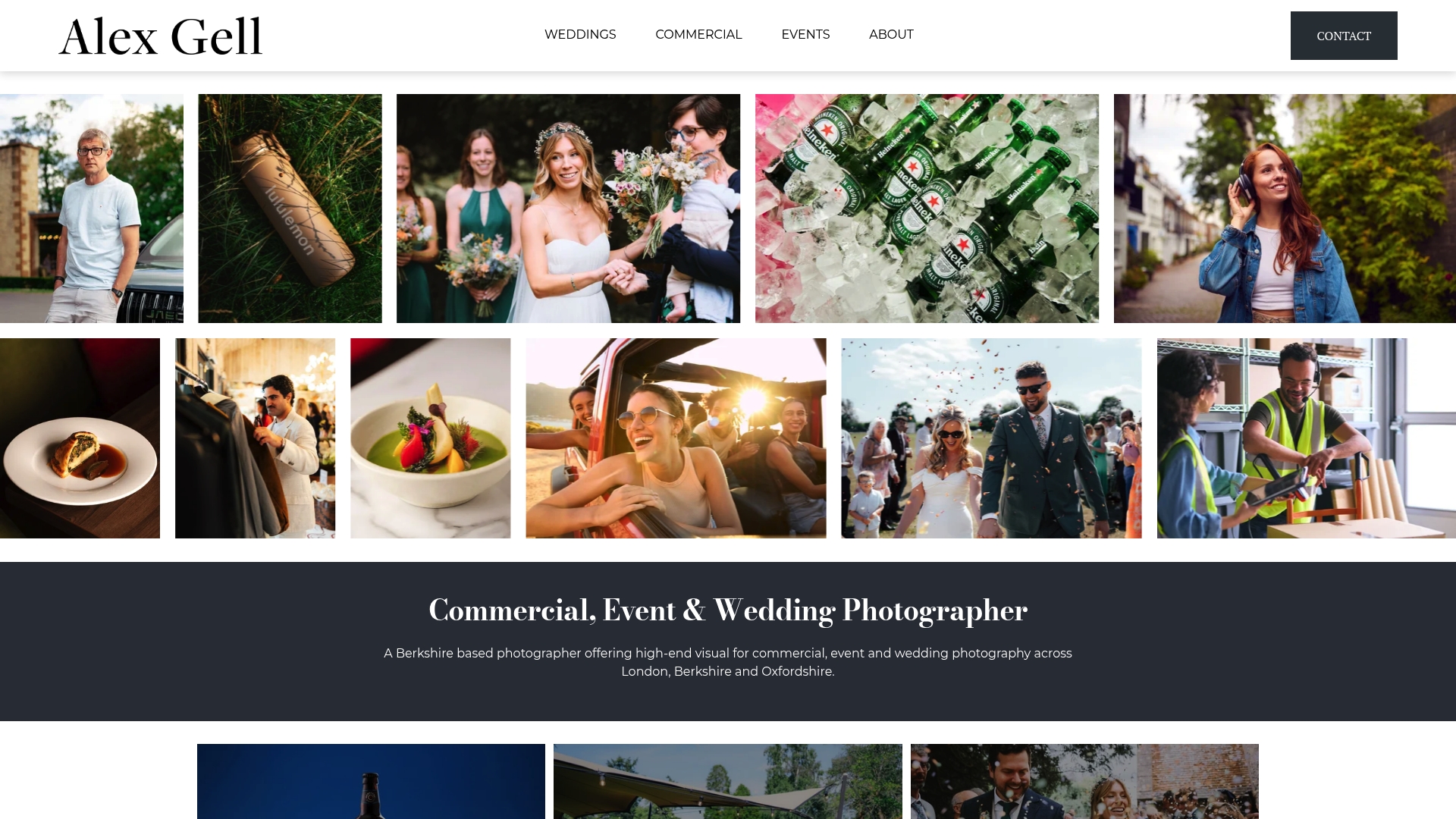
Packages are flexible on coverage hours, portrait time, retouching level, and delivery format. If you have a specific vision, bring it. If you are still deciding between styles, that conversation is part of the process. Check availability and request a sample full gallery to see exactly how a hybrid day looks from start to finish.
Sources
- Everything to Know About Wedding Photography Styles | Vogue
- Wedding Photography Styles Explained: An Honest Guide
- What is an Editorial Wedding Photographer? A Full Breakdown
- What is Editorial Wedding Photography - Philadelphia Wedding Photographer
- Wedding Photographer Styles: Clear Guide, Zero Regret
- 6 Reasons To Choose Film Wedding Photography - Reformed Film Lab
