
Food Photography Pricing in the UK: What to Budget in 2026
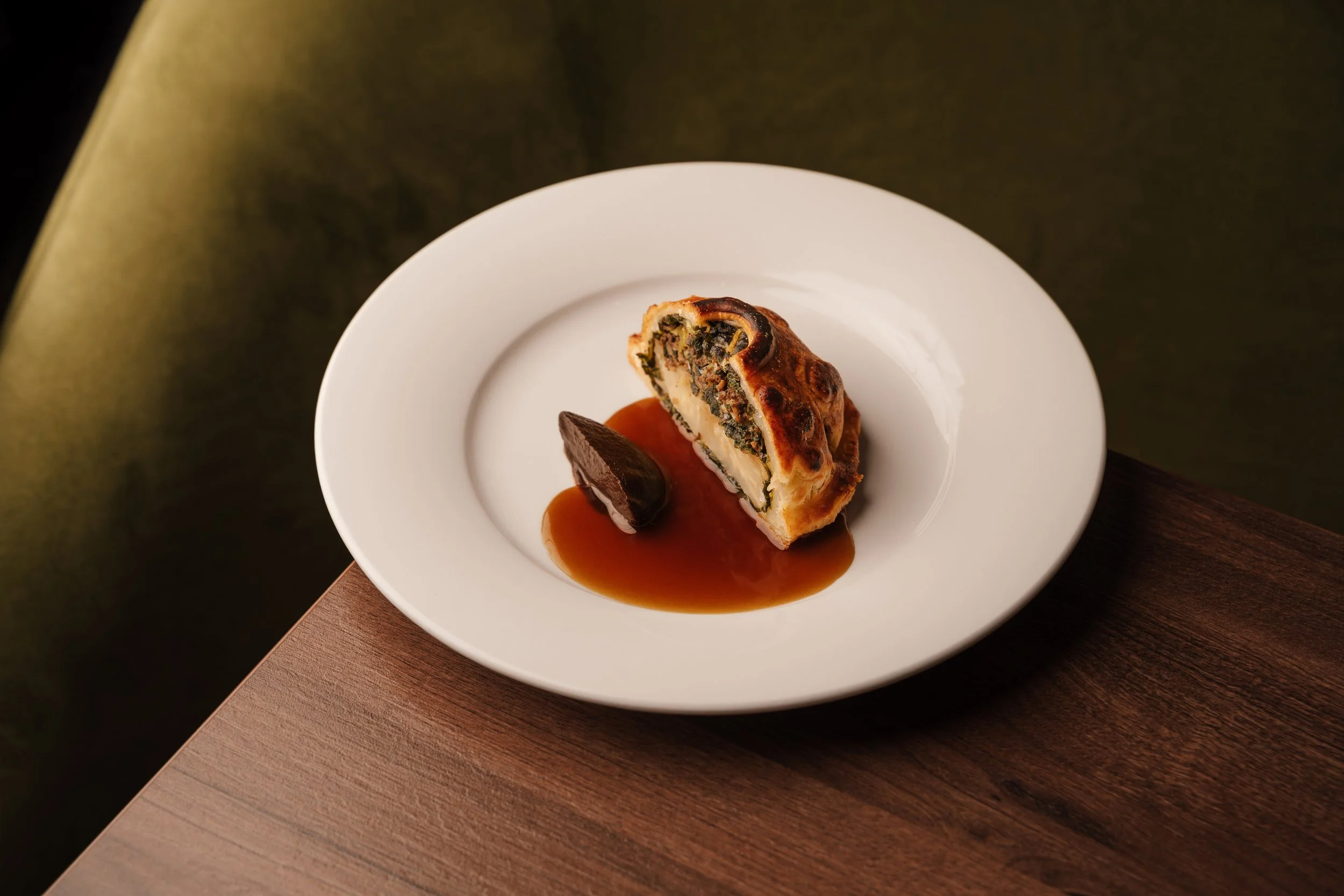
Leba Restaurant: Alex Gell Photography
Food photography pricing in the UK typically runs from around £150 for a short session with a junior photographer up to £1,800 or more for a full production day with a senior specialist, according to recent market surveys. For most small businesses, a realistic working budget sits somewhere between those poles. A half-day with a mid-level food photographer costs roughly £300–£600 outside London, rising to £350–£800 in the capital for a food specialist. Full-day rates commonly land between £550 and £1,000 for mid-level, with senior specialists commanding £1,000–£1,800+ depending on experience and location.
The main pricing models you will encounter are:
- Hourly rate — flexible, suits short menu updates or top-up shots
- Half-day rate — typically three to four hours; good for 8–12 hero dishes
- Day rate — six to eight hours; the standard unit for campaign or editorial work
- Per-image rate — a fixed fee per finished image, common in e-commerce
- Package pricing — a bundled fee covering a set number of images, editing and a defined licence
- Retainer — a recurring monthly or quarterly arrangement for ongoing content
The headline figure on any quote rarely tells the whole story. Licensing uplifts, food styling, props, studio hire and VAT are the costs that most commonly push a final invoice well above the initial number. The Rate Sheet's UK Commercial Photography Pricing Report explains this through what it calls the Two-Tier Principle: the brief and the intended usage, not just the subject matter, are what move rates most. The Association of Photographers (AOP) and Gov are the two authoritative references for understanding what you are actually buying when you commission images.
Key takeaways
UK food photography pricing ranges from around £Rates typically range from £150 for a junior half-day session to £1,800 or more for a senior full-production day, with licensing scope, food styling and VAT impacting the total cost. the most common factors that move a final quote higher.
| Point | Details |
|---|---|
| Set your budget range early | Junior half-days start around £150–£300; mid-level full days run £550–£1,000; senior specialists charge £1,000–£1,800+. |
| Confirm licence scope upfront | Social and website use is standard; paid advertising, packaging and perpetual rights each carry additional fees. |
| Itemise every extra | Food styling (£150–£500), props (£100–£300), studio hire, travel and VAT can collectively double a headline quote. |
| Compare quotes on equal terms | Standardise shot count, retouching level and licence scope before comparing prices — headline figures alone are misleading. |
| Alex Gell for transparent pricing | Alex Gell provides line-item quotes covering creative fee, licence and expenses for food shoots across London, Berkshire and Oxfordshire. |
Table of Contents
- How do photographers typically charge for food photography?
- What are realistic UK benchmark rates by experience and shoot type?
- What does a quote usually include, and what costs extra?
- How do licensing and usage rights affect your total cost?
- How do you brief a food photographer and what should you ask?
- How Alex Gell prices food photography for small businesses
- My honest view on food photography pricing
- Work with Alex Gell on your next food shoot
- Sources
How do photographers typically charge for food photography?
The model a photographer uses shapes the whole conversation around cost, so it is worth understanding each one before you request a quote.
Hourly rates suit reactive or low-volume briefs: a quick refresh of three or four dishes, a product shot for a press release, or a top-up when a menu changes. The risk is that an hourly arrangement can feel rushed; photographers are conscious of the clock, and creative decisions get compressed.
Day rates and half-day rates are the most common structure for food work. A half-day gives a photographer enough time to set up, shoot eight to twelve dishes properly and pack down without cutting corners. Day rates make sense for larger menus, multi-setup shoots, or any brief that includes both food and interior or lifestyle elements.
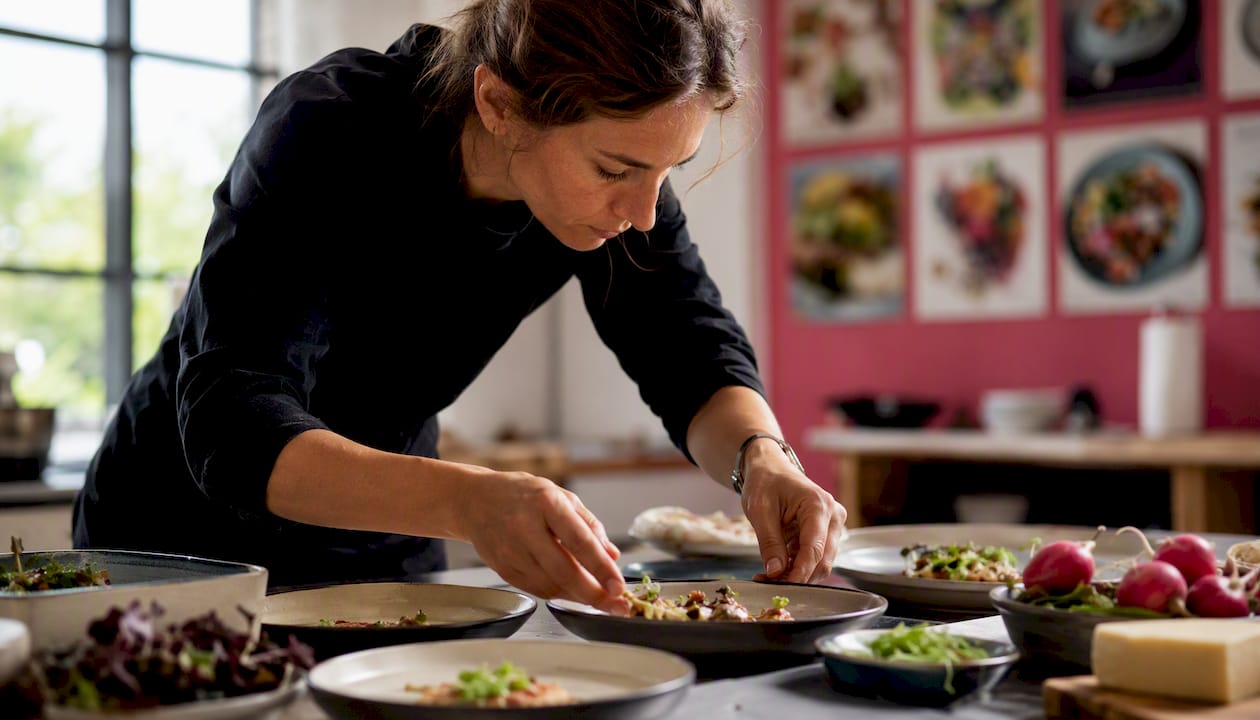
Per-image pricing appeals to e-commerce clients who need a precise deliverable count and want to control spend image by image. The catch is that very low per-image quotes often strip out planning, food styling and adequate post-production, which tend to surface later as reshoots or underwhelming results.
Package pricing is usually the most cost-effective route for small businesses commissioning a defined set of images. A well-structured package bundles shooting time, editing, a set image count and a clearly scoped licence into one figure, making it easier to budget and compare.
A properly assembled quote has three components, as Photocultivator's restaurant photography pricing guide describes: a creative fee, a separate licensing charge, and expenses. Licensing is often priced at roughly 10–20% of the creative fee, scaled by the intended usage. Knowing this structure helps you read any quote critically rather than just comparing headline numbers.
Pro Tip: If you are commissioning ten or more finished images, ask for package pricing rather than an hourly rate. Packages almost always include more value per image and give both sides a clearer brief to work to.
What are realistic UK benchmark rates by experience and shoot type?
Concrete numbers help, so here is how the market breaks down. These ranges draw on The Rate Sheet's UK benchmarks and market survey data.
Day-rate benchmarks by experience level
Junior photographer (0–3 years): Half-day £150–£300, full day £300–£550. Typically includes basic colour correction and web-resolution files. Suitable for social content and simple menu shots where budget is the primary constraint.
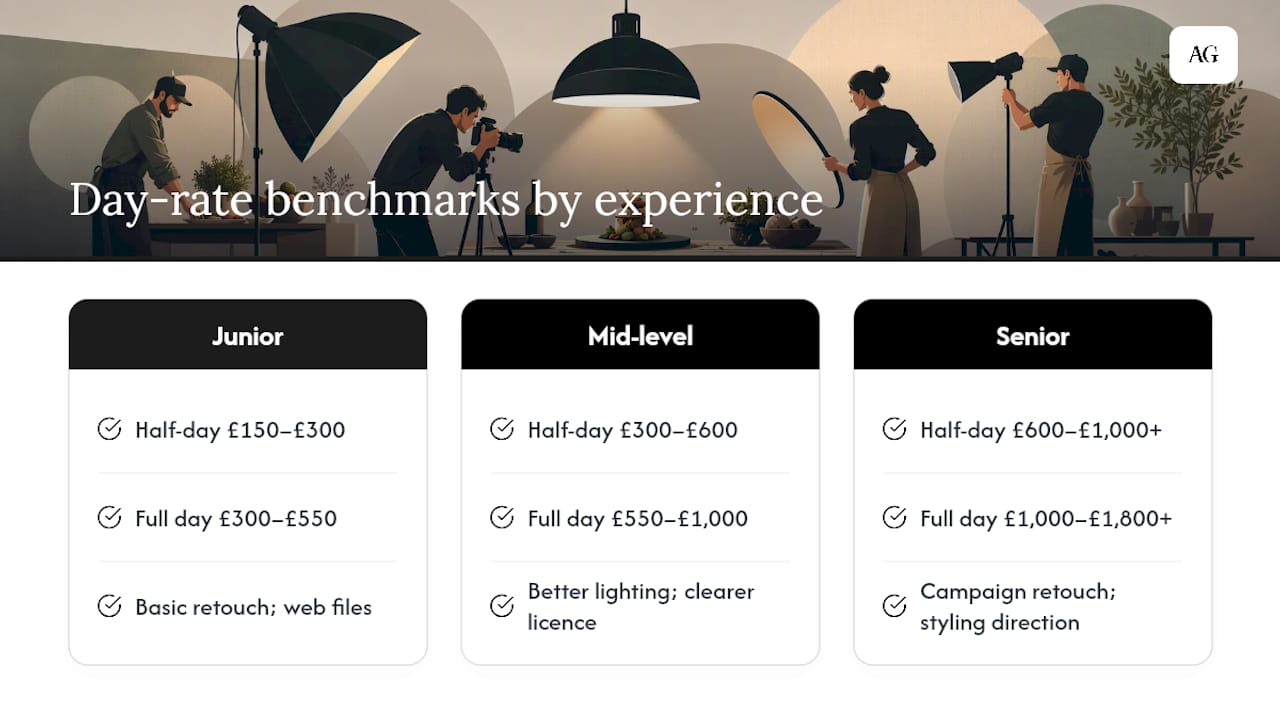
Mid-level photographer (3–7 years): Half-day £300–£600, full day £550–£1,000. Usually includes more considered lighting, a higher standard of editing, and a clearer licence clause. This tier covers most small-business food briefs well.
Senior/established specialist (7+ years): Half-day £600–£1,000+, full day £1,000–£1,800+. Rates reflect experience, a demonstrable food portfolio, and the ability to handle complex briefs involving food styling direction, multiple setups and campaign-grade retouching.
Per-image and package examples
A five-image starter package from a mid-level photographer typically runs £350–£600 and covers a half-day shoot, basic retouching and a social/website licence. A ten-image standard package sits closer to £600–£1,000. A twenty-five-image premium package, which might include a food stylist, full retouching and an extended digital licence, commonly ranges from £1,200 to £2,500 depending on the photographer's tier and location.
Regional variation
London commands a premium across all tiers, partly because studio hire, travel time and the general cost of doing business are higher. Outside the capital, rates in cities such as Manchester, Bristol and Birmingham tend to run 15–25% lower than equivalent London quotes. Rural and smaller-town photographers often price lower still, though the pool of food specialists narrows considerably.
What does a quote usually include, and what costs extra?
Most food photography quotes cover a defined block of shooting time, basic colour correction, a set number of web-resolution image files, and a standard social media and website licence for a fixed period, usually one to two years. That is the baseline. Everything beyond it is typically charged separately, and the extras add up faster than most clients expect.
Common additional costs to budget for:
- Food stylist: £150–£500 per day. Often the single biggest variable. Some photographers include basic styling direction in their fee; a dedicated food stylist is a separate hire.
- Props and tableware: £100–£300. Sourcing, hiring or purchasing the crockery, linens and surfaces that make food look its best.
- Studio hire: £100–£400 per day depending on location. Not always necessary if shooting on-site at a restaurant or kitchen, but essential for controlled-light hero shots.
- Assistants: £150–£300 per day. Larger productions often need a second pair of hands for lighting or food prep.
- Advanced retouching: £50–£200 per image, beyond the standard colour correction included in most quotes.
- Travel: £50–£200 or more, depending on distance. Always clarify whether travel is included or charged at cost.
- Rush fees: typically 25–50% on top of the standard rate for delivery faster than the agreed turnaround.
- Extended commercial licensing: £100–£500 or more, for uses beyond social and website (paid advertising, packaging, out-of-home).
- VAT: 20% on top of all fees for VAT-registered photographers.
The gap between 'basic editing' and 'retouching' is worth understanding before you sign anything. Basic editing means colour correction, exposure adjustment and cropping. Retouching means removing blemishes, adjusting food texture, compositing elements or doing the kind of detailed work that makes a dish look magazine-ready. The latter takes significantly longer and is priced accordingly.
Pro Tip: Always ask for a line-item quote rather than a single bundled figure. Request a sample licence clause at the same time. A photographer who cannot provide both is a red flag.
How do licensing and usage rights affect your total cost?
This is the part of food photography pricing that catches most small businesses off guard. Under the Copyright, Designs and Patents Act 1988, the photographer is ordinarily the first owner of copyright in any image they create. Buying a shoot does not transfer ownership; it buys you a licence to use the images within agreed parameters. As GOV.UK's copyright guidance makes clear, copyright does not transfer simply by purchasing a physical object or a digital file — any broader rights must be agreed in writing.
What this means in practice is that the licence scope directly affects the price. Common licence tiers run roughly as follows:
- Social media and website use — the standard scope included in most packages; covers organic posts and website display for a defined period
- Local or regional paid advertising — typically adds 20–40% to the creative fee
- National advertising (print, digital, out-of-home) — can double or triple the base licence cost
- Packaging and point-of-sale — often priced as a separate, higher-value licence given the long shelf life
- Perpetual buyout — full, unlimited use in perpetuity; the most expensive option and rarely necessary for most small businesses
The AOP's guidance for clients is direct on this point: a social media licence is platform-specific and does not automatically cover paid advertising or packaging. If your plans for an image change after the shoot, expect to negotiate an additional licence fee rather than assume your existing agreement covers the new use.
One practical note on GDPR: if any identifiable people appear in your food photography (staff, customers, or models), those images may constitute personal data under data protection law. The IPO blog on copyright and GDPR confirms that valid, documented consent is required in many such cases. Model release forms are standard practice for any shoot involving recognisable individuals.
Pro Tip: Negotiate a time-limited licence first rather than paying for a perpetual buyout upfront. Most small businesses refresh their imagery every two to three years anyway, and a time-limited licence costs considerably less.
How do you brief a food photographer and what should you ask?
A clear brief protects your budget. Before you contact anyone, write one sentence that covers: the objective, the primary uses, the number of images needed, and the formats required. Something like: "We need 15 retouched hero dish images for our website and Instagram, shot on-location at our restaurant in Reading, for use over the next two years." That single sentence eliminates most of the ambiguity that leads to scope creep and unexpected costs.
Questions to ask every photographer you approach
- What is your day rate or package rate, and what does it include?
- How many finished, retouched images are delivered?
- What licence is included, and what uses does it cover?
- Do you provide food styling, or is that a separate cost?
- Who sources and pays for props?
- What is your standard turnaround time, and what is the rush fee?
- Do you charge travel separately, and how is it calculated?
- Are your fees subject to VAT?
- What are your cancellation and reshoot terms?
- Can I see examples of food work specifically, not just your general portfolio?
Red flags to watch for
- Vague licence wording such as "full usage rights" with no defined scope, territory or duration
- A single bundled price with no line-item breakdown
- No food-specific portfolio examples, or examples that are clearly stock imagery
- Per-image prices that seem unrealistically low (under £30 per finished image from a claimed professional)
- No written contract or terms of engagement
On timing: most mid-level food photographers need two to three weeks' lead time for a straightforward shoot. Complex productions with food stylists, studio hire and multiple setups benefit from four to six weeks. Rush delivery, defined as turnaround faster than the photographer's standard timeline, typically carries a 25–50% surcharge on the base fee.
As a rough guide, 8–12 hero dishes translate to a half-day shoot. A full menu of 25–30 dishes, or a brief that includes both food and interior or lifestyle shots, needs a full day or more.
How Alex Gell prices food photography for small businesses
Pricing at Alex Gell is built on three transparent components: a creative fee, a clearly scoped licence, and separately itemised expenses. There are no hidden bundling surprises. Every quote arrives as a line-item breakdown so you can see exactly what you are paying for and compare it fairly against other options.
Three sample packages cover most small-business food briefs:
Starter package — a half-day shoot delivering 10 fully retouched images, standard social media and website licence for two years, basic colour grading and file delivery within seven working days. Props and food sourced by the client. Travel within Berkshire, Oxfordshire and London included within agreed zones.
Standard package — a full-day shoot delivering 20 retouched images, digital licence covering social, website and local paid advertising for two years, full post-production editing and file delivery within five working days. Includes basic styling direction; dedicated food stylist and props quoted separately.
Premium package — a full production day delivering 30+ retouched images, extended digital licence covering national digital advertising and packaging for three years, full retouching and colour grading, priority delivery within three working days. Food stylist, props and studio hire quoted as line items.
Extended licensing (national advertising, packaging, perpetual buyout) is always quoted separately and transparently, so you only pay for what you actually need. VAT is added at the standard rate for VAT-registered clients.
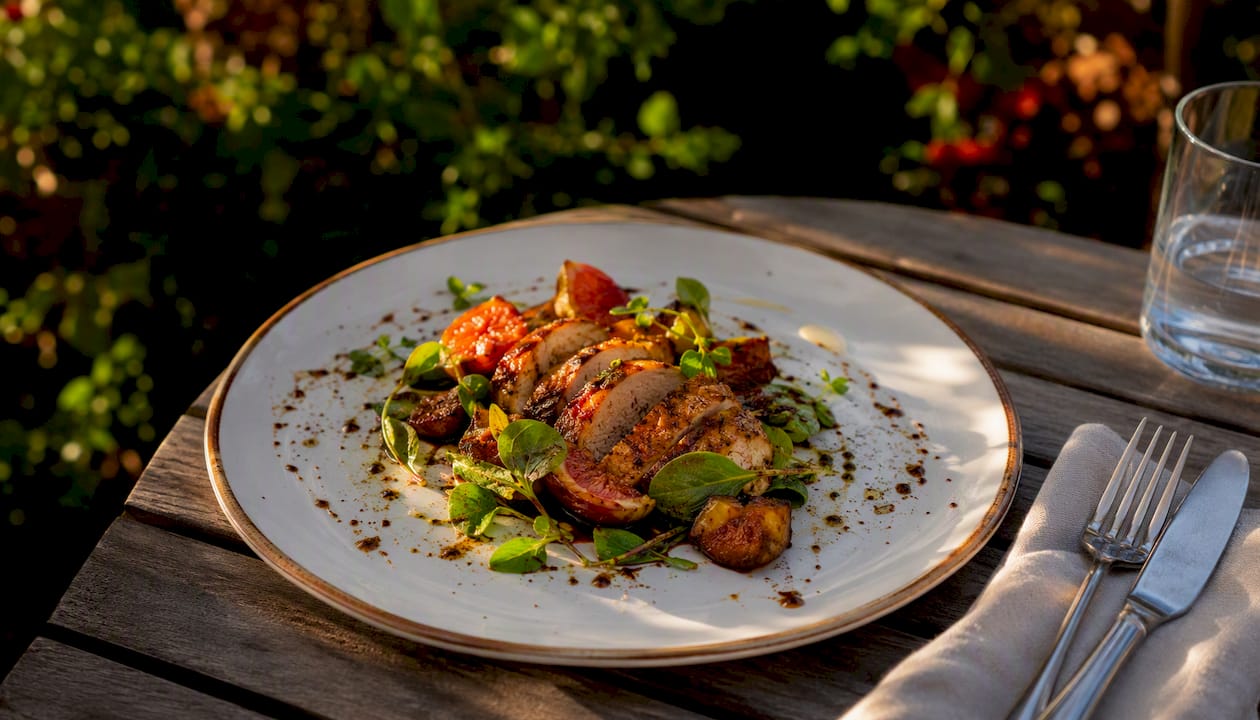
Work from the Leba Restaurant shoot in Wokingham shows what a well-planned food shoot delivers: clean, appetising hero images that work equally well on a printed menu and an Instagram grid. That kind of result comes from preparation, not luck.
Pro Tip: When requesting a quote, include your shot list, the intended uses, and your deadline. The more specific your brief, the more accurate the quote — and the less likely you are to encounter unexpected costs later.
My honest view on food photography pricing
Pricing transparency is something I feel strongly about, and not just because it is good business practice. When a client understands exactly what they are paying for — the creative time, the licence scope, the post-production — they make better decisions. They choose the right package for their actual needs rather than the cheapest option that looks good on paper.
The most common mistake I see small businesses make is comparing quotes on headline price alone. A £300 quote and a £700 quote for "food photography" can represent completely different things: different image counts, different retouching standards, different licence scopes, and different levels of pre-shoot planning. The Two-Tier Principle from The Rate Sheet captures this well — it is the brief and the usage that drive cost, not the subject. A dish of pasta and a hero campaign image of a dish of pasta are not the same commission.
I also think the licensing conversation is one that the industry has not always handled well. Clients are sometimes handed vague "full usage rights" language that sounds reassuring but means very little legally. The AOP's client guidance and the GOV.UK copyright framework are clear: rights must be defined in writing, with scope, territory and duration. A photographer who cannot or will not specify those terms is not protecting you.
The work I did for Leba Restaurant and the Elcot Retreat event both started with a clear brief, a transparent quote and a defined licence. That is not a complicated process. It just requires both sides to have the conversation properly at the start.
Good food photography is not a cost. It is the difference between a menu that sells and one that does not.
Work with Alex Gell on your next food shoot
Alex Gell offers menu photography, editorial food shots and fast-turnaround PR image packs for restaurants, food brands and hospitality businesses across London, Berkshire and Oxfordshire. Every project starts with a clear brief and a line-item quote, so you know exactly what you are getting before anything is agreed.
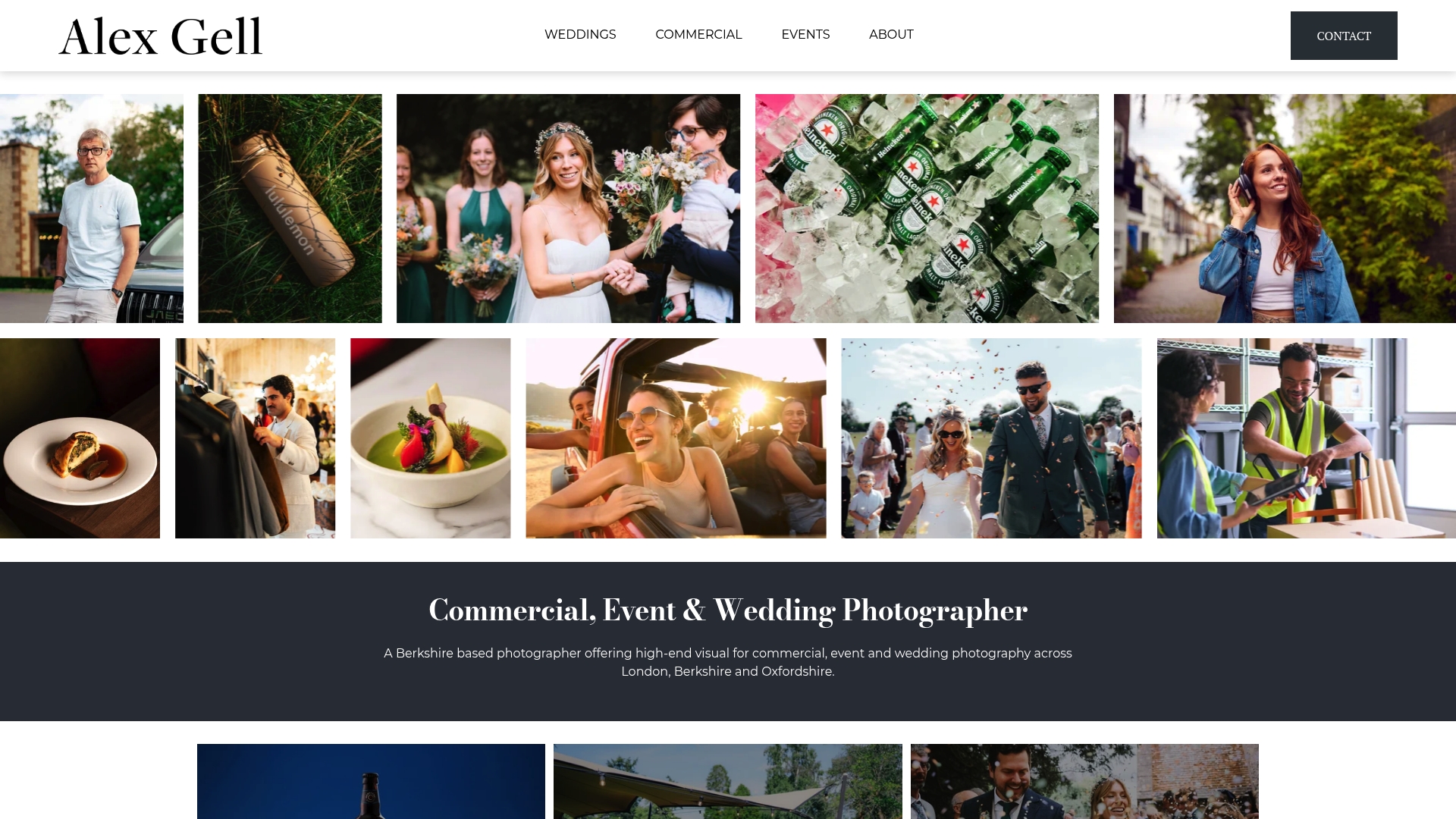
Whether you need ten hero dishes for a website refresh or a full production day for a new menu launch, the process is straightforward: share your shot list, your intended uses and your timeline, and you will receive a transparent, itemised quote in return. No vague bundled prices, no licence surprises.
To discuss your brief and get an accurate quote, visit the commercial photography London page or get in touch directly. If you are based in Berkshire or Oxfordshire, the commercial photographer Berkshire and commercial photographer Oxfordshire pages have full details on how shoots are scoped and priced for those areas.
Sources
These are the primary references used throughout this article. Each one is worth bookmarking if you are budgeting for food photography or reviewing a contract.
- UK Commercial Photography Pricing Report 2026 | The Rate Sheet
- The Association of Photographers — Copyright: information for clients
- Gov
- Restaurant photography pricing UK: what to charge in 2026 (LocalBrandHub)
- How Much Does Food Photography Cost in 2026? US, UK & EU Rates | FoodyFocus
- Photocultivator — Photographing a restaurant space: pricing guide for photographers
