
Half day wedding photography: what it covers and costs
Half-day wedding photography means 4 to 6 hours of coverage, usually spanning the ceremony through to the early reception, though some micro packages run as short as 2 to 3 hours. It suits couples with a single-venue day, a later ceremony time, or a small guest list where the story doesn't need capturing from breakfast to the last dance. The trade-off is simple: you save money, but you lose the getting-ready shots and the party photos later in the evening.
Here's the quick version before we get into specifics:
- Best fit: Micro-weddings, elopements, registry office ceremonies, and single-venue celebrations.
- What you get: Ceremony, confetti, family groups, a short couple session, and the start of the reception.
- What you lose: Preparations beforehand and anything after the meal, including speeches and first dance in most cases.
Key Takeaways
Half-day wedding photography works best when a couple defines their priority moments in advance and books hours that match a single, compact venue.
| Point | Details |
|---|---|
| Typical coverage | Half-day packages run 4 to 6 hours and cover ceremony, confetti, family groups, and early reception. |
| Price range | UK half-day packages cost roughly £500 to £1,200, against £1,000 to £2,500 for a full day. |
| Deliverables gap | Half-day galleries typically hold 200 to 400 edited images, compared with 400 to 800 for a full day. |
| Biggest risk | Multiple venues or long travel between locations is the most common reason short packages run out of time. |
| Recommended approach | Alex Gell builds half-day coverage around a couple's agreed priority list, delivering editorial results across Berkshire, Oxfordshire, and London. |
Primary sources used for prices, timelines and practitioner insight
- The Perfect Wedding Online informed coverage inclusions, exclusions, and travel pitfalls.
- Hitched and Fearless Photographers provided package length and full-day pricing context.
Table of Contents
- What does half day wedding photography actually cover?
- How much does half day wedding photography cost in the UK?
- Is half day coverage right for your wedding day?
- How many hours should you actually book?
- Sample timelines: what 4, 5 and 6 hours actually looks like
- Getting editorial results from a shorter wedding day
- What most wedding photography advice gets wrong
- Book a photographer who makes half-day coverage count
- Sources
What does half day wedding photography actually cover?
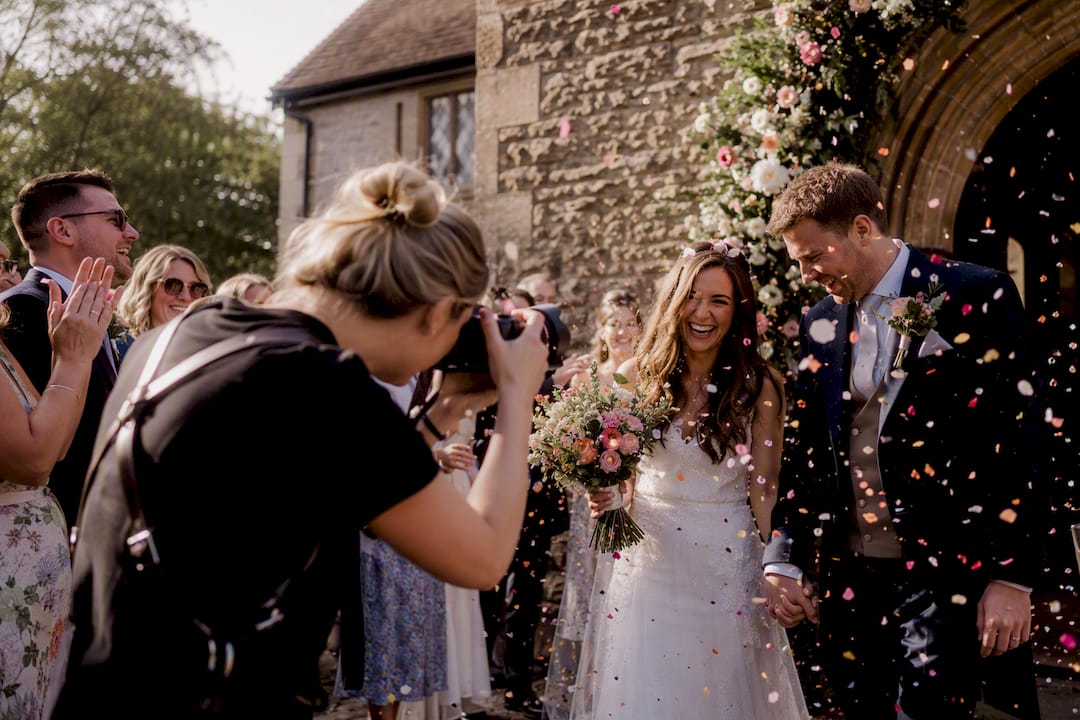
A typical half-day package documents the ceremony, the confetti throw straight after, family group photos, and a condensed couple portrait session. Coverage usually extends into the beginning of the reception, sometimes capturing the room, the wedding breakfast setup, and guests arriving for drinks. Photographers working half-day slots prioritise the moments that happen close together, because there simply isn't time to chase a scattered schedule.
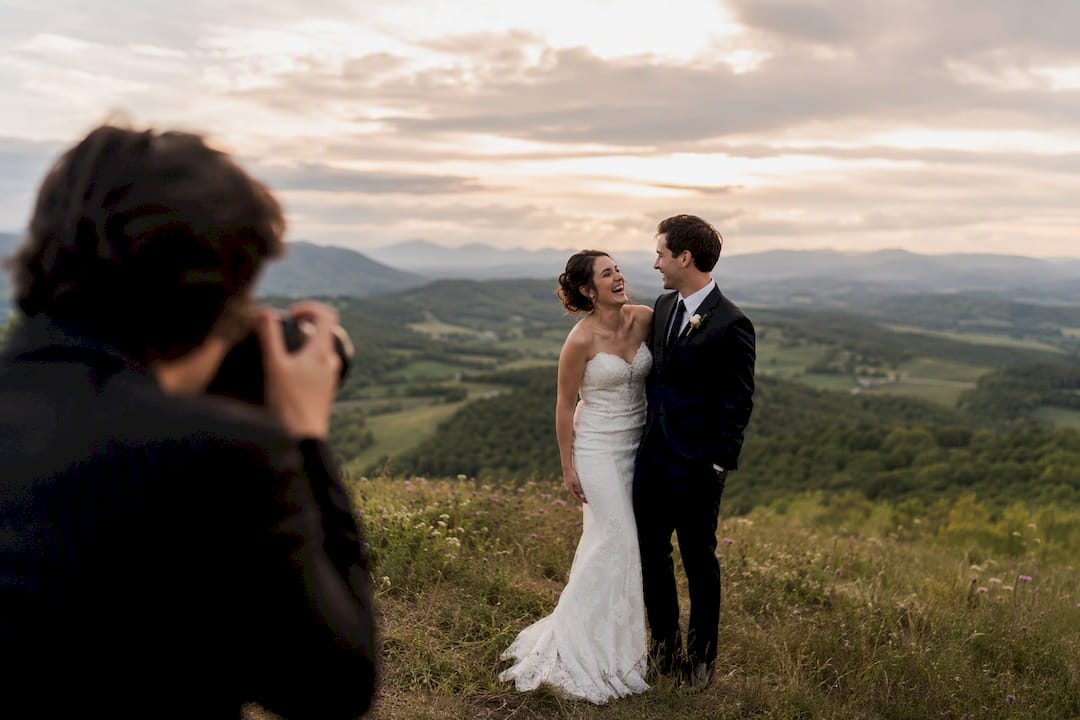
What gets left out is just as important to understand before you book. Getting-ready shots at home or in a hotel room almost never make the cut, since that happens hours before the ceremony and usually at a separate location. Golden-hour portraits vanish too, unless your ceremony is timed late enough that the light lines up with your coverage window. Speeches, the first dance, and evening entertainment are the other big exclusions, simply because most half-day bookings end well before dinner is cleared.
Pro Tip: If golden hour matters to you, work backwards from sunset when booking your ceremony time, not forwards from when the venue opens its doors.
On deliverables, expect a private online gallery with a defined turnaround, typically two to four weeks. The image count is where the difference from full-day coverage really shows.
Half-day packages typically deliver 200 to 400 edited images, compared with 400 to 800 for a full day, according to pricing data from Weddings Hub. That gap reflects hours photographed, not a drop in quality.
How much does half day wedding photography cost in the UK?
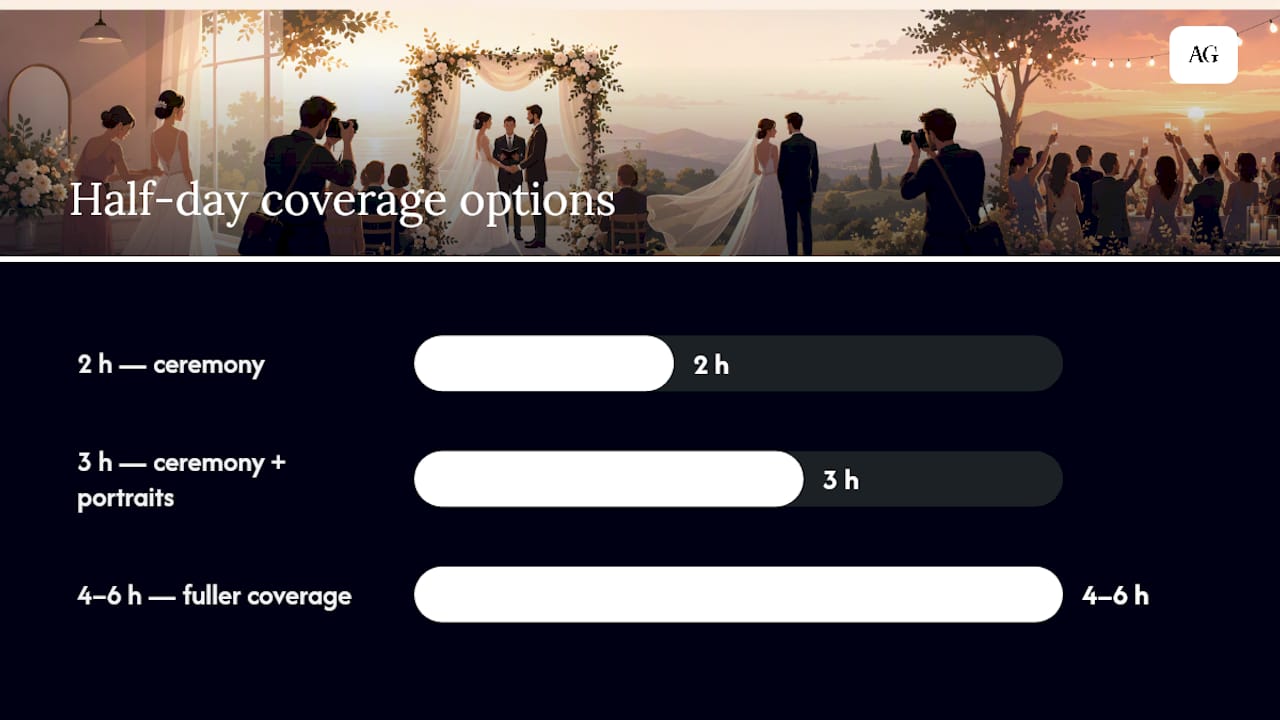
Package length dictates both price and what you can realistically expect captured. A 2-hour booking suits a registry ceremony and little else. A 3-hour slot stretches to cover the ceremony, confetti, and a handful of portraits. The 4 to 6 hour band is where most half-day packages sit, giving room for family groups and a proper couple session without rushing.
On price, half-day coverage (4 to 5 hours) in the UK typically runs £500 to £1,200, while full-day coverage (8 to 10 hours) sits between £1,000 and £2,500. Micro-wedding packages of 2 to 4 hours can start even lower, from around £450 to £700 depending on region and the photographer's experience level.
A few things push a quote higher than the base rate:
- A second shooter, usually added for larger guest lists or two ceremony locations.
- Printed albums or fine art prints, quoted separately from digital galleries.
- Travel beyond a set radius, often charged per mile or as a flat fee.
- Rush delivery, if you need your gallery back in days rather than weeks.
Separately, a 2025 survey by Fearless Photographers put the average basic full-day package at roughly £2,100, with most photographers charging between £1,600 and £2,500. That figure is worth keeping in your back pocket when you're deciding whether the half-day saving is worth the gaps it leaves. Ask every photographer to itemise overtime rates before you sign anything. A quote that looks competitive on paper can creep up fast if your ceremony overruns by 40 minutes and the invoice adds a surprise fee.
Is half day coverage right for your wedding day?
Half-day coverage works best when your day is already compact. If you're marrying at one venue, holding a later ceremony, or planning a micro-wedding with a handful of guests, four to six hours will comfortably tell the story without gaps that bother you later.
Watch for these situations, which tend to break a short package:
- Preparations at a separate venue. If you want getting-ready photos and your hair and makeup happens across town, that alone can eat an hour of travel each way.
- Multiple locations on the day. Ceremony at a church, reception at a country house, and a photo stop somewhere scenic in between adds up fast, and travel between sites is the single biggest cause of half-day packages running out of time.
- Evening entertainment you want captured. A live band, fireworks, or a first dance you've been planning for months won't survive a coverage window that ends at 5pm.
If any of these apply, the fix is usually simple: consolidate your locations where you can, start your ceremony earlier to buy back time, or agree your top three priority moments with your photographer in advance so nothing important gets missed.
Pro Tip: Build 15 to 30 minutes of contingency into every block of your timeline. Ceremonies run late, family groups take longer to wrangle than anyone expects, and that buffer is what keeps a tight half-day schedule from collapsing.
How many hours should you actually book?
Start by separating your must-have moments from your nice-to-haves. If confetti and family portraits matter more than the first dance, your hours should reflect that honestly rather than trying to squeeze everything in.
Once you know your priorities, these are the questions worth asking on every enquiry call:
- What time does coverage start and finish, exactly?
- What's the overtime rate if the day runs long?
- How many edited images will I receive, roughly?
- Do you carry backup equipment and professional insurance?
- Is a second shooter available, and at what cost?
- What's the turnaround time for the final gallery?
- Do I get full usage rights to the images, or a licensed set?
- Will you need feeding, or access arranged with the venue?
Before signing anything, check the contract covers overtime terms clearly, states the cancellation policy, lays out the payment schedule, and lists exactly what you're getting as deliverables. Vague wording here causes most of the disputes couples run into after the day.
If your budget is tight but you want a fuller day, ask about a micro-package extension rather than jumping straight to full-day pricing. Shifting your ceremony time by an hour to catch golden hour, or paying for one additional hour instead of a second shooter, often gets you more of what you actually want. One extra hour tends to deliver better value than a full second photographer for most half-day bookings, particularly if your priority is a fuller portrait session rather than more camera angles.
Sample timelines: what 4, 5 and 6 hours actually looks like
Seeing hours mapped against real moments makes the decision far easier than staring at a package name.
| Hours | Typical timeline |
|---|---|
| 4 hours | Photographer arrives, ceremony, confetti, family groups, 20 to 30 minute couple session, departs before the meal. |
| 5 hours | Ceremony, confetti, extended couple session, family groups, short coverage of early reception or arrival drinks. |
| 6 hours | Ceremony, confetti, longer portrait session, speeches captured early if timed well, limited evening or golden-hour coverage. |
A few practical notes on all three bands. First, build your photographer's travel time into the hours you book, not on top of them, since drive time between locations is one of the most commonly misunderstood parts of a quote. Second, if delays happen, and they usually do, the contingency buffer mentioned earlier is what protects your portrait session rather than your ceremony coverage. Third, six hours tends to be the sweet spot for couples who want the narrative to feel complete without paying full-day rates, because it can stretch from ceremony through to the start of speeches.
Getting editorial results from a shorter wedding day
I've built my approach around exactly this challenge: how do you get genuinely beautiful, story-led images out of a compressed timeline? The answer is planning before the day even starts, not during it. On short bookings, I ask couples for a simple priority list well in advance, so there's no debate on the day about what matters most.
A printed list of family group combinations, agreed beforehand, saves real time. Structured sequencing can save 10 to 20 minutes compared with arranging people on the fly, and that's time you get back for portraits instead.
Pro Tip: Scout your portrait location on a venue visit beforehand where possible. Knowing exactly where the light falls at 2pm versus 4pm turns a rushed ten-minute session into something that actually looks considered.
You can see how this plays out across real weddings in my wedding photography portfolio, including several half-day bookings shot in Berkshire and Oxfordshire.
What most wedding photography advice gets wrong
Most guidance on this topic treats half-day coverage as a compromise, a lesser version of the "real" package. That framing does couples a disservice. The evidence points the other way: a well-planned four or five hour booking, focused on the moments that actually matter to you, tends to produce a tighter, more intentional gallery than a full day spent chasing every possible angle.
Where the conventional advice falls down is in treating hours as the only variable worth negotiating. The bigger lever is your priority list. Two couples booking the same five hours can walk away with completely different results, purely because one told their photographer exactly what mattered and the other assumed everything would get covered somehow. If I had one piece of advice for anyone weighing this decision, it would be this: spend less time comparing package lengths and more time deciding what story you actually want told, then book the hours that fit it.
— Alex
Book a photographer who makes half-day coverage count
Alex Gell is the practical choice for couples who want editorial-quality wedding photography without paying for hours they won't use. Rather than a generic package built around a fixed hour count, coverage gets shaped around your actual priorities, whether that's a compact ceremony in Berkshire, an intimate registry wedding in Oxfordshire, or a single-venue day in London.
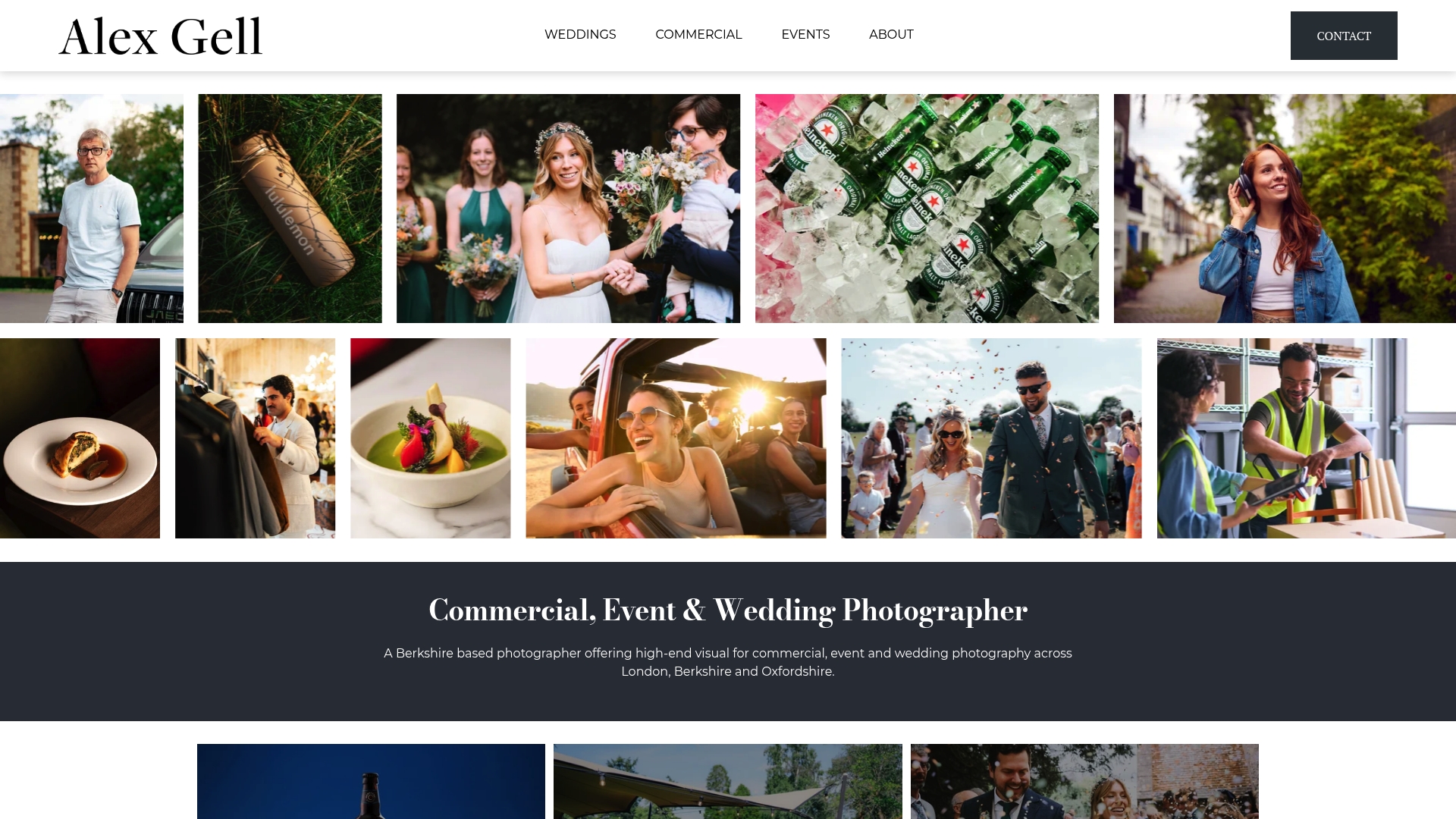
What makes this work on shorter days is preparation, not compromise: a clear priority list agreed before the day, efficient family-group sequencing, and location scouting done in advance so your portrait session doesn't feel rushed. The wedding photography portfolio shows exactly what that looks like across a range of half-day and full-day weddings. Couples planning shorter ceremonies also sometimes find it useful to line up their ceremony script and flow alongside their photography timeline, so both run to the same rhythm on the day.
If you're weighing up hours for your own wedding, the next step is straightforward: get in touch through the wedding enquiry page with your date and venue, and you'll get a clear, itemised quote back with no guesswork about what's included.
Sources
- Half-Day vs Full-Day Wedding Photography Explained | The Perfect Wedding Online
- Wedding photography prices | Hitched
- 2025 UK prices | Fearless Photographers
