
3 Checks Before Hiring an Event Photographer: Style, COI, Contract
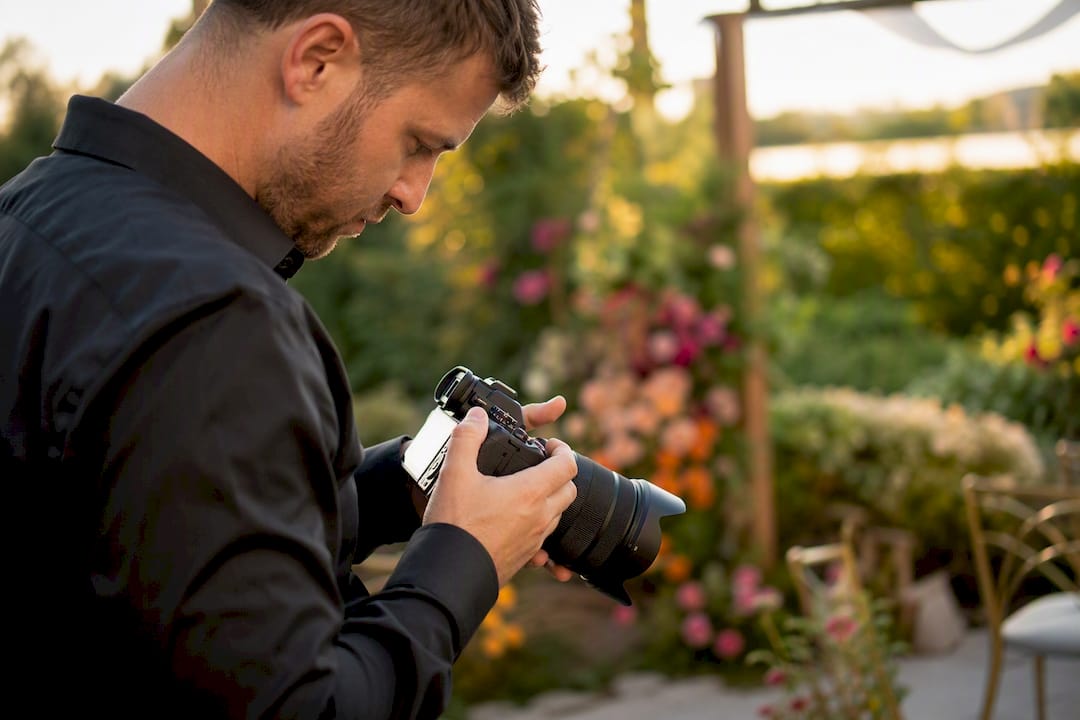
Hire the photographer whose existing work already looks like your event, not the one with the cheapest quote. Before you shortlist anyone, check three things: their style matches your goals, they can show you a Certificate of Insurance, and they'll put scope, deliverables and usage rights in a written contract. Ask every candidate for a full event gallery, not a highlights reel, and start there.
TL;DR:
- Full event galleries are essential for evaluating a photographer's consistency and handling of difficult moments, especially across varying lighting and chaotic environments.
- Confirm that their style matches your event type, whether documentary, reportage, or editorial, and verify their ability to work confidently in different lighting conditions.
- Price depends on hours, travel, assistants, editing, and licensing, with suspiciously low quotes likely limiting deliverables or licensing scope.
- Obtain a detailed contract covering scope, usage rights, insurance, and backup clauses before paying a deposit to protect your investment.
- Provide a brief, prioritized shot list and key details beforehand, and ensure the photographer arrives early and works discreetly to capture authentic interactions.
Table of Contents
- How to evaluate a photographer's portfolio and style
- What should I ask an event photographer before booking?
- What determines the cost of an event photographer?
- Contracts, insurance and usage rights worth insisting on
- Briefing your photographer and building a shot list that works
- What happens on the day and how delivery works
- What I've learned about the trade-offs no one mentions
- Ready to book your event photographer?
- Sources
- FAQ
How to evaluate a photographer's portfolio and style
A highlight reel tells you almost nothing. Anyone can pick out their best twelve shots from a wedding or awards dinner. What you actually need to see is a full event gallery, because that's where consistency shows up (or falls apart) across three hours of shifting light, boring speeches, and chaotic networking breaks. Guides on event photography consistently point to this as the single most useful test you can run before booking, and one detailed guide on what to expect sets it out clearly: highlights are curated, full galleries reveal how someone handles the difficult moments.
While you're scrolling, watch for two things. First, does their style suit your event? Documentary and reportage photography captures things as they happen, ideal for corporate events, parties, and anything where the atmosphere matters more than posed shots. Editorial and commercial styles lean more polished and directed, better suited to product launches or brand activations where the images will end up in marketing material.
Second, test their range. Can they handle a dimly lit marquee as confidently as a bright conference hall? Portfolio fit, matching existing work to your event type and scale, is repeatedly flagged as the most reliable predictor of a good outcome, and it costs you nothing to check before you pick up the phone.
What should I ask an event photographer before booking?
Once you've narrowed your list, get everyone on a call. A structured set of questions, covering experience, insurance, deliverables and contingency planning, is a genuinely practical tool here, and it's widely recommended for exactly this reason. Work through these in order:
- Are you available on my date, and have you shot similar events recently?
- How many hours are covered, and how many edited images will I receive?
- Can I get a preview or sneak-peek gallery before the full set is ready?
- What's your backup plan if your camera fails or you're taken ill?
- Do you carry public liability insurance, and can you send a COI?
- Have you worked at my venue before, or would a site visit help?
- How do you prefer to communicate on the day, brief check-ins or hands-off?
Pro Tip: Ask about workload around your date specifically. A photographer covering three events in one weekend is more likely to arrive tired, edit in a rush, or send a second shooter you haven't vetted.
What determines the cost of an event photographer?
Price swings on five things: how many hours you need covered, travel distance, whether a second photographer or assistant is required, how much editing is involved, and what usage rights you're buying. A half-day corporate shoot with light editing costs far less than a full-day brand activation needing same-day social content and a commercial licence.
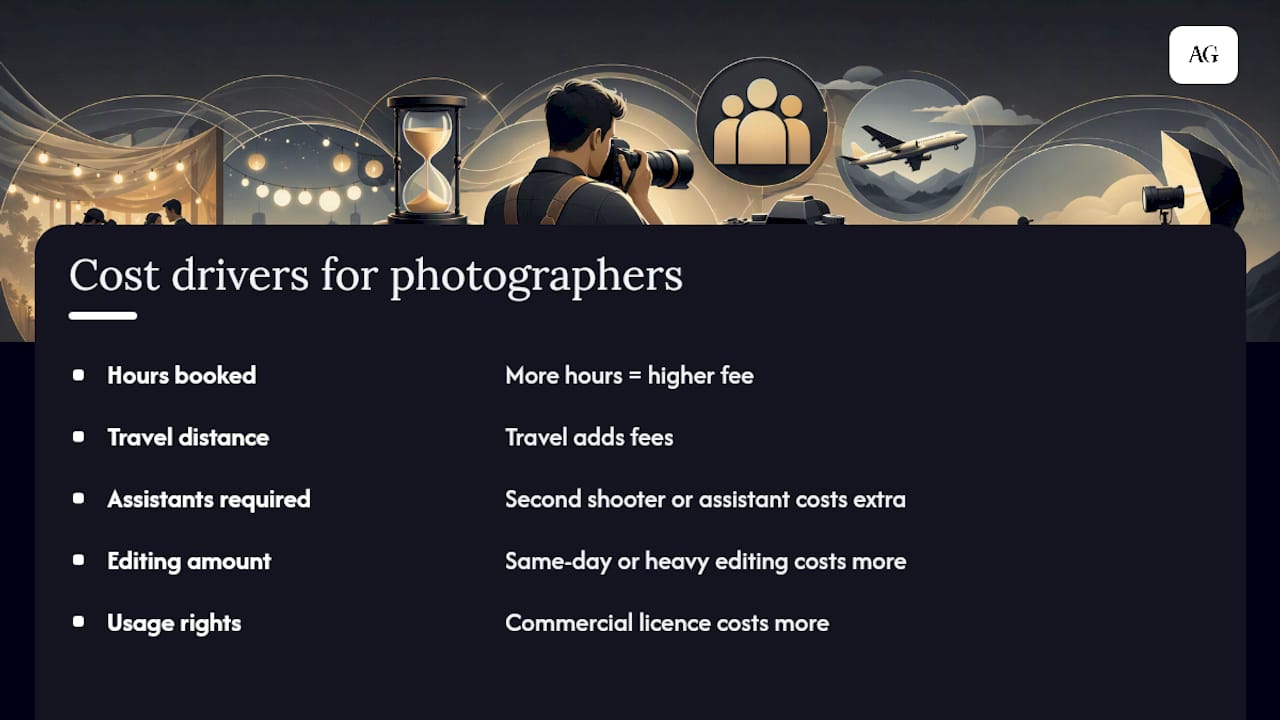
Be wary of quotes that sit well below everyone else's. It usually means fewer edited images, no backup equipment, or a licence that only covers personal use rather than marketing. One organiser-focused guide makes the point well: compare quotes by what's actually included, duration, editing scope, assistants, licensing, rather than the headline number alone. Two quotes that look £200 apart can represent very different value once you account for what each photographer hands over.
If you need images live during the event, for a press release or Instagram story, budget separately for it. Negotiating a same-day edit or sneak-peek delivery adds real production labour, and photographers who offer it well tend to price it as a distinct line item rather than bundling it in.
Contracts, insurance and usage rights worth insisting on
Get everything in writing before you pay a deposit. A proper contract states the scope of work (hours, number of shooters, minimum edited images delivered) and spells out usage rights separately from copyright. Most photographers retain copyright but grant you a licence for marketing, PR or personal use, and that distinction matters more than people expect: a fully edited, colour-graded gallery with broad usage rights tends to represent better long-term value than a cheaper shoot with a restrictive licence.
Ask for the Certificate of Insurance early, not the week before. Many venues require public liability cover from every supplier, and some specify exact policy wording, so confirm what your venue needs in writing well ahead of the date. Finally, insist on a backup clause naming an approved substitute in case of illness or emergency, and check the contract's cancellation and postponement terms before you sign anything.
Briefing your photographer and building a shot list that works
Send a one-page brief a week or two before the event. Keep it tight:
- Timeline, arrival to wrap, with key moments timestamped
- Must-capture moments (speeches, award presentations, first dance, product reveal)
- VIP names and any sponsor or brand logos that need featuring
- On-site contact who can answer questions in real time
Layer your shot list by priority. Must-have shots are non-negotiable (the client's opening address, the ribbon cutting). Important shots matter but flexibly (candid networking, room details). Nice-to-have shots are bonus if time allows (exterior venue shots, arrivals). For a large or unfamiliar venue, a short pre-event call or site visit is worth the hour. It's also worth asking your venue directly about supplier requirements and quirks. Venues that regularly host client events often have specific expectations around access, lighting restrictions or where suppliers can set up.
What happens on the day and how delivery works
A professional photographer arrives early, scouts the space quietly, and checks in briefly rather than hovering. Coverage should feel discreet, capturing real interactions rather than staging every frame.
Turnaround varies by scope: expect a few days for preview images if you need something urgently, and one to two weeks for a fully edited gallery, longer for large multi-room events with heavier post-production. For events over roughly 300 attendees or with several concurrent programmes, budget for a second shooter so nothing important gets missed while coverage is split across rooms.
Delivery typically arrives through an online gallery you can download from, in high-resolution JPEG at minimum. Afterwards, confirm your licence terms, archive the files somewhere safe, and flag any images you'd like removed or re-edited within the agreed window.
What I've learned about the trade-offs no one mentions
Every event photographer makes calls you never see. I'll often pre-visit a venue to check lighting and sightlines, carry a second body and lenses in case anything fails mid-shoot, and work from a shot list ranked by priority so nothing critical gets missed if time runs short.
The trade-off people underestimate is directing versus documenting. Pull a group together for a posed shot and you gain a clean image, but you lose the two minutes of candid energy happening around them. Good photographers make that call constantly, and it's worth asking how a candidate thinks about it before you book them.
— Alex
Ready to book your event photographer?
Alex Gell is the alternative to piecing together a photographer from directories and hoping the portfolio translates on the day. Every enquiry gets a full event gallery to review, not curated highlights, a Certificate of Insurance on request, a written contract covering scope and usage rights, and a documentary-plus-editorial style built specifically for corporate events, product launches, brand activations and private parties across London, Berkshire and Oxfordshire.
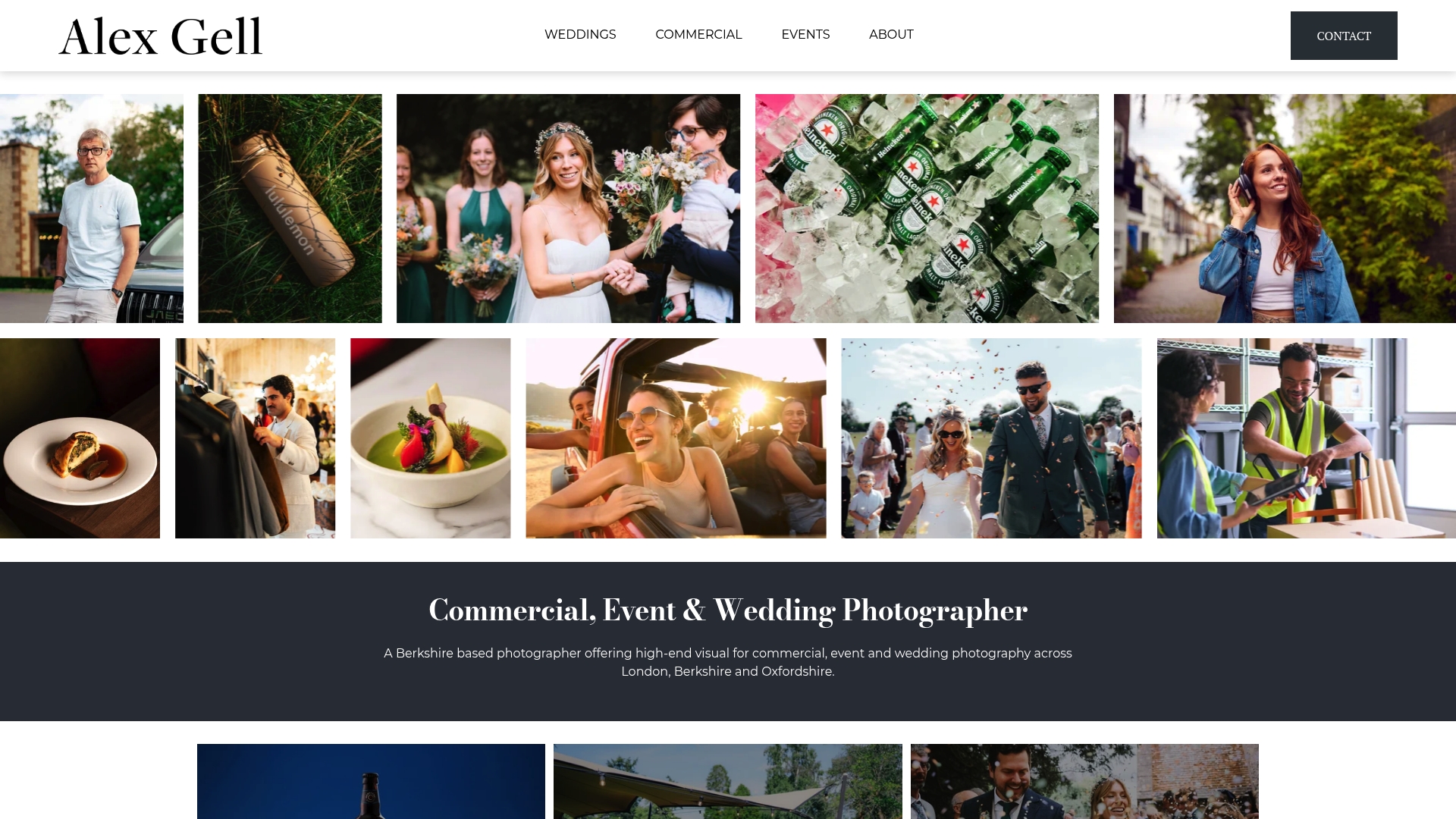
What sets this apart is speed without cutting corners: fast turnaround for PR and marketing assets when you need images the same day, alongside the fuller edited gallery when you don't. Browse the corporate and event portfolio to see full galleries in practice, then get in touch through the event photographer London page for a tailored quote based on your date, venue and coverage needs.
Sources
- Event Photographer Guide: What to Expect and How to Choose
- Questions to ask before hiring an event photographer
- How to Choose an Event Photographer: A Complete Guide for Organisers | TIME&SPACE
- What to Look for in Event Photographers: A 2026 Guide - Event Photojournalism
FAQ
What is the going rate for an event photographer?
Rates vary widely based on hours covered, editing scope, and licensing, so the only reliable way to judge value is comparing itemised quotes rather than a single headline figure.
How much should I pay for a photographer?
What you pay should reflect duration, travel, assistants, and how broad a usage licence you need. A low quote that omits full editing or commercial rights often costs more in the long run.
How do I pick a good event photographer?
Check their full event gallery for consistency, confirm their style matches your event (documentary versus editorial), and verify they carry insurance and offer a written contract. Alex Gell's portfolio blends both styles for exactly this reason.
What is the 20 60 20 rule in photography?
Definitions of this rule vary between photographers, and there's no single agreed standard, so treat any specific breakdown you see online with caution rather than as an industry-wide framework.
How far in advance should I book an event photographer?
Popular photographers for weddings and large corporate events often book up months ahead, so reserve your date as soon as your venue and timing are confirmed rather than waiting until details are finalised.
