
When Black and White Wedding Photos Work Best (and when they don't)
Black and white is the stronger choice whenever emotion, shape or light matter more than the colour in the frame. A confetti-strewn dance floor or a garden bursting with peonies usually deserves its colour. But a quiet exchange of vows, a tear caught mid-fall, or a first dance lit by a single spotlight? Monochrome makes those moments feel timeless rather than dated.
- Choose black and white for emotionally charged, intimate moments where feeling matters more than décor.
- Keep colour for scenes where the palette is doing real work, such as florals, sunset skies or a bold styling scheme.
Want the practical rules and shooting tips behind that decision? Keep reading.
Key Takeaways
Black and white wedding photography works best when it isolates emotion, form or texture that colour would otherwise distract from, and it needs strong exposure and composition at the point of capture to succeed.
| Point | Details |
|---|---|
| Choose monochrome for emotion | Vows, quiet exchanges and candid reactions typically read stronger in black and white than colour. |
| Keep colour where it works | Florals, sunset views and bold styling usually lose meaning once desaturated. |
| Shoot RAW every time | Full tonal range at capture is essential; conversion cannot fix poor exposure or composition. |
| Convert with channel mapping | Lifting red and orange channels slightly keeps skin tones warm instead of flat and grey. |
| Ask Alex Gell for a balanced gallery | Alex Gell mixes colour and monochrome deliberately across London, Berkshire and Oxfordshire weddings, available via the wedding enquiry page. |
Suggested reading on black and white wedding photography
- Shielding visual complexity: the perceptual research behind faster subject recognition in monochrome.
- What monochrome asks of the viewer: a critical look at how removing colour changes attention.
- Striking balance in black and white wedding photos: practical guidance on mixed lighting and conversion timing.
Table of Contents
- Why black and white wedding photos feel timeless
- When to choose monochrome over colour
- Shooting habits that make monochrome work
- How black and white wedding photos are made in editing
- Creative shot types worth requesting
- How Alex Gell approaches monochrome on the wedding day
- What monochrome actually gives a couple
- Book the black and white look for your wedding day
- Frequently asked questions
- Sources
Why black and white wedding photos feel timeless
Strip out colour and the eye has nowhere else to go but tone, texture and gesture. That's not sentiment, it's how perception works. A 100-participant perceptual survey comparing paired colour and monochrome images found that viewers identified the subject of a photo faster in black and white, and reported stronger emotional responses to it. The researchers call this "perceptual shielding": remove the distraction of colour, and the viewer's attention narrows onto what the photographer actually wants them to see.
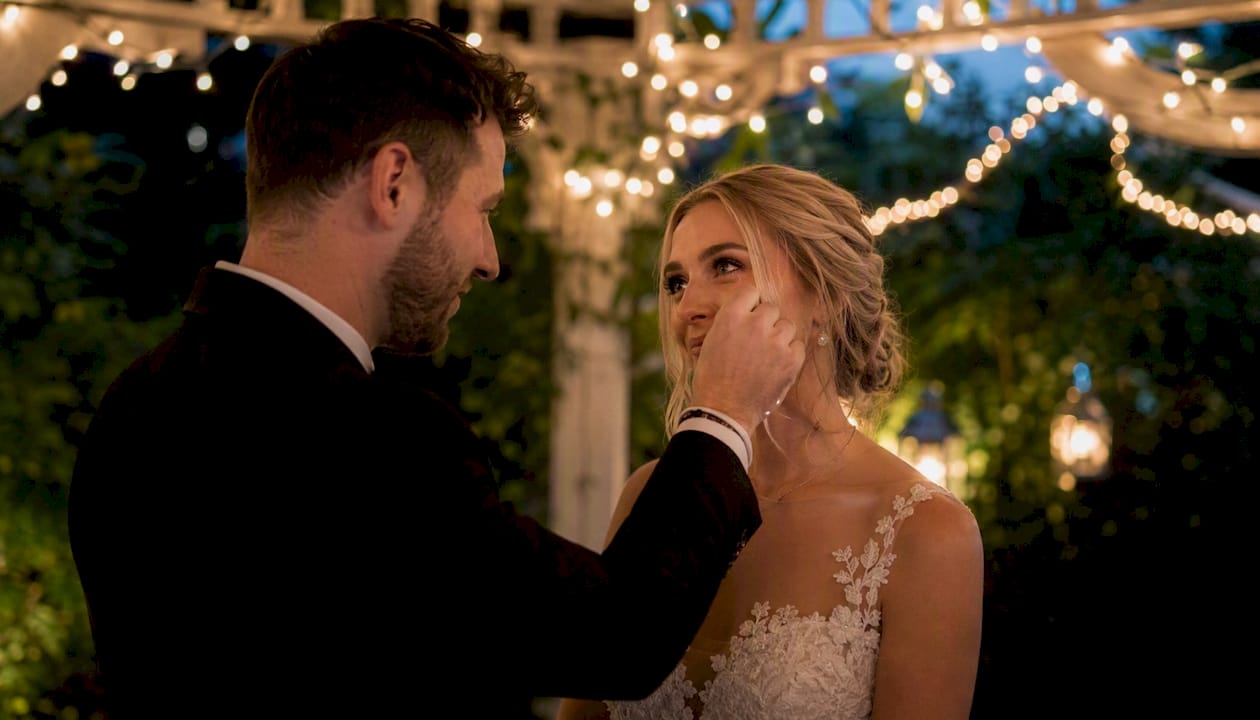
There's a cultural layer here too. Interdisciplinary research on monochrome photography-1263-1277) argues that black and white functions almost as its own visual language, one that encourages abstract, symbolic reading rather than literal documentation. That's partly why monochrome wedding photos rarely look dated the way colour images can. Strip out the era-specific colour palette and you strip out the visual clues that tie a photo to a decade.
Monochrome tends to evoke a fairly specific emotional register:
- Nostalgia, because it echoes the look of family photo albums going back generations.
- Gravitas, useful for a ceremony moment that deserves weight rather than brightness.
- Intimacy, since removing colour often removes visual "noise" between the viewer and the subject's expression.
When to choose monochrome over colour
Not every image benefits from the treatment, so it helps to run through a short mental checklist before deciding.
- Is the emotion the point? Vows, first looks, quiet parent moments: usually yes to monochrome.
- Is colour competing for attention? Clashing wallpaper, mismatched fairy lights, an orange dance-floor wash: convert it.
- Is the lighting mixed? Fluorescent overhead plus warm candlelight plus a stray blue spotlight rarely reads well in colour, and industry guidance on handling tricky wedding lighting backs black and white as the practical fix.
- Does the venue lean architectural? Stone, timber and shadow often read better in tone than in hue.
- Would colour date the image? If the answer is yes, monochrome usually wins.
Ceremony florals, a golden-hour view of the venue, or a bride in a jewel-toned dress almost always need their colour left in. Late-night dancing, candid ceremony reactions and intimate portraits are consistently strong monochrome candidates, echoing what many working photographers report choosing to deliver in black and white.
Pro Tip: Don't just tell your photographer "I like black and white." Show them two or three moments from other weddings you'd want treated that way, whether that's a quiet embrace or a dramatic silhouette. Specific references save far more back-and-forth than a vague style word.
Shooting habits that make monochrome work
The conversion can't rescue a badly exposed or poorly composed frame. If the fundamentals aren't there in colour, they won't magically appear once the hue is stripped out.
- Shoot RAW, always. It preserves the full tonal range needed for a clean conversion later, a point wedding photography guidance consistently stresses.
- Expose for the whole scene, not just the highlights. Blown-out whites or blocked shadows can't be recovered afterwards.
- Look for shape over colour. Strong silhouettes, repeating architectural lines and clear negative space all read beautifully once colour is gone.
Pro Tip: Train your eye to spot "graphic light" in the moment, hard shadows, a shaft of window light, backlighting through a veil. If a scene looks striking even when you squint and ignore the colours, it's a strong black and white candidate.
How black and white wedding photos are made in editing
Desaturating an image isn't the same as converting it properly, and the difference shows up fastest in skin tones. Flat desaturation often leaves faces looking grey and lifeless, because it treats every colour channel equally instead of mapping them deliberately into shades of grey.
- Start from the RAW colour file, never a JPEG.
- Choose how each colour channel maps to a tone, since reds and oranges usually need lifting slightly to keep skin looking warm rather than flat.
- Build contrast through a tone curve rather than a blunt slider, protecting midtones while deepening blacks.
- Refine highlights and shadows individually so detail survives in a white dress and a dark suit in the same frame.
- Add fine grain and sharpen selectively, particularly for prints and albums.
Pro Tip: A small lift in the red and orange channels during conversion can keep skin looking warm rather than muddy, a technique many experienced wedding photographers rely on to avoid the flat, grey-faced look of a quick desaturation.
Creative shot types worth requesting
A handful of shot types consistently reward the monochrome treatment, and they're worth naming when you're briefing a photographer or reviewing a portfolio.
- Candid ceremony close-ups, capturing raw reaction rather than posed expression.
- Low-light reception dancing, where colour casts from venue lighting would otherwise fight the moment.
- Silhouette portraits against a window, doorway or open sky.
- Architectural framing, using a venue's stone or timber lines as a graphic backdrop, the kind of texture-rich setting seen at venues like The Hall Exeter.
- Texture-driven detail shots: lace, stubble, hands clasped together.
Mixing documentary and editorial approaches works well here. Documentary monochrome captures the unscripted moment; editorial monochrome leans into deliberate composition. Both benefit from the same tonal clarity. When you're browsing a photographer's portfolio, look for genuine tonal range, deep blacks, clean whites, and detail retained in both, rather than a flat grey wash that suggests a lazy desaturation.
How Alex Gell approaches monochrome on the wedding day
Alex balances colour and black and white across an album to create rhythm rather than treating monochrome as a default filter. Most galleries lean heavily on colour, with black and white reserved for the moments that need it: a quiet vow exchange, a candid laugh between parents, the charged stillness just before a first look. That mirrors how many working wedding photographers describe their own delivered galleries, where monochrome typically makes up a minority of the final set rather than the majority.
You can see how that balance plays out in a real gallery from the Asylum Chapel and Sail Loft wedding. If you have specific moments in mind for the monochrome treatment, raise them early. Full booking details sit on the wedding enquiries page, and common questions about deliverables are answered on the FAQ page.
What monochrome actually gives a couple
One wedding sticks in my mind: a father and daughter, foreheads touching, seconds before she walked down the aisle. Shot in colour, the frame was cluttered with a patterned carpet and a slightly clashing bouquet. In black and white, none of that mattered. Just the two faces and the moment between them.
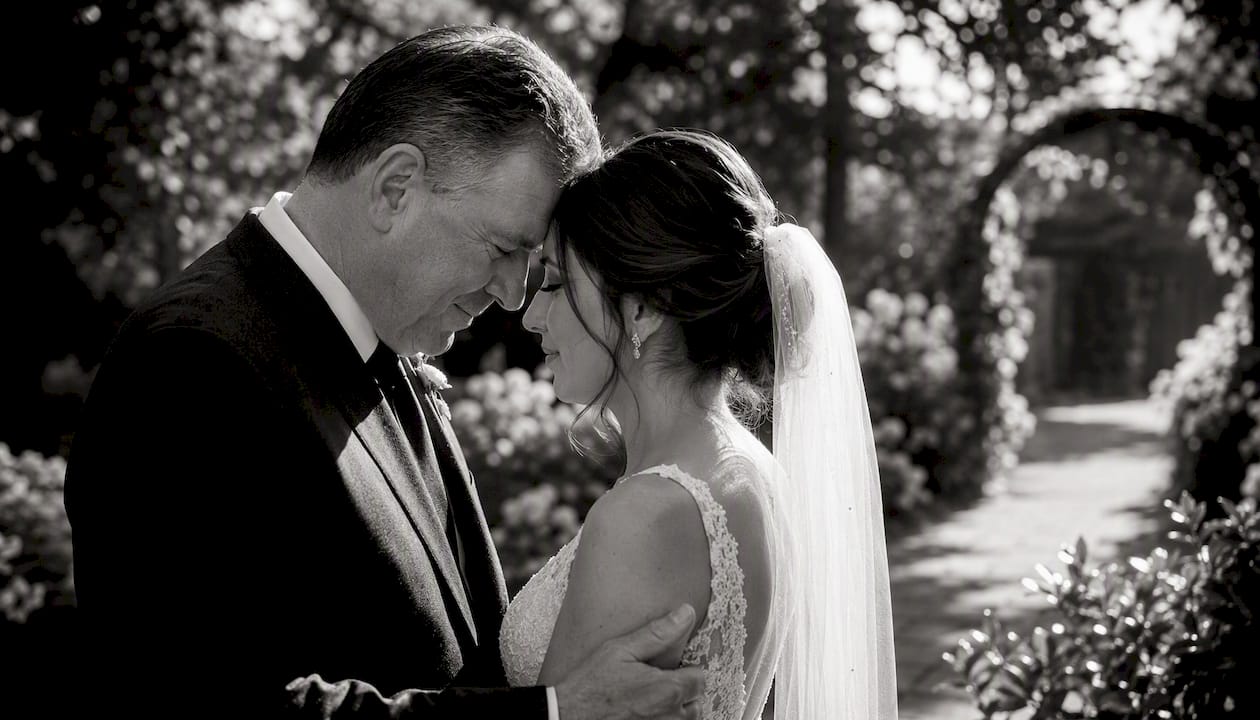
That's the judgement call behind every conversion, weighing what a couple loves against what actually serves the image. The best monochrome choices come from that balance, not from applying a filter because it looks nice.
Book the black and white look for your wedding day
If the images in this article are the kind you want walking down your own aisle, Alex Gell shoots weddings across London, Berkshire and Oxfordshire with exactly this blend of documentary honesty and editorial polish in mind.
Every wedding booking includes a considered mix of colour and monochrome, chosen image by image rather than applied as a blanket style, so your album has rhythm rather than repetition. You'll see real examples of that balance across the wedding photography portfolio, and if you're planning a London wedding specifically, the London wedding photography page covers availability and packages. Ready to talk dates? Send your details through the wedding enquiry form and Alex will get back to you with next steps.
Frequently asked questions
Do most wedding photographers shoot in black and white, or convert afterwards? Most shoot in colour RAW and convert selectively during editing, which preserves the option to keep an image in colour if the black and white version doesn't work as well.
How many black and white photos should I expect in my wedding gallery? Typical galleries lean mostly colour, with monochrome reserved for the moments it genuinely improves, often a smaller proportion of the overall set rather than the majority.
Can I request specific moments to be delivered in black and white? Yes, and it helps enormously to be specific. Naming moments, such as the vows or the first dance, rather than saying "more black and white photos please" gives your photographer a clear brief to work from.
Does black and white work for every wedding style? No. Venues with strong architectural texture, dramatic light or muted tones tend to suit it best. A wedding built around a vivid colour scheme may lose meaning once desaturated.
Sources
- Shielding visual complexity: semiotic mechanisms and perceptual effects of black-and-white photography
- What monochrome asks of the viewer
- Striking balance: black and white wedding photos (tips and techniques)
