
Lifestyle Brand Photography: What it is and How to Plan a Shoot
Lifestyle brand photography uses natural, story-led images of real people using your product or service to show customers how your brand fits into their lives, building trust faster than a plain product shot ever could. It works because it gives shoppers context, not just a catalogue view, and context is what shortens the gap between "that looks nice" and "I'll buy that." You need it when:
- Your website hero image feels flat or generic and isn't earning a second look
- You're launching a social campaign and need footage that stops the scroll
- You sell online and want product-in-use shots that answer the question "but what does it actually look like in real life?"
Key Takeaways
Lifestyle brand photography works because it shows real context rather than an isolated product, and that context builds trust, engagement and conversion faster than plain product shots.
| Point | Details |
|---|---|
| Definition matters | Lifestyle photography shows products or people in natural, believable use, unlike posed portraits or isolated product shots. |
| Plan formats before shooting | Request 16:9, 4:5 and 9:16 frames on the day to avoid costly reshoots and cropping compromises later. |
| Budget realistically | Expect roughly $150 to $500 for simpler sessions, rising sharply for full campaign days with styling and casting. |
| Brief in detail | A written brief with goals, brand pillars, shot list and licensing terms produces far more accurate quotes. |
| Measure against a baseline | Compare engagement, click-through and conversion against your previous product-only imagery, not in isolation. |
| Work with a specialist | Alex Gell blends documentary candour with editorial polish for brands across Berkshire, London and Oxfordshire. |
Table of Contents
- What is lifestyle brand photography?
- Why does lifestyle photography matter for small brands?
- What formats and shots do brands actually need?
- How does a lifestyle shoot actually run?
- What should you budget and expect on timing?
- How do you brief a lifestyle photographer properly?
- Should you DIY it or hire a professional?
- How do you keep every image on-brand?
- How do you measure whether it's actually working?
- How do I approach a lifestyle shoot?
- Ready to plan your own lifestyle shoot?
- Sources
What is lifestyle brand photography?
Lifestyle brand photography captures real or realistic moments, people using a product, a founder at work, a team mid-conversation, staged just enough to look effortless rather than posed. It sits in a different lane from product photography, editorial work, and formal portraiture, even though all four can appear in the same marketing campaign.
The differences come down to focus, subject and intent:
- Product photography isolates the item, usually on a plain background, to show shape, colour and detail with total clarity.
- Editorial photography tells a bigger visual story, often for a publication or campaign, with heavier styling and a strong creative concept.
- Portrait photography centres on the person's face and character, typically posed and closely directed.
- Lifestyle photography blends all three instincts but keeps the scene believable. The product or service appears in use, in a real or realistic setting, with candid-feeling body language.
A few examples make the scope clearer. A family lifestyle shoot might show a couple using a homeware brand's product over Sunday breakfast. A corporate lifestyle shoot could capture a founder genuinely mid-task in their workspace, not staring at a laptop for the camera. A lifestyle product shot might show a skincare bottle beside a bathroom sink, condensation on the mirror, towel slightly askew, as if someone had just used it.
The best lifestyle images look like a moment you stumbled onto, not a scene you were shown. That illusion is the entire craft.
Confusingly, some suppliers call this "commercial lifestyle photography" or "brand storytelling photography." They're the same discipline. The terminology varies more than the technique does.
Why does lifestyle photography matter for small brands?
Lifestyle photography builds trust and emotional connection faster than polished, sterile product shots, because it shows your brand behaving the way customers hope it will behave in their own lives. That trust translates directly into commercial results. One widely cited comparison recorded a 42% jump in click-through after a brand swapped catalogue-style product images for storytelling frames on the same campaign.
For a small business, the practical marketing impacts stack up quickly:
- Higher engagement on social posts, because people respond to people, not props
- Better-performing ad creative, since context-rich images tend to hold attention longer than flat product cutouts
- Stronger social proof, particularly when the imagery features real customers or staff rather than stock models
- Improved organic discoverability, since descriptive file names, alt text and keyword-rich metadata help lifestyle images surface in search image packs
Different sectors lean on this in different ways. A food brand shoots a dish mid-serve, steam still rising, rather than a static plated shot. A fashion label shows the garment moving on a real body in a real street. A wellness brand captures a genuinely relaxed face during a treatment, not a rehearsed smile. Professional services firms, who often struggle to photograph an "invisible" product, use lifestyle imagery of consultations, handshakes and workspaces to make expertise feel tangible.
What formats and shots do brands actually need?
Most brands commissioning a shoot ask for four core formats: a hero image for the website, vertical clips for social Stories and Reels, square or near-square shots for the main feed, and a horizontal set for video or press use. Planning these ratios before the shoot, rather than cropping afterwards, avoids the awkward compromises that come from stretching one frame to fit five different placements.
- 16:9 horizontal: website hero banners, video thumbnails, PR and press imagery
- 4:5 vertical (near-square): Instagram and Facebook feed posts, the format that tends to dominate mobile screens
- 9:16 full vertical: Instagram Stories, Reels, TikTok
- 1:1 square: email headers, product grids, some ad formats
Requesting a mix of horizontal, vertical and square frames on the day, rather than relying on cropping later, reduces the risk of costly reshoots when a format doesn't quite work.
A small business might commission a package covering a website hero shot, six to eight social-ready lifestyle frames, and a short set of product-in-use images for the online shop, all from a single half-day session.
How does a lifestyle shoot actually run?
A lifestyle brand shoot moves through five stages: brief, scout, shoot, edit, deliver, and skipping any one of them is usually where shoots go wrong. The brief sets direction, the scout confirms the location and light work in reality rather than in theory, the shoot day captures the planned list plus a few unplanned moments, editing shapes the final look, and delivery hands over files in the formats you actually need.
- Creative brief: define the campaign goal, the brand pillars, and the feeling the images need to convey.
- Moodboard: gather reference images so everyone, photographer included, agrees on tone before the camera comes out.
- Shot list: a written, numbered list of every shot required, grouped by setup to save time on the day.
- Casting: choose models, staff or customers who genuinely reflect your audience.
- Styling: confirm wardrobe, props and set dressing in advance, not on the morning.
- Schedule: plan the shoot around natural light and build in buffer time between setups.
- On-day shooting: work through the shot list, then leave 10 to 15 minutes between setups to catch spontaneous, unplanned moments, often the strongest frames of the day.
- Tethered review: check images on a larger screen as you go, catching lighting or composition issues before you lose the location.
- Post-production: colour grading, light retouching, and a "natural finish" pass that keeps skin and texture looking real rather than airbrushed.
A reusable shot list for a small brand typically includes: one hero image, three to four lifestyle-in-use shots, two to three product detail close-ups, a handful of B-roll or transitional frames, and four to six square or vertical cutdowns ready for social.
What should you budget and expect on timing?
Most small-brand lifestyle shoots fall somewhere between a few hundred pounds for a short DIY-assisted session and several thousand for a full campaign day. Many professional lifestyle photographers(https://www.shopify.com/blog/lifestyle-photography) price sessions in the $150 to $500 range for simpler briefs, scaling up sharply for full production days with styling, casting and multiple locations.
- Half-day shoot: a single location, one or two setups, ideal for a website refresh or a small product-in-use gallery.
- Full-day shoot: multiple locations or setups, a broader shot list, suited to a season launch or a full social content refresh.
- Campaign-level production: multiple models, stylists, and possibly a second shooter, built for a major launch or a full year of content across channels.
Pro Tip: Ask your photographer for a "content bank" day rather than a single-purpose shoot. Careful shot-listing and planning around light lets one well-run session cover six to twelve months of content, which changes the cost-per-use calculation entirely.
On timing, expect one to three weeks of pre-production for briefing, casting and location scouting, a single shoot day for most small-business briefs, and five to ten working days for editing and final delivery, longer for campaign-level jobs with heavier retouching.
Licensing deserves a line in every brief. Confirm territory (UK-only or worldwide use), duration (perpetual licence or a fixed term), and whether the images are exclusive to you or usable by the photographer for their own portfolio and marketing. Get this in writing before the shoot, not after you've already published the images.
How do you brief a lifestyle photographer properly?
A strong brief tells the photographer exactly what success looks like before anyone picks up a camera, and it's the single biggest factor in whether you get a quote that matches what you actually wanted. Vague briefs produce vague quotes and, often, a shoot day full of guesswork.
Work through this checklist before you contact anyone:
- Campaign goal (website refresh, product launch, social content bank)
- Brand pillars and the three words that should describe every image
- Audience: who needs to see themselves reflected in the casting
- Must-have shots, written as a numbered list, not a vague description
- Usage and licence terms: where the images will run and for how long
- Budget range, even an approximate one
- Timeline: shoot date and the date you need final files by
A proven six-step checklist, covering hiring the right photographer, communicating your vision clearly, choosing the location, arranging hair and makeup, preparing a packing list, and planning your content strategy, catches most of the details that get overlooked when briefs are rushed.
A short email template you can adapt:
"Hi [name], we're planning a lifestyle shoot for [brand] to support [goal]. We need [number] images covering [shot types] for use on [channels]. Our brand feels [three words]. Budget is around [range] and we'd need final files by [date]. Could you share availability and a sample quote?"
Should you DIY it or hire a professional?
DIY works when your budget is tight, your needs are simple (a handful of social posts, a quick product-in-use shot), and you're comfortable shooting and editing yourself. Hiring a professional earns its cost back when the images need to carry serious weight, a full campaign, a website relaunch, or anything going to press or paid ads, where inconsistent lighting or awkward framing will actively cost you credibility.
If you're going the DIY route:
- Shoot near a window in natural light rather than relying on overhead bulbs
- Use the rule of thirds and leave breathing room around your subject for cropping flexibility
- Choose authentic, uncluttered settings over anything that looks like a studio backdrop
- Edit for a natural finish rather than heavy filtering, over-processed images read as inauthentic fast
- Ask staff, friends or willing customers to model rather than hiring unfamiliar faces; comfort on camera shows
Borrow a prop or two from a friend's home if your own space looks too "brand office." A lived-in kitchen photographs better than a boardroom.
How do you keep every image on-brand?
Consistency comes from decisions you make before the shoot, not corrections you make after it. Lock your colour palette, your typical framing style, and your editing approach into a short brand style guide, then hand it to every photographer or editor who touches your imagery, including yourself, if you're shooting in-house.
A few habits keep a growing image library coherent:
Pick a consistent editing tone (warm and natural, cool and clean, high contrast) and apply it across every batch, not just the newest one. Reuse the same two or three locations or settings where it makes sense, so your feed reads as one brand rather than five disconnected shoots. Brief every photographer with the same reference moodboard, even if months pass between sessions, so tone doesn't quietly drift.
Casting matters here too. If your last shoot featured staff aged in their twenties in bright, minimal spaces, and your next one features older models in a cluttered setting, the mismatch will show up in your feed even if no single image looks wrong on its own. Keep a simple visual reference document, five to ten of your best images, and share it every time you brief new work, whether that's a photographer, a stock library, or your own phone camera on a quiet Tuesday.
How do you measure whether it's actually working?
Track lifestyle imagery against the same metrics you already use for other creative, engagement rate, click-through rate, and time-on-page, then compare performance directly against your previous product-only shots. The comparison matters more than the raw number: a lifestyle image that gets a 3% engagement rate means little in isolation, but means a great deal next to a 1.5% baseline from your old catalogue shots.
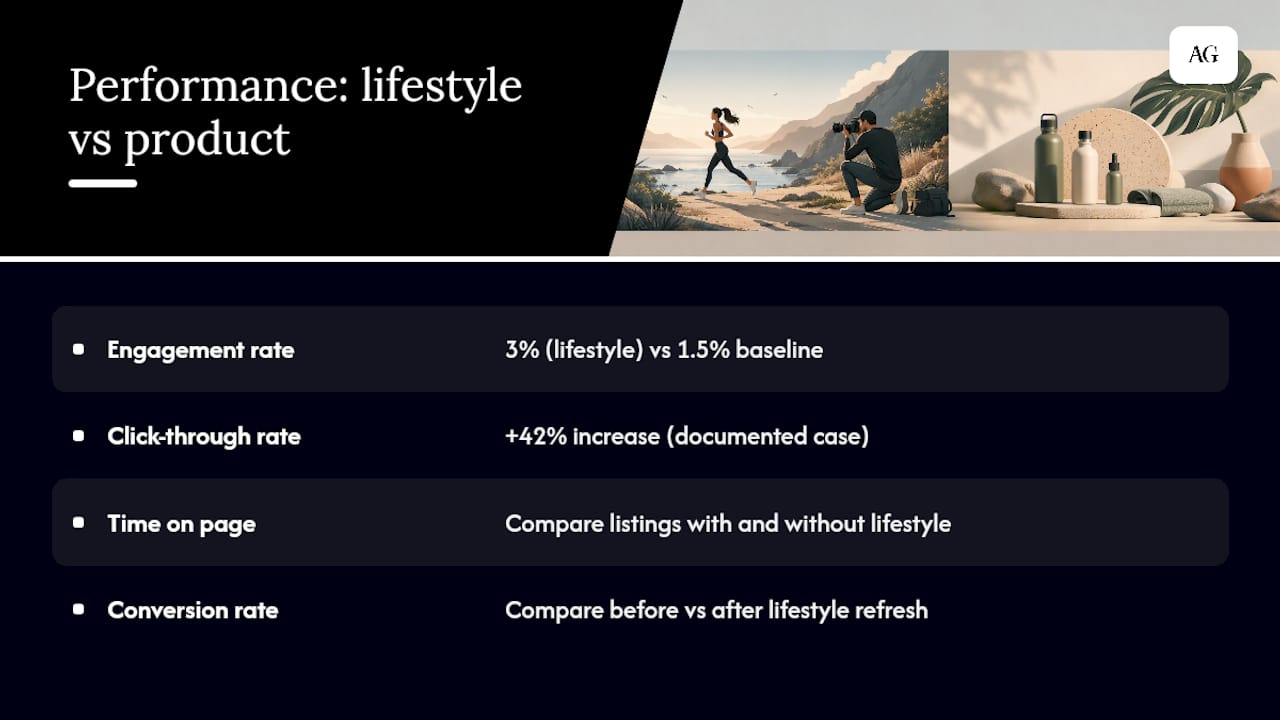
Watch four signals specifically. Engagement rate on social posts using lifestyle imagery versus posts using plain product shots. Click-through rate on ads or email campaigns, since one documented case saw a 42% increase in click-through after switching to storytelling images. Time on page for product listings that include lifestyle shots alongside standard product photography. Conversion rate on landing pages before and after a lifestyle image refresh.
Run this as a genuine A/B comparison where you can, same product, same audience, same channel, only the imagery changed. Give it a full campaign cycle before drawing conclusions; a single week of data on a seasonal product will mislead you. If you're tracking organic search performance too, keep an eye on image search traffic, since well-tagged lifestyle images with proper alt text and file naming tend to surface in image packs that plain product shots rarely reach.
How do I approach a lifestyle shoot?
My approach starts with a straightforward idea: the best brand images look found, not made. I blend documentary-style candid photography with an editorial polish, so the final set feels honest but still holds up next to your best-produced marketing.
On the day, expect a relaxed pace with clear direction, we work through the agreed shot list first, then leave space for the unplanned moments that usually turn out best. I keep clients involved throughout, checking frames together rather than disappearing behind the camera. You'll get a curated, retouched gallery delivered in the formats you actually need, not a dump of unsorted files.
If that sounds like the kind of shoot your brand needs, you can see examples of recent work and get in touch through the commercial photography portfolio.
Ready to plan your own lifestyle shoot?
Alex Gell gives small businesses and brand teams a locally based alternative to hiring a big production agency for lifestyle work, one photographer who handles the brief, the shoot and the edit personally, rather than passing your project between departments. That means fewer handoffs, clearer communication, and a final gallery shaped by one consistent creative eye rather than committee.
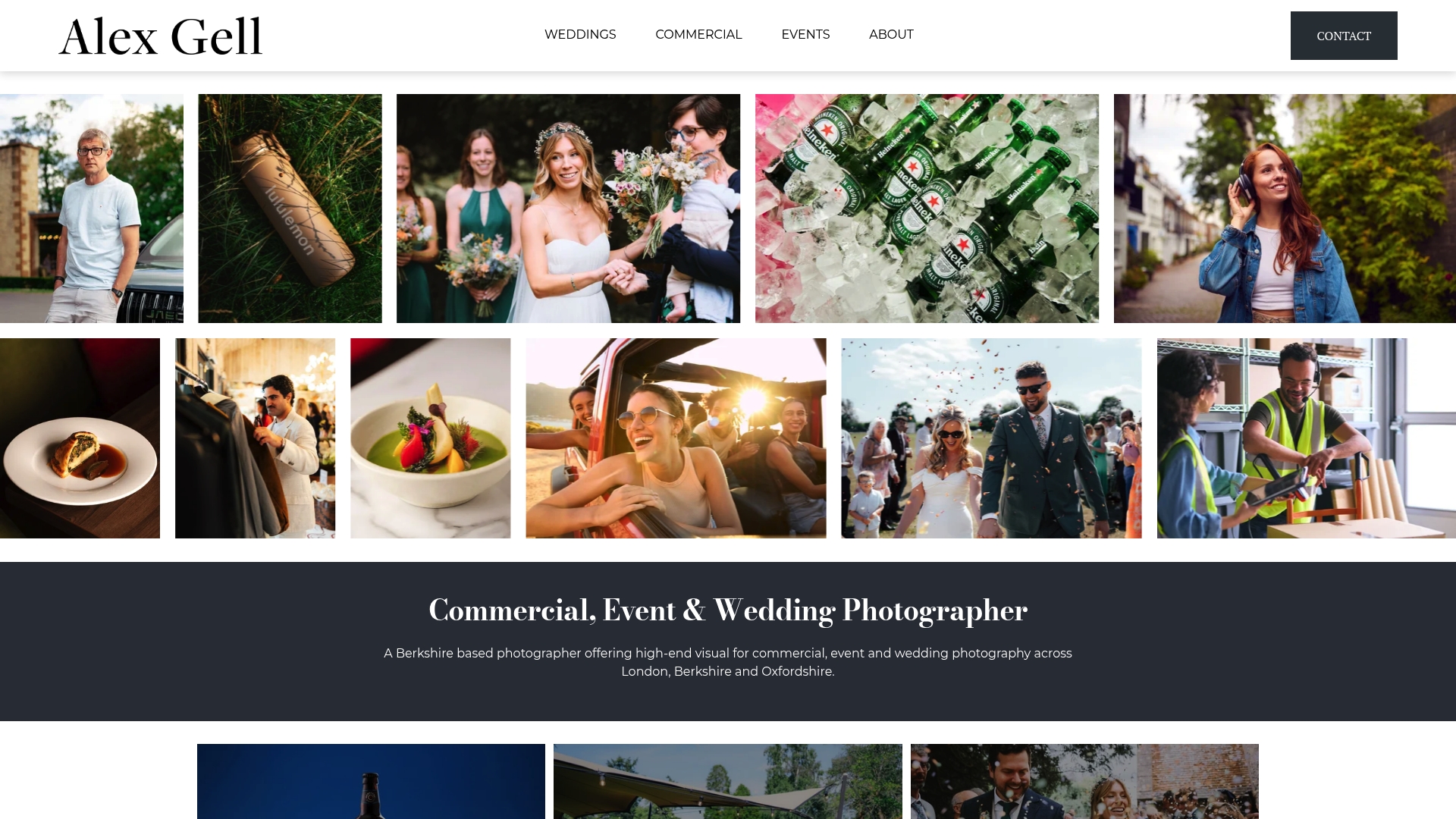
Packages are built around what you actually need rather than a fixed template: a half-day shoot for a website refresh or a small social content batch, a full-day shoot for a broader campaign covering multiple locations or setups, and campaign-level production for launches that need casting, styling and a full content bank to last the year. Every package includes a written usage licence, so you know exactly where and how long you can use your images.
You can browse recent commercial and lifestyle work on the Berkshire photography portfolio or the London commercial page, and if you're based near Oxford, the Oxfordshire service page covers availability in that area too. For wardrobe or headshot prep ahead of a shoot, Studio2U's guidance on professional image requirements is worth a read before casting day.
Ready to talk specifics? Get in touch through the commercial photographer London page with your goals, rough timeline and budget, and you'll get a straightforward quote back, no lengthy sales process attached.
Sources
These sources cover the planning, pricing and storytelling detail behind this guide.
- What Is Lifestyle Photography? Steps, Examples, and Tips (2025) - Shopify
- What Is Lifestyle Photography for Brands? - Little Rusted Ladle
- Photosbysiobhan
- How to plan a brand photoshoot | Keira Hand
