
When Will You Get Your Wedding Photos Back?
Most couples wait 4 to 6 weeks for their full wedding gallery outside peak season, stretching to 8 to 12 weeks between May and September. Sneak peeks typically land within 48 to 72 hours, sometimes up to a week if your photographer is juggling a run of weddings back to back.
That's the honest, industry-standard window, and it's worth quoting back to any photographer you're vetting. Here's what you should expect at each stage:
- Sneak peek (10 to 30 images): 48 hours to a week
- Highlights or teaser reel: 1 to 3 weeks
- Full gallery: 4 to 8 weeks off-peak, 8 to 12 weeks in peak season
- Printed album or physical prints: an extra 4 to 10 weeks after gallery approval, since album design and proofing take time on top of the digital edit
Pro Tip: Ask your photographer to write the maximum delivery date into your contract, not just a rough estimate. A number on paper protects you far more than a verbal promise ever will.
If your wedding falls in June, July or August, add a few weeks to every figure above. Peak season means your photographer is editing several weddings at once, and even the best studios queue work in the order it arrives.
Key Takeaways
Full wedding gallery delivery typically takes 4 to 8 weeks off-peak and 8 to 12 weeks during peak season, with sneak peeks arriving within 48 to 72 hours.
| Point | Details |
|---|---|
| Standard delivery window | Expect 4 to 8 weeks off-peak, extending to 8 to 12 weeks during peak wedding season. |
| Sneak peeks arrive fast | Most photographers send a small preview gallery within 48 to 72 hours of the wedding. |
| Contract is the final word | Always confirm a written maximum delivery date rather than relying on a verbal estimate. |
| Very fast delivery has trade-offs | Two-week full galleries often mean heavy presets or outsourced editing rather than bespoke retouching. |
| Follow up calmly, not urgently | Check in politely at the halfway point, then reference your contract if the deadline passes. |
| Alex Gell's approach | Alex Gell agrees a clear delivery window before the wedding and sends sneak peeks within days, backed by a written contract. |
Table of Contents
- What happens after the wedding: the workflow explained
- How long does the full wedding photo turnaround take?
- What factors actually change your wedding photo turnaround time?
- What should your contract say about photo delivery?
- How do wedding photographers deliver the final photos?
- When should you follow up if your photos are late?
- Why does good wedding photo editing take real time?
- A note from Alex on delivery and communication
- Book a wedding photographer who tells you exactly when your photos arrive
- Sources
What happens after the wedding: the workflow explained
Your photographer doesn't go home and start editing your ceremony photos that same night. There's a proper sequence, and understanding it explains almost everything about why wedding photo delivery time isn't instant.
A single wedding day can generate thousands of raw files across two cameras, sometimes more if a second shooter is involved. That volume alone means the process has to be structured, not improvised. Here's the typical run-through:
- Ingest and backup: Files are copied off memory cards onto at least two separate drives before anything else happens, protecting your images against hardware failure
- Culling: The photographer sorts through every frame, removing duplicates, blinks, and technical misses, usually cutting the raw count down by more than half
- Base edits: Colour correction, exposure balancing, and white balance fixes are applied across the whole selected set so the gallery feels consistent
- Fine retouching: Hero shots, portraits, and detail images get closer attention. Skin tones, stray hairs, and background distractions are cleaned up here
- Sequencing and quality control: Images are arranged to tell the story of the day, then checked again for consistency before anything goes out
- Export and upload: Final files are compressed for web delivery and uploaded to your gallery platform, with high-resolution versions prepared separately
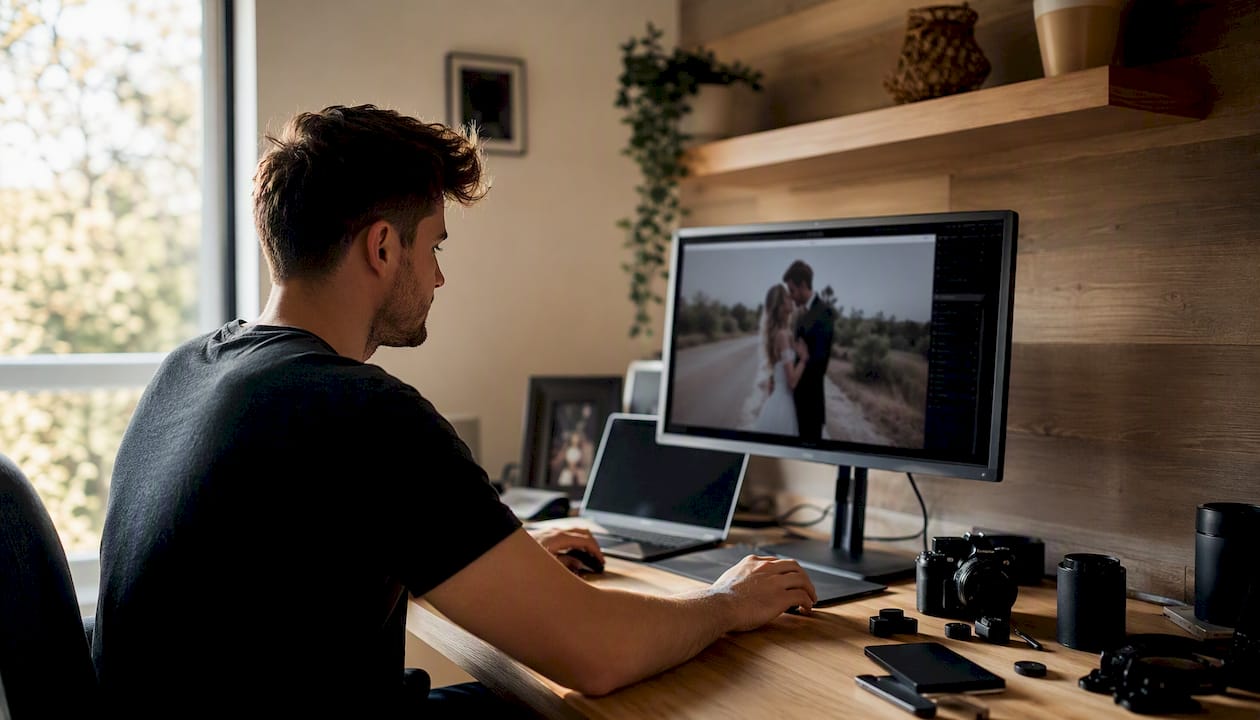
Editing a full wedding commonly runs into many tens of hours of hands-on work, not because photographers are slow, but because each of those six stages has its own demands. A wedding with two cameras and a second shooter simply produces more files to sort, more angles to reconcile, and more decisions to make about which frame tells the story best.
Most studios run editing on a first-in, first-out basis, working through weddings in the order they happened. Some carve out dedicated editing blocks in the calendar, deliberately protecting time so gallery quality doesn't slip when bookings pile up.
How long does the full wedding photo turnaround take?
Here's what the numbers actually look like when you compare sources across the industry. Timelines cluster fairly tightly, which is reassuring if you're trying to judge whether your own photographer's quote is reasonable.
| Delivery stage | Typical timeframe | Peak season adjustment |
|---|---|---|
| Sneak peek | 48 hours to 1 week | Usually unaffected |
| Highlights reel | 1 to 3 weeks | Add 1 to 2 weeks |
| Full gallery | 4 to 8 weeks (6 weeks average) | 8 to 12 weeks |
| Album or prints | 4 to 10 weeks after gallery approval | Add 2 to 4 weeks |
Rush or expedited delivery is often available if you need your gallery sooner, perhaps for a magazine feature or an urgent family need. Expect an additional fee for this, since it usually means your photographer bumping your wedding ahead of others already in the queue. That's not favouritism, it's simply reordering a first-in, first-out system, and most studios are upfront about the cost of doing so.
A full gallery in the 6 to 10 week range is common across many professional accounts, and where you land within that band depends heavily on the factors covered next.
What factors actually change your wedding photo turnaround time?
Not every wedding takes the same time to edit, and the gap between a fast turnaround and a slow one usually comes down to a handful of predictable variables.
- Season and booking volume: A photographer shooting four weddings in June needs longer per gallery than one shooting a single wedding in February
- Number of images captured: More coverage hours and multiple photographers mean a larger raw file count to cull and edit
- Retouching depth: Heavy skin retouching, background removal, or creative colour grading on every image takes far longer than light, consistent presets
- Second shooter involvement: Combining two photographers' files into one coherent gallery adds a synchronisation step that solo shoots don't need
- In-house versus outsourced editing: Photographers who edit their own work maintain consistency but often take longer than those who send files to an external editing service
If a photographer promises a full gallery in two weeks flat, ask how. Very fast turnarounds are often achieved through heavy presets, limited retouching, or outsourced editing rather than the bespoke, hands-on process most couples actually want. That's not necessarily a red flag, but it's worth knowing which trade-off you're accepting.
Peak-season queuing is the single biggest driver of delay, and it's rarely anything to do with your photographer's work ethic. A studio handling six summer weddings in a month has to spread editing hours across all six, which pushes every individual delivery date later than it would be in a quieter month.
What should your contract say about photo delivery?
Your contract, not a general guideline like this one, is the final word on when you should expect your photos. If there's ever a mismatch between what you've read online and what your photographer promised in writing, the written agreement wins every time.
A properly drafted contract should include:
- A specific maximum delivery date, not a vague estimate like "a few weeks"
- The number of final edited images you'll receive, so you know roughly what to expect
- The scope of retouching included as standard, and what counts as an extra charge
- A sneak-peek window, typically 48 to 72 hours, so you know when to expect a taster
- Rush delivery terms, including any additional fee if you need your gallery earlier
If no specific date is written into your agreement, eight weeks is a reasonable baseline to expect, with 8 to 12 weeks considered standard during peak-season delays. Anything significantly beyond that without communication is worth raising.
When you're checking availability or booking, it's worth asking directly rather than assuming. A short, clear question at enquiry stage saves confusion later:
- "Could you confirm the maximum delivery date in writing?"
- "How many final images are typically included in a gallery like mine?"
- "What's your sneak-peek turnaround, and is there a rush option if I need images sooner?"
Most photographers, including those with a genuinely strong booking calendar, will answer this openly. Reviewing a wedding photographer's service page before your enquiry call also gives you a sense of how transparent a studio is about its own process.
How do wedding photographers deliver the final photos?
Delivery formats vary slightly by studio, but most couples receive their gallery through one or more of the following:
- Online gallery: A private, password-protected web page where you can view, favourite, and download images directly
- Download link or ZIP file: A bulk download containing all high-resolution files, often provided alongside the online gallery
- Physical prints or album proofs: Available as an add-on, typically arriving separately and later than the digital files
When your gallery arrives, run through a quick checklist before you relax:
- Does the number of images match what your contract promised?
- Are the files full resolution, suitable for large prints, not just web-sized previews?
- Has visible retouching been applied to key portraits and group shots?
- Are file names, dates, and metadata correct, particularly if you're archiving them for insurance purposes?
- If you've ordered an album, has the proof stage been scheduled or discussed?
Pro Tip: The moment your gallery lands, download the full-resolution files and back them up in at least two places, ideally a cloud service and an external drive. Online galleries don't stay live forever, and losing access after the fact is a heartbreak entirely avoidable with ten minutes of effort.
When should you follow up if your photos are late?
A bit of patience goes a long way here, but there's also no reason to sit anxiously wondering if you've been forgotten. A structured, polite approach works far better than an emotional one.
- At the halfway point of the quoted window, send a friendly check-in. Something like: "Hope editing's going well! Just wanted to check we're still on track for the timeframe we discussed."
- If the maximum contract date passes with no gallery and no update, reference the agreement directly and calmly: "Our contract states delivery by [date]. Could you let me know where things stand?"
- If two weeks pass beyond that with no response, set a final, clear deadline in writing and mention next steps if it isn't met, whether that's a small compensation discussion or, in rare cases, further action.
Keep the tone warm rather than accusatory throughout, at least until stage three. Most delays are workload-related, not neglect, and a friendly nudge is usually all it takes. Avoid ultimatums early, avoid multiple messages across different platforms in the same week, and avoid involving social media before you've exhausted direct communication. It rarely helps and can sour what should be a happy outcome.
Why does good wedding photo editing take real time?
Editing a wedding properly isn't a mechanical process you can simply speed up by working faster. It's closer to writing a short story out of several thousand individual sentences, deciding which ones belong, which ones need reworking, and how they flow together.
A ten-hour wedding day can produce several thousand raw files. Turning that into a polished, consistent gallery means culling ruthlessly, correcting exposure and colour across every single frame, and then giving the hero images the kind of retouching attention that makes a photograph feel finished rather than just captured.
Colour consistency alone is a bigger job than most couples realise. A gallery shot across a bright outdoor ceremony, a dim reception hall, and golden-hour portraits needs careful colour grading so it all feels like one cohesive story rather than three different photoshoots stitched together. Rushing this stage is exactly how you end up with the preset-heavy, slightly flat look that heavy outsourcing tends to produce.
Studio workload realities matter too. A photographer with several weddings queued in the same month is managing parallel editing projects, each requiring the same level of care. That's the honest trade-off behind every quoted delivery window: speed and bespoke quality sit at opposite ends of the same scale, and the best studios are transparent about where they land on it.
A note from Alex on delivery and communication
Waiting for your wedding photos shouldn't feel like waiting in the dark. I've built my process around giving couples a sneak peek fast, usually within a few days, precisely because I know the anxiety of not knowing is often worse than the wait itself.
Every couple I work with gets a clear delivery window agreed before the wedding even happens, not a vague promise handed over on the day. If your timeline changes for any reason, you'll hear about it from me directly, not have to chase it. And if you're not sure what to ask during a booking conversation, ask anyway. The questions in this guide about maximum delivery dates, image counts, and retouching scope are exactly the kind of thing I'd expect a couple to raise, and exactly the kind of thing I'm happy to put in writing.
Good editing takes real hours, and I'd rather take the time to get your gallery right than rush it out early and compromise the story your photos are meant to tell.
Book a wedding photographer who tells you exactly when your photos arrive
If reading through all of this has made you realise how much clearer your own contract could be, that's the whole point. Alex Gell builds a clear delivery timeline into every wedding booking before the day even happens, so you're never left guessing.
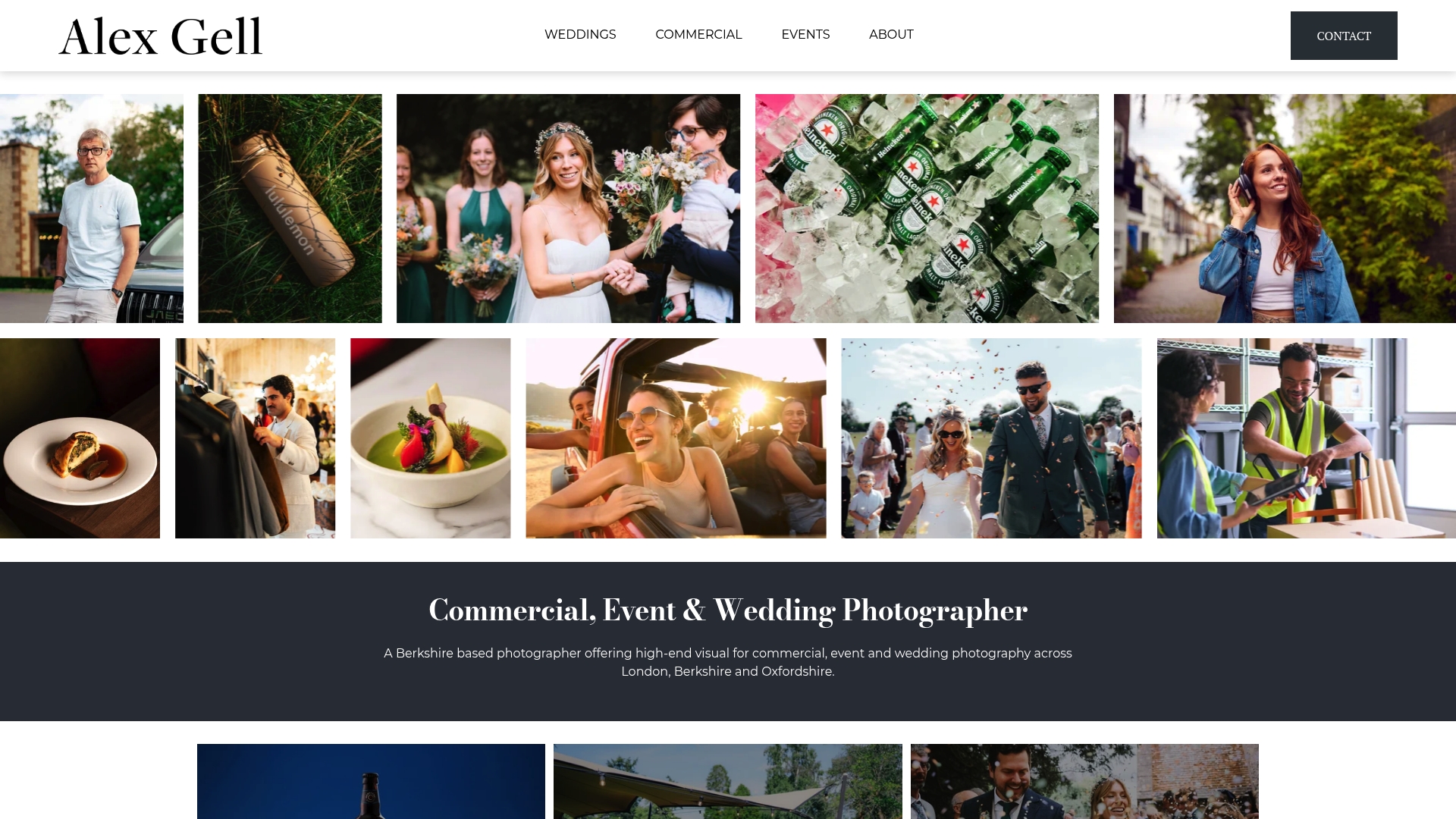
Every couple gets a sneak peek within days of the wedding, a written maximum delivery date for the full gallery, and straightforward communication if anything shifts along the way. Rush delivery is available where needed, and every contract spells out image counts and retouching scope upfront so there's nothing to interpret later. You can browse the full wedding photography portfolio to see finished galleries and typical delivery examples, or check the F&Q's page for common questions about process and pricing.
If you're planning a wedding across London, Berkshire, or Oxfordshire and want a photographer who puts your delivery timeline in writing from the first conversation, get in touch through the wedding enquiry page and start the conversation properly.
Sources
- Wedding Guide Anatole — wedding photo turnaround
- JustAnswer — wedding photographer late wedding pictures
- Stories by Victoria — How long do wedding photos take to edit?
- Hariel Xavier — What actually happens after your wedding day: the photo process nobody explains
