
Editorial Wedding Photography: A Guide for Couples
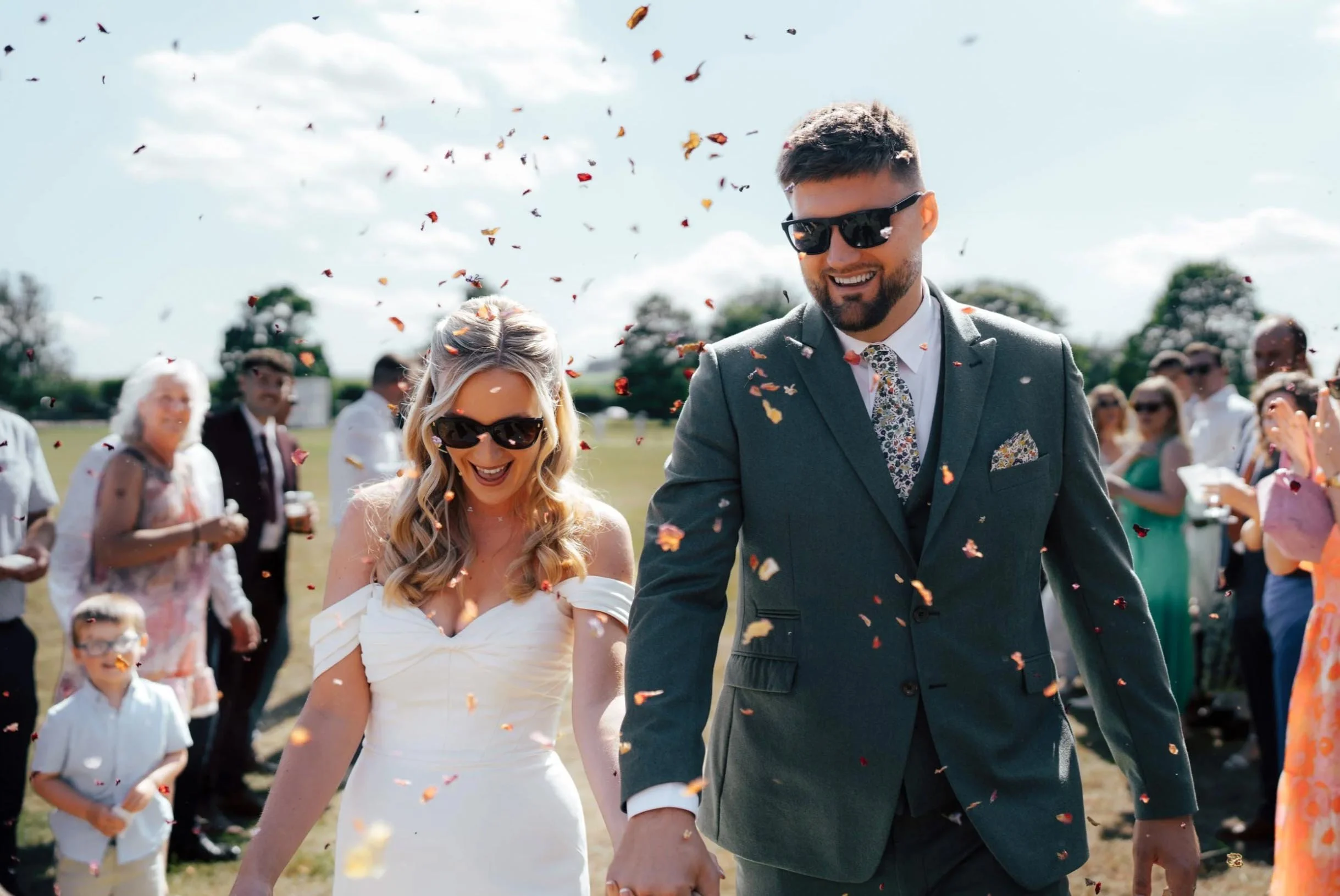
Editorial Wedding Photography: Alex Gell Photography
Editorial wedding photography is a fashion-inspired, magazine-led approach that prioritises composed, styled, and storytelling images over purely candid moments. Think of it as the difference between a wedding album and a Vogue spread. According to Vogue's guide to wedding photography styles, an editorial wedding photographer creates curated, magazine-spread-like images and may direct posing to achieve a consistent, visually driven narrative across a gallery.
This style suits couples who want a fashion-forward, highly polished gallery where every frame feels considered and beautiful. The main trade-off is time: editorial portrait sessions typically require more direction and dedicated shooting time than a purely documentary approach, which means a little more time away from your guests.
Key takeaways
Editorial wedding photography is a fashion-led, magazine-inspired style that rewards couples who invest time in portrait sessions and trust their photographer's direction to create a visually consistent, beautiful gallery.
| Point | Details |
|---|---|
| What editorial means | Fashion-inspired, directed portraiture with compositional discipline and consistent editing across the full gallery. |
| The main trade-off | Portrait sessions typically run 60 minutes and require direction, meaning more time away from guests than a documentary approach. |
| Portfolio review | Always request full wedding galleries, not just highlights, to assess consistency across varied lighting and a full day. |
| Hiring essentials | Confirm coverage hours, image licensing, deliverables, and cancellation terms in writing before signing any contract. |
| Alex Gell | Covers weddings across London, Berkshire, and Oxfordshire with a blend of editorial portraiture and warm documentary coverage. |
Table of Contents
- What does editorial wedding photography actually look like?
- How does editorial compare to fine art, documentary, and traditional styles?
- How does an editorial wedding photographer work from enquiry to album?
- How to review a photographer's portfolio beyond the highlights
- What does editorial wedding photography typically cost in the UK?
- How to choose and hire an editorial wedding photographer
- What to expect on the wedding day: timing and the 20/60/20 idea
- How to prepare as a couple for editorial-style portraits
- Where to find inspiration for editorial wedding photography
- Why editorial wedding photography rewards the right couple
- Alex Gell Photography: editorial wedding photography in London, Berkshire, and Oxfordshire
- Sources
What does editorial wedding photography actually look like?
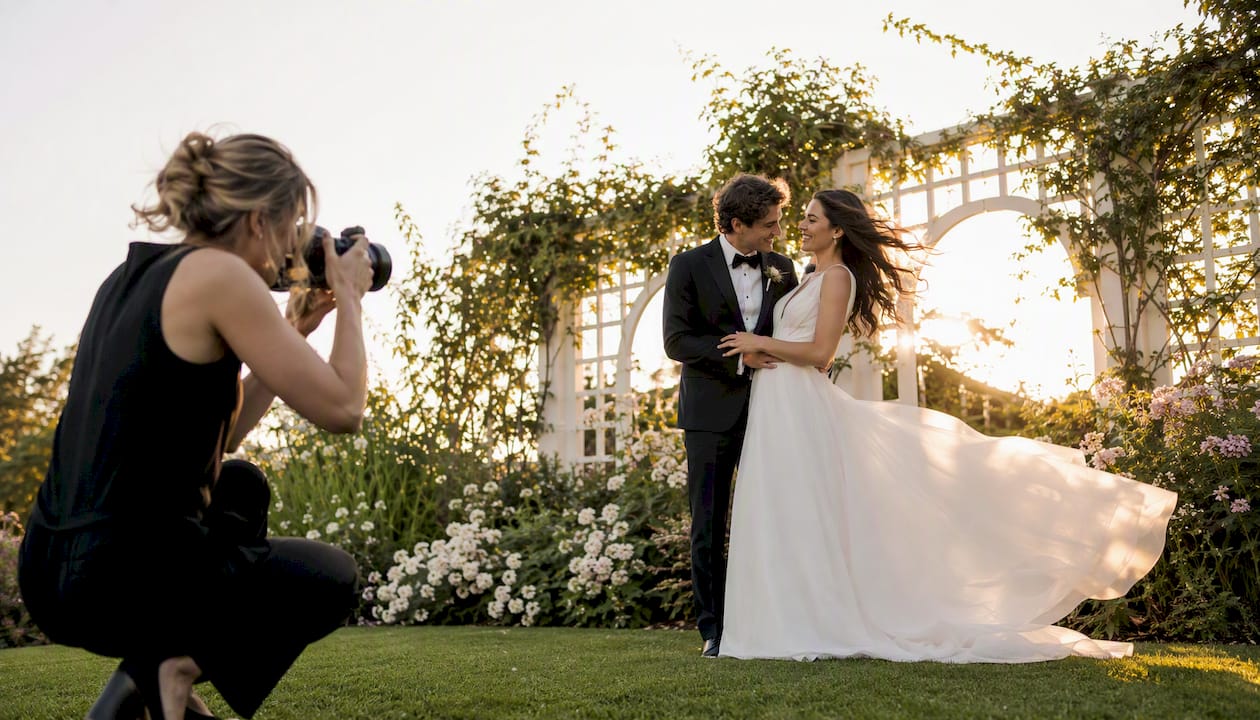
If you want your wedding album to resemble a fashion magazine, an editorial photographer shoots with a dramatic, fashion-led look — glamorous, edgy, or quietly refined depending on the couple's aesthetic. The visual hallmarks are distinct and consistent across a well-executed gallery.
The core visual traits of editorial wedding photography:
- Fashion-led portraiture: poses are directed and considered, borrowing from high-fashion and commercial portrait work rather than the "just look at each other and laugh" school of wedding photography
- Compositional discipline: attention to lines, symmetry, balance, and negative space gives images a magazine-worthy quality that purely candid shots rarely achieve
- Intentional use of light: window light, golden-hour backlight, and off-camera flash are used deliberately to sculpt and flatter, not just to expose correctly
- Consistent aesthetic: colour grading, contrast, and tone are applied uniformly so the gallery reads as a cohesive body of work rather than a collection of individual snapshots
- Considered styling: dress movement, veil placement, bouquet position, and background choice are all part of the frame
Common image types include dramatic bridal portraits, styled flat-lay detail shots, sweeping couple poses in architectural or landscape settings, and magazine-style spreads of the ceremony and reception.
Pro Tip: The single fastest way to achieve that magazine look is to shoot during golden hour with a clean, uncluttered background. Even a modest venue can produce stunning editorial portraits when the light is right and the background is simple.
How does editorial compare to fine art, documentary, and traditional styles?
These four styles are often used interchangeably online, but they describe genuinely different approaches. Understanding the differences helps you decide which elements matter most to you.
| Style | Level of direction | Time required | Emotional candidness | Editing style |
|---|---|---|---|---|
| Editorial | High — photographer directs poses and scenes | Longer portrait sessions (60 minutes) | Lower during posed sessions | Consistent, fashion-influenced grade |
| Fine art | Moderate — guided but softer direction | Medium portrait sessions | Moderate | Film-inspired, muted or airy tones |
| Documentary | Minimal — photographer observes | Short or no formal portrait time | High throughout | Natural, lightly processed |
| Traditional | High — formal group shots and set poses | Structured, often formulaic | Lower | Bright, clean, classic |
Editorial and fine art are the styles most often confused. Fine art tends toward softer, film-inspired tones and a gentler posing approach; editorial is bolder, more fashion-driven, and more deliberately composed. Documentary sits at the opposite end of the spectrum, prioritising authentic moments over visual perfection.
In practice, many photographers blend the two philosophies: composed portraits for the couple sessions, observational coverage for the ceremony and reception. A hybrid approach often produces the most satisfying galleries because you get the beautiful portraits and the real, honest moments.
How does an editorial wedding photographer work from enquiry to album?
The process is more involved than booking a documentary photographer, and that is a good thing. More planning means better images.
- Initial enquiry and consultation. You discuss your vision, share inspiration images or moodboards, and the photographer walks you through their approach, typical day structure, and what they need from you to achieve the look you want.
- Pre-wedding planning. A good editorial photographer will ask for input on your timeline, suggest portrait locations at your venue, and may request a shot list or style reference. This is where the visual direction is agreed.
- Timeline input. Editorial portrait sessions typically allocate a longer period for couple portraits for couple portraits, which needs to be built into the day's schedule. Your photographer should advise your planner or venue coordinator on this.
- Day-of portrait sessions. The photographer will direct you through a series of poses and locations, adjusting light, position, and styling details as they go. Ceremony and reception coverage is usually more observational, preserving genuine moments.
- Post-production and delivery. Editing is applied consistently across the gallery to maintain the agreed aesthetic. Editorial photography emphasises refined posing, clean compositions, and intentional light — the editing reinforces rather than creates that look. Typical turnaround for a full gallery is six to twelve weeks, with album design following after your image selection.
How to review a photographer's portfolio beyond the highlights
Highlight reels are curated to impress. A photographer's best twenty images from five different weddings can look extraordinary even if the full galleries are inconsistent. The only way to judge whether you are looking at a genuine, repeatable aesthetic is to browse full wedding galleries.
When reviewing a full gallery, check for:
- Consistency across lighting conditions: does the editorial quality hold up indoors, in harsh midday sun, and during the evening reception?
- Ceremony coverage: are the real moments captured with the same care as the posed portraits?
- Storytelling across the day: does the gallery feel like a complete narrative, or does it peak during the portrait session and fall flat everywhere else?
- Editing uniformity: are colour grade and contrast consistent from image to image, or do some frames look like they belong to a different photographer?
- Variety within the aesthetic: a strong editorial gallery shows range — wide establishing shots, intimate close-ups, detail images — not just one repeated pose in different locations
Ask specifically: "Can I see two or three full wedding galleries from start to finish?" If a photographer hesitates or offers only curated selections, that is worth noting.
Pro Tip: Look at the wedding photography portfolio and then ask to see a complete gallery from a similar venue type to yours. A country house wedding and an urban warehouse wedding will test a photographer's range in very different ways.
What does editorial wedding photography typically cost in the UK?
Pricing varies considerably based on experience, location, and what is included, so treat any range as a starting point rather than a fixed market rate. The figures below reflect typical package shapes in the UK market.
The main cost drivers are photographer experience and demand, travel and accommodation for destination or out-of-county weddings, second shooter fees, album production (fine-art albums from specialist printers add significantly to cost), and commercial or print licensing if you plan to use images for publication.
A note on editorial image value: magazine commissioning rates for editorial photography are cited around $300 per image and $800–$1,000 for a cover, with hourly averages around $75–$100. These figures relate to magazine work rather than wedding packages, but they illustrate why photographers with genuine editorial credits command higher day rates.
How to choose and hire an editorial wedding photographer
Building your shortlist
Start by matching portfolio aesthetics, not just style labels. Many photographers describe themselves as editorial; the portfolio tells you whether they mean it. Request full galleries (see the section above), check for published press credits, and ask for references from recent couples.
Interview questions worth asking:
- "How do you balance directed portrait sessions with documentary coverage during the day?"
- "What does your typical couple portrait session look like, and how long do you need?"
- "Can you walk me through your post-production process and how you maintain consistency across a gallery?"
- "Have any of your wedding images been published, and can you share those credits?"
Contract essentials
Practical hiring advice from UK wedding planning experts emphasises checking contracts carefully before signing. Your contract should specify:
- Coverage hours with start and end times clearly stated
- Deliverables: number of edited images, format, and delivery method
- Image licensing: what you are permitted to do with the images (print, share online, publish)
- Cancellation and rescheduling terms: what happens if the date changes or the photographer is unable to attend
- Retouching scope: what is included in standard editing and what costs extra
- Delivery timeline: a written commitment on when you will receive your gallery and album
Red flags to watch for:
- Vague deliverables ("a selection of images" with no minimum number)
- Unwillingness to share full galleries from real weddings
- No written contract or a contract that omits licensing terms
- Pricing that seems unusually low for the claimed experience level
What to expect on the wedding day: timing and the 20/60/20 idea
The exact split shifts depending on your priorities, but it gives you a realistic sense of how the day divides.
Editorial portrait sessions work best when they are scheduled around natural light. Golden hour (the hour before sunset) is the most popular slot for a reason: the warm, directional light does a significant amount of the work. A post-ceremony slot before the wedding breakfast is another common option, especially for summer weddings where golden hour falls late in the evening.
Practical expectations for the day:
- Your photographer will direct you through poses and locations, so trust the process even if it feels unfamiliar at first
- Allow buffer time between the ceremony and the wedding breakfast for portraits; rushing this session produces rushed images
- Communicate any physical limitations or preferences to your photographer in advance
- A second shooter allows the lead photographer to focus on editorial portraits while documentary moments are covered simultaneously
How to prepare as a couple for editorial-style portraits
Preparation makes a genuine difference to how your editorial portraits turn out. The most striking fashion-inspired wedding photography comes from couples who feel comfortable in front of the camera, not just couples who look good.
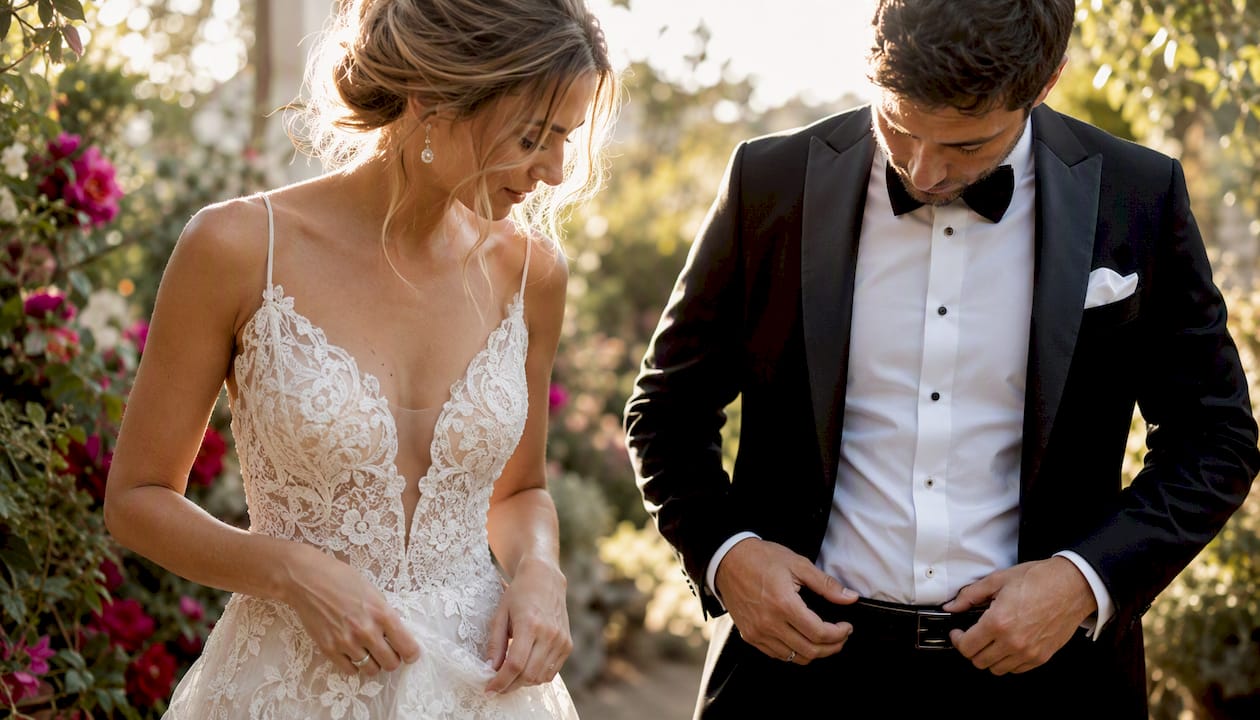
Clothing and styling choices matter more than most couples realise. Clean lines, fabrics that move well (chiffon, silk, crepe), and colours that complement your venue and each other photograph beautifully. Avoid busy patterns or logos that date quickly. For the groom or second partner, a well-fitted suit in a classic colour holds up far better than a trend-led choice.
Talk to your photographer before the day about any poses or directions you feel uncertain about. A brief engagement or pre-wedding shoot is one of the best investments you can make: it builds familiarity with the camera, with your photographer's direction style, and with how you move together as a couple. Many couples find that the posing direction and styling tips that feel awkward in theory become natural very quickly once you are in front of the lens.
On the day itself, trust the direction you are given. Editorial photographers are creating conditions for beautiful images — choosing the right angle, the right light, the right moment to release the shutter. Your job is simply to be present and let the process happen around you.
Where to find inspiration for editorial wedding photography
The most useful reference points for editorial wedding photography tend to come from fashion and lifestyle publications rather than traditional wedding blogs. Vogue, Harper's Bazaar, and Brides magazine all regularly feature fashion-led wedding editorial that shows the aesthetic at its most refined. Pinterest boards curated around terms like "fashion wedding photography" or "editorial wedding portraits" surface a wide range of styles quickly.
For real-wedding examples that show the style applied to actual weddings rather than styled shoots, look at photographers' full blog galleries. The Asylum Chapel and The Sail Loft wedding gallery is a strong example of editorial sensibility applied to a real London wedding: composed portraiture, consistent light, and genuine emotion running through the whole day.
Styled shoots, which appear frequently on wedding blogs, are useful for seeing a photographer's technical ability but should not be mistaken for evidence of how they handle a real wedding day. A real wedding gallery is always the more useful reference.
Why editorial wedding photography rewards the right couple
Most articles about editorial wedding photography focus on what it looks like. What they understate is what it requires from you as a couple.
The couples who get the most from this style are not necessarily the most photogenic. They are the ones who are willing to give the portrait session genuine time and attention, who trust their photographer's direction even when a pose feels unfamiliar, and who have thought carefully about the visual story they want their gallery to tell. The fashion-inspired quality of editorial wedding photography does not come from the camera or the editing alone. It comes from the collaboration between photographer and couple.
There is also a tendency to treat editorial and documentary as opposites, as though choosing one means sacrificing the other. In practice, the most satisfying wedding galleries blend both: composed, beautiful portraits for the moments that deserve that treatment, and honest, unguarded coverage for the ceremony, the speeches, and the late-night dancing. The skill is in knowing which approach serves which moment.
Alex Gell Photography: editorial wedding photography in London, Berkshire, and Oxfordshire
Alex Gell brings a genuine editorial sensibility to wedding photography across London, Berkshire, and Oxfordshire, with a background in commercial and fashion-adjacent work that shows in every portrait session. The approach is direct and honest: composed, fashion-led portraits for the couple sessions, warm and observational coverage for everything in between.
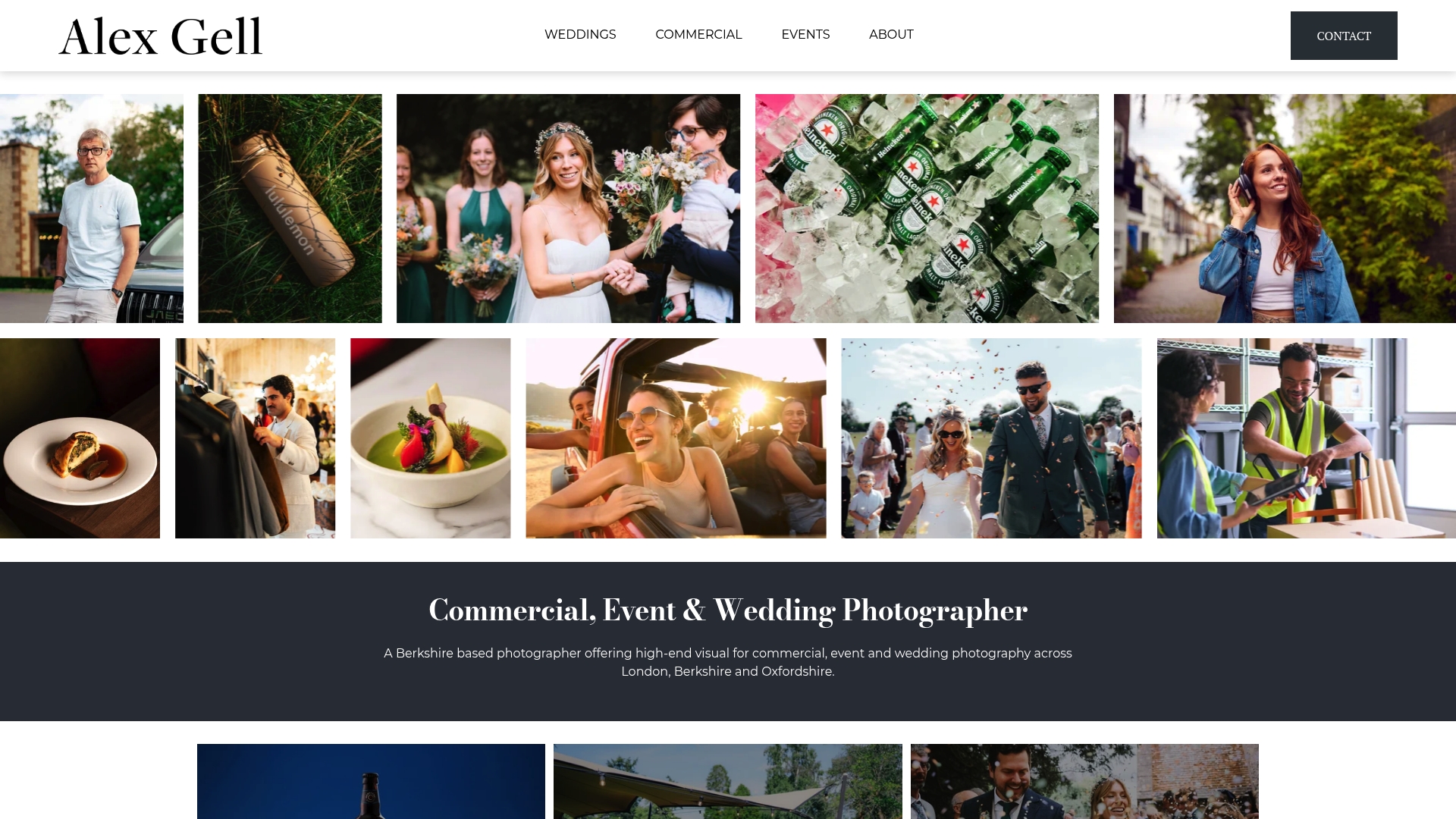
The wedding photography portfolio includes full galleries from real weddings, published press credits, and clear package outlines so you know exactly what you are booking. Pricing is transparent, contracts cover licensing and deliverables clearly, and the process from first enquiry to final album is designed to be straightforward and personal.
If you are planning a wedding in London, Berkshire, or Oxfordshire and want a gallery that genuinely looks like it belongs in a magazine, send a wedding enquiry and let's talk about what you have in mind.
Sources
- Wedding photography styles
- Top tips to find your perfect wedding photographer
- How to Choose Between Documentary and Editorial Wedding Photography
- Questions To Ask Before Hiring A Wedding Photographer In UK - City Magazine
