
Engagement Photo Outfits: the formula that photographs well
The formula is simple: a coordinated palette, one flowing or textured focal piece, and a neutral, well-fitting layer to hold it all together. That combination photographs beautifully in almost any light, whether you're stood in a Berkshire field or on a London bridge at golden hour.
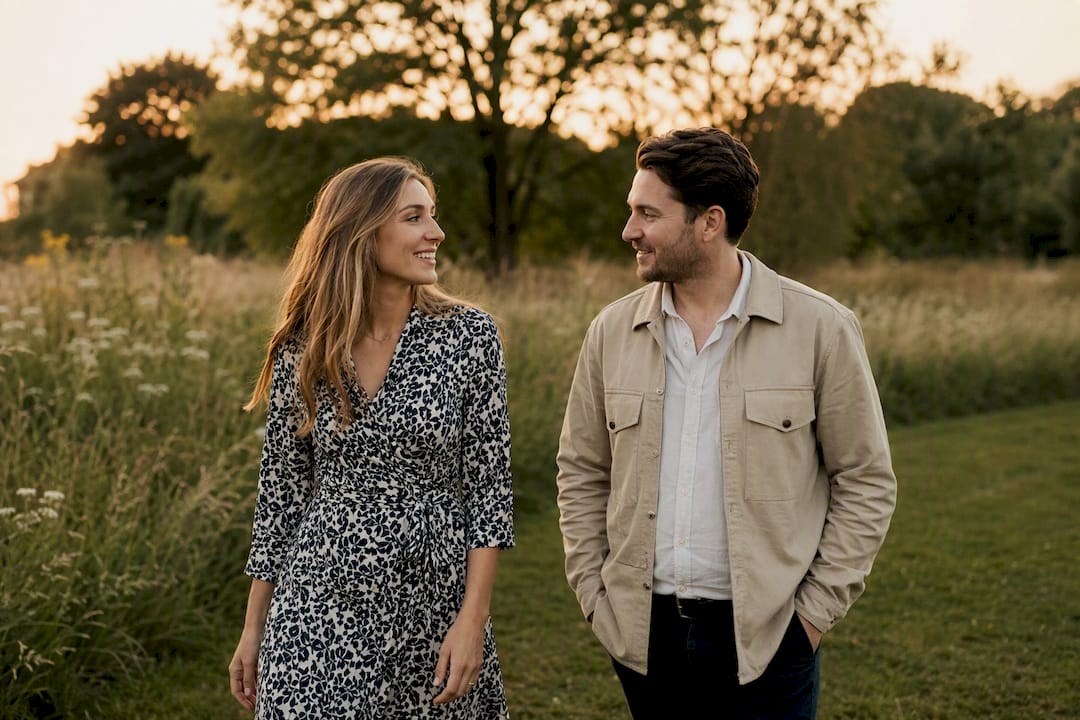
Bring two looks rather than one. A dressier option and a casual option give your photographer variety without turning the session into a costume change marathon. Swap a scarf, a jacket, or jewellery between the two and you've created a second gallery's worth of images from one wardrobe.
The colour swap that matters most: skip pure white and pure black.
- Choose ivory or cream instead of white
- Choose charcoal or navy instead of black
- Add one muted earth tone (rust, olive, or terracotta) to warm the palette
Key Takeaways
The most effective engagement photo outfits combine a coordinated two to three colour palette, one textured focal piece, and forgiving tones like ivory, charcoal, or navy instead of pure white or black.
| Point | Details |
|---|---|
| Coordinate, don't match | Share a two to three colour palette and formality level rather than identical outfits. |
| Avoid pure white and black | Choose ivory, cream, charcoal, or navy for more forgiving exposure and detail. |
| Plan two looks | Bring one dressy and one casual outfit, plus a small accessory swap. |
| Test before the shoot | Photograph both outfits in daylight seven to fourteen days ahead to catch sheerness or odd colours. |
| Match hair and makeup formality | Keep styling energy consistent with how formal or casual each outfit is. |
Table of Contents
- What to wear for engagement photos: the dos and don'ts photographers actually enforce
- Seasonal outfit ideas for every time of year
- Choosing engagement shoot clothing for your location
- How to coordinate two outfits without looking matchy
- What to wear branding photos aside, here's the men's guide
- Footwear and accessory choices that affect your poses
- Your pre-shoot photo test and packing checklist
- How to prepare engagement shoot clothing in advance
- Bringing personal style and meaningful accessories into your photos
- Coordinating hair and makeup with your outfit choices
- Ready to book your own engagement session?
- What the outfit advice gets right, and what it misses
- Frequently asked questions about engagement photo outfits
- Sources
What to wear for engagement photos: the dos and don'ts photographers actually enforce
Every photographer has a mental checklist they run through the moment a couple arrives for a shoot. Here's what actually gets flagged.
- Coordinate, don't match. Pick a shared two to three colour palette and a shared level of formality, rather than identical outfits. Bliss & Bone's styling guide makes this point well: you want to look like you belong in the same frame, not like you raided the same wardrobe.
- Skip busy prints and visible logos. Small, dense patterns can cause moiré, that distracting shimmer effect on camera, and Brides notes texture reads far more reliably than print. Linen, silk, and knit all photograph with depth that flat prints can't match.
- Avoid stark white and true black. White tends to blow out in bright daylight; black loses all its detail in shadow. Ivory, cream, charcoal, and navy hold texture and tone in almost any light.
- Test comfort before the shoot. Walk in the shoes. Sit down in the trousers. If you're fidgeting with a waistband an hour in, it will show in your face.
- Bring layers, not a full wardrobe change. One outfit swap plus a jacket or cardigan gives you range without adding stress to the timeline.
Pro Tip: Sit down in your outfit at home for ten minutes before the shoot. If you're adjusting or tugging at anything, your photographer will end up capturing that fidget instead of your smile.
Seasonal outfit ideas for every time of year
Light changes with the seasons, and your wardrobe should change with it.
Spring calls for light fabrics and a touch of colour. Pastels, soft florals, and airy cotton work with the season's gentler light. Bring a light cardigan or blazer for cooler mornings.
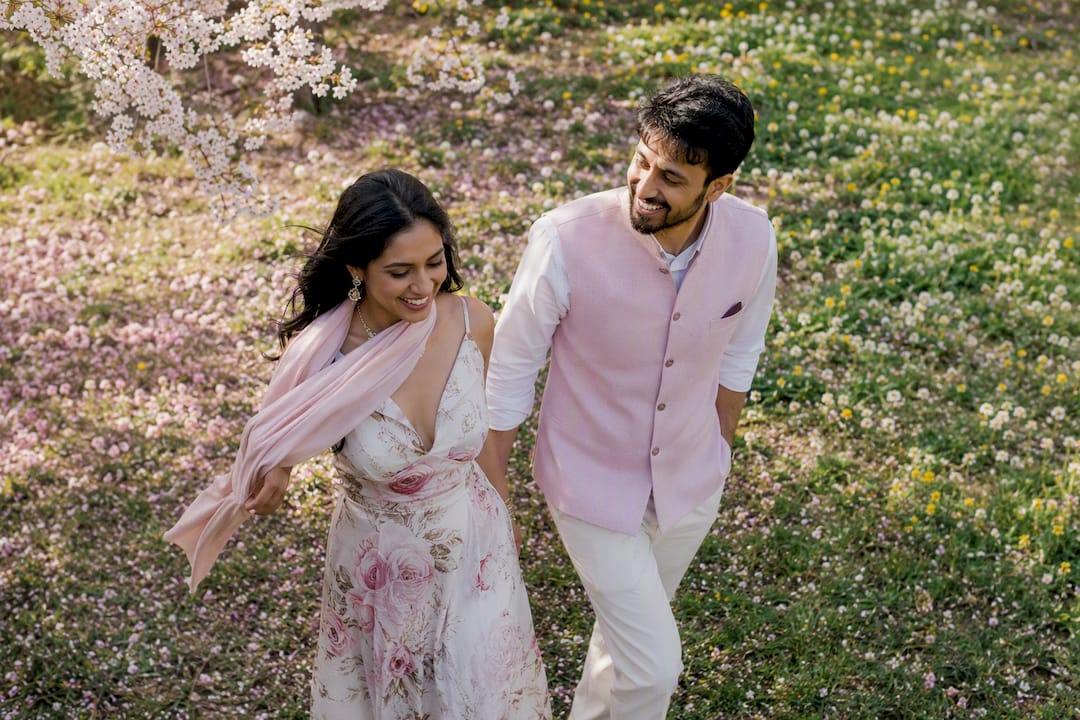
Summer rewards breathable fabric over anything structured. Linen, cotton, and chiffon move well and stay cool. Schedule your session around golden hour rather than midday, when harsh overhead sun flattens colour and casts unflattering shadows.
Autumn is arguably the most forgiving season for engagement photography. Bliss & Bone's seasonal guidance points to rust, olive, and mustard with textured knits as a reliable combination, layered sensibly so you're warm without losing the golden hour glow.
Winter suits jewel tones and structured outerwear: deep emerald, burgundy, or navy against a wool coat. Avoid stark white here especially. Snow and pale skies are reflective enough without your outfit adding to the glare.
- Spring: pastels, light cotton, a spare cardigan
- Summer: linen and chiffon, golden hour timing
- Autumn: rust, olive, mustard, textured knitwear
- Winter: jewel tones, structured coats, avoid white near reflective backdrops
Choosing engagement shoot clothing for your location
Your setting should shape your wardrobe as much as the season does.
On a beach, flowing fabrics move naturally with the wind and the water. Skip heels entirely (they sink and snap) and anchor loose hair with a light product so it doesn't dominate every frame.
In an urban setting, structured silhouettes and richer, more saturated colours hold their own against concrete, glass, and hard architectural lines. Watch for reflective surfaces such as shop windows, which can throw unexpected colour back onto your outfit.
In a field or woodland, earth tones and boots make practical sense, and fabrics with a bit of movement (a midi skirt, a loose shirt) catch the wind in a way that photographs beautifully. Bliss & Bone recommends exactly this kind of adjustment: flowing fabric for open, natural settings and tailoring for architectural ones.
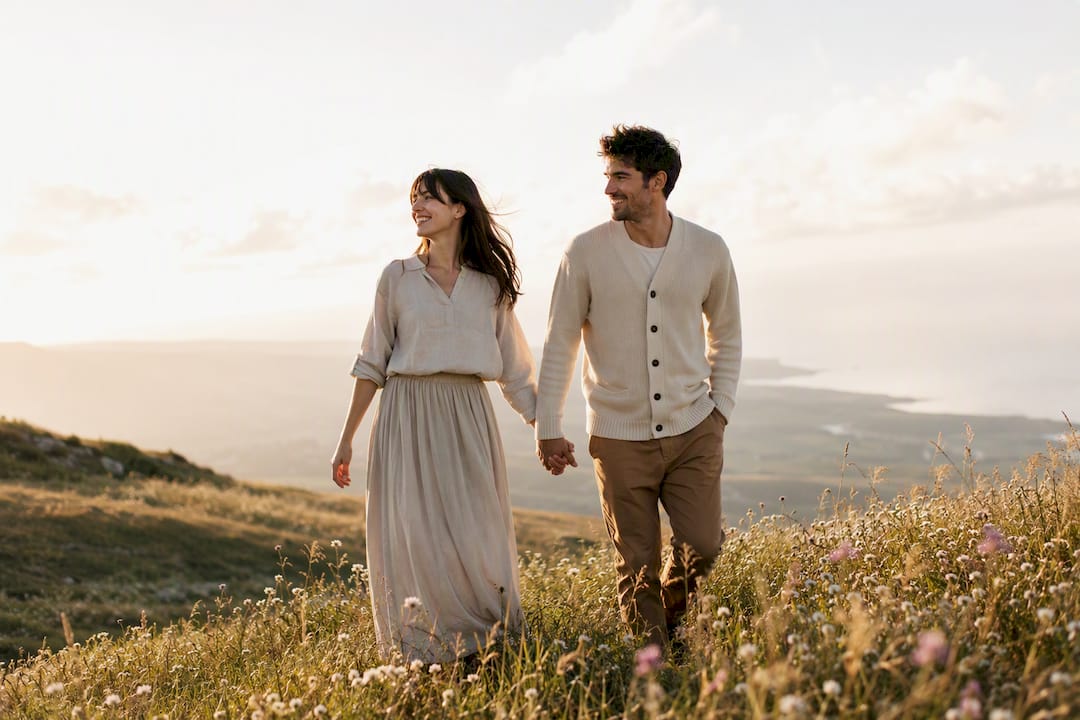
At home, lean into elevated loungewear and personal touches, a favourite mug, a well-loved book, rather than anything too formal. Intimacy is the whole point.
How to coordinate two outfits without looking matchy
Matching engagement photo outfits (same colour, same fabric) almost always reads as costume rather than couple. Coordinating reads as intentional.
- Choose one focal piece. Let one person's outfit lead, usually a dress, patterned shirt, or standout colour, and pull two supporting tones from it for the other person.
- Match formality before colour. A tailored dress paired with trainers and a t-shirt looks mismatched regardless of how well the colours work. Bliss & Bone stresses formality alignment as the first check, colour second.
- Keep patterns to one person. If one of you wears a print, the other should stay solid. Two patterns in one frame competes for attention.
- Echo with accessories. A scarf, tie, or belt in a shared tone ties the look together without forcing identical outfits.
What to wear branding photos aside, here's the men's guide
Men's engagement outfits live or die on fit, not on what's actually being worn. A t-shirt that fits properly beats an expensive shirt that doesn't.
- Prioritise fit above everything: a simple base layer under a well-fitting jacket or knit outperforms anything baggy or boxy.
- Reliable combinations: chinos with a fine knit, dark denim with a blazer, or a tailored coat with a scarf for winter sessions.
- Break in new shoes before the shoot. Stiff, unworn leather changes how you walk, and that shows.
- Small accents, a tie, a pocket square, a scarf, can echo your partner's palette without competing with it.
Footwear and accessory choices that affect your poses
Footwear shapes how you move, and how you move shapes every photograph.
- Skip stilettos on grass or sand; they sink, tilt your posture, and photograph awkwardly. Pack a neutral flat spare.
- Keep jewellery minimal and meaningful. Noisy costume pieces catch light unpredictably and distract from your faces.
- Use accessories, scarves, hats, belts, to add texture and quietly tie your two outfits' palettes together.
- Pack a small kit: blister plasters, safety pins, and makeup wipes cover most last-minute mishaps.
Your pre-shoot photo test and packing checklist
A quick test at home saves you from discovering a problem on the day itself.
- Take full-length daylight photos of both outfits seven to fourteen days before the shoot.
- Check for sheerness, unexpected colour shifts, and any visible logos.
- Walk and sit in the outfit to confirm nothing pulls, rides up, or restricts movement.
- Pack outfit one, outfit two (or a layering piece), a spare pair of shoes, and a small touch-up kit.
- Confirm outfit-change timing and logistics with your photographer beforehand, so the transition doesn't eat into your session.
Pro Tip: Dylan van Druten's couples session guide lists exactly this: a daylight test, a spare outfit, comfortable shoes, and a confirmed change plan. It's a short list, but it catches almost every common regret.
A photographer's perspective on what actually works
I shoot engagement sessions across Berkshire, London, and Oxfordshire, from city streets to open countryside, and the outfits that photograph best are rarely the most elaborate. They're the ones the couple forgot they were wearing within the first five minutes.
Couples who bring one dressy option and one relaxed layer, tested beforehand in daylight, consistently give me the widest range of usable images. Browse the commercial and lifestyle portfolio for examples of how fabric and movement translate once the camera's rolling.
How to prepare engagement shoot clothing in advance
Preparation is where most outfit regret gets prevented, and it takes less effort than people expect.
Start with laundering everything at least three days before the shoot, not the night before. Fresh creases from a rushed iron often look worse on camera than a slightly soft, well-worn garment. Steam rather than iron wherever you can; steaming relaxes fabric without pressing in the harsh, flat lines an iron can leave, particularly on linen and silk, which are common choices for engagement sessions.
Try the full outfit on at least a week ahead, not the day before. This gives you time to fix a hem, swap a button, or replace a top entirely if something doesn't sit right. It's also your chance to check for any static, pilling, or stray threads that only become obvious once you're actually standing in good light.
Take the daylight photo test seriously. Photograph yourselves in the outfits near a window or outdoors, in the kind of light you'll actually be shot in. This is the point where sheerness, odd colour casts, and shine become visible in a way they never do in a changing room mirror.
Lay both outfits out the night before, including shoes, accessories, and any layering pieces, so the morning of the shoot involves zero last-minute decisions. Couples who do this consistently arrive calmer, and that calm shows up in the first ten minutes of photographs.
Bringing personal style and meaningful accessories into your photos
The outfits that age well in photographs are usually the ones that say something about the couple wearing them, not the ones chasing a trend.
If you both love the outdoors, that can show up as a well-worn field jacket rather than a stiff new coat. If your relationship has a running joke, a small pin or piece of jewellery that references it adds warmth without needing an explanation in the image itself. Heirloom jewellery, a grandmother's brooch, a father's watch, brings genuine sentiment into the frame, and often becomes the detail couples treasure most once the photos come back.
Balance is the key word. One meaningful piece per person is usually enough; three competing accessories start to look cluttered rather than considered. If you're torn between two sentimental items, pick the one with the better story, not necessarily the one that matches best.
Personal style also means resisting outfits that feel borrowed from Pinterest rather than your own wardrobe. If you never wear florals, an engagement shoot isn't the moment to start. Comfort in your own skin translates directly into how relaxed you look on camera, and that matters more than any single garment choice.
Coordinating hair and makeup with your outfit choices
Hair and makeup should support your outfit, not compete with it, and getting this balance right usually comes down to one simple rule: match the formality level across all three.
A structured, tailored outfit generally pairs well with slightly more polished hair and makeup, a soft wave, a defined lip. A relaxed, casual outfit calls for the same energy in your styling: looser hair, a more natural makeup finish. Mismatching these, high glam with jeans and trainers, tends to read as slightly off in photographs, even if neither element looks wrong on its own.
Consider your location too. Wind at the beach or in an open field will move your hair regardless of how it's styled, so a half up-do or a low bun tends to hold better than something left entirely loose. Humidity affects makeup longevity more than most couples plan for, so a light setting spray is worth packing alongside your touch-up kit.
If you're changing outfits partway through the session, plan a small hair or makeup adjustment to go with it, a change in parting, a fresh lip colour, rather than a full redo. It's a subtle way of making your second look feel distinct without adding time pressure to the shoot.
Ready to book your own engagement session?
Reading the advice is one thing; having someone who applies it instinctively on the day is another. Alex Gell photographs engagement and couple sessions across London, Berkshire, and Oxfordshire, blending documentary-style candid moments with the kind of editorial polish that makes an outfit choice actually pay off in the final gallery. If you're planning a session and want a photographer who already knows how light, location, and wardrobe interact, get in touch through the wedding photographer London page to check availability and discuss your location.
What the outfit advice gets right, and what it misses
Most engagement photo outfit advice online treats colour palette as the whole problem. It isn't. Colour matters, but fit and movement matter more, and they get a fraction of the attention.
I'd argue the single most overlooked factor is comfort under sustained posing. Couples spend far more time picking a colour scheme than checking whether they can sit on a wall, walk across grass, or hold a hand for twenty minutes without a waistband digging in. That discomfort reads on your face long before it shows in the outfit itself.
The conventional advice also underplays the daylight photo test. It's the single cheapest, fastest way to catch a problem, sheerness, colour shift, an unexpected logo, before it becomes permanent in your gallery. Prioritise that test and the fit check over chasing a trending colour palette. The outfit that photographs well is the one you forget you're wearing.
Frequently asked questions about engagement photo outfits
What colours should we avoid for engagement photos? Avoid pure white and pure black. White tends to blow out in bright light, and black loses detail in shadow. Ivory, cream, charcoal, and navy photograph more reliably in most conditions.
Should engagement photo outfits match or coordinate? Coordinate rather than match. Share a two to three colour palette and formality level instead of wearing identical outfits, which tends to look staged rather than natural.
How many outfits should we bring to an engagement shoot? Two is usually enough: one dressier option and one casual option. Add a small accessory swap, a scarf or jacket, to create variety without a long change.
What should we do to prepare our outfits before the shoot? Launder and steam garments a few days ahead, try them on a week before to catch fit issues, and take a full daylight photo test to check for sheerness or colour shifts.
What should men wear for engagement photos? Prioritise fit over the specific garment. Chinos with a knit, dark denim with a blazer, or a tailored coat with a scarf in winter all work well, provided the fit is right and shoes are already broken in.
Sources
- Engagement Photo Dresses & Outfits: What to Wear Guide — Bliss & Bone
- Taking engagement photos soon? These expert-approved fashion tips will help you avoid photo regret — Brides
- What to wear for couples session: a simple guide — Dylan van Druten
