
Film vs Digital Wedding Photography: How to Choose
For most couples, a hybrid approach wins: film for portraits and quiet, light-led moments, digital for everything fast, dark or unpredictable. Film gives you that warm, textured look with soft grain and gentle highlight roll-off. Digital gives you reliability when the light drops and the day speeds up. Neither medium alone covers a full wedding day as well as the two combined.
Before you commit to a style, weigh three things:
- Look versus risk. Film's mood comes with slower shooting and no instant review.
- Budget versus coverage. Film costs more per frame; digital gives you volume for the same fee.
- Photographer skill versus medium. A photographer who shoots film badly will disappoint you more than a skilled digital shooter ever would.
The rest of this guide walks through the aesthetic differences, the costs, the moments each medium suits best, and the exact questions to ask before you book.
Key Takeaways
Most couples get the best result from a hybrid approach, using film for portraits and quiet moments and digital for reception and low-light coverage, because photographer skill matters more than the medium itself.
| Point | Details |
|---|---|
| Hybrid suits most weddings | Film covers portraits and ceremony highlights; digital handles reception and fast-paced moments. |
| Film costs more and takes longer | Stock, lab processing and scanning add cost and push turnaround beyond digital-only packages. |
| Backup routines reduce risk | Ask specifically how a photographer safeguards negatives and digital files against loss. |
| Judge the photographer, not just the format | Experience with a medium affects consistency far more than which camera type is used. |
| Alex Gell shoots hybrid weddings | Alex Gell blends film portraits with digital coverage across Berkshire, Oxfordshire and London. |
Table of Contents
- Film vs digital wedding photography: the visual and technical differences
- Weighing the pros and trade-offs of each medium
- When should you choose film, digital or a hybrid approach?
- What film adds to your wedding photography budget and timeline
- Questions to ask your wedding photographer before booking
- How to spot genuine film work in a portfolio
- A photographer's view: running film and digital on the same wedding day
- Why hybrid galleries feel like one consistent story
- Reliability and risk: what can actually go wrong
- Sustainability: film's chemistry versus digital's energy footprint
- Real-world results: how each medium performs on the day
- Does the photographer matter more than the medium?
- What I'd tell any couple weighing film against digital
- Ready to plan your own film and digital wedding coverage?
- Sources
Film vs digital wedding photography: the visual and technical differences
Film and digital solve the same problem in different ways, and it shows in the final image. Film produces soft grain, organic colour rendering and a distinctive highlight roll-off that gently compresses bright areas instead of clipping them to white. Digital sensors, by contrast, tend to deliver sharper detail, higher resolution, and stronger performance in low light.
The technical workflow differs just as much as the look. Film locks you into a fixed ISO per roll, so a photographer has to plan lighting decisions before pressing the shutter. Digital allows instant review, adjustable sensitivity shot to shot, and burst modes for capturing split-second reactions. Format matters too: 35mm film is portable enough for candid, editorial-style coverage, while medium format (120) film suits formal portraits better, thanks to its richer tonal range and larger negative.
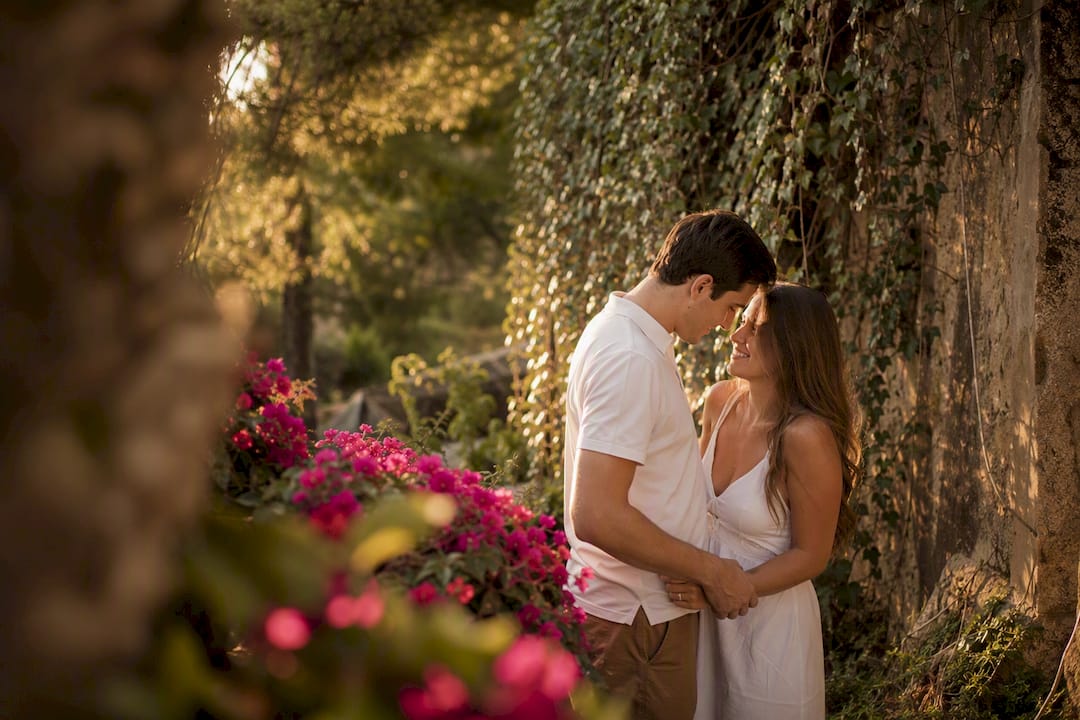
In practice, that means a golden hour couple portrait is where film tends to shine, and a candlelit reception speech is where digital typically saves the day.
Pro Tip: Ask your photographer to shoot a test roll during your engagement session in similar lighting to your ceremony. It tells you far more than any portfolio highlight reel.
Weighing the pros and trade-offs of each medium
Film's appeal is emotional as much as technical. It slows a shoot down, produces a warmer palette, and leaves you with physical negatives that can outlast any hard drive. The trade-offs are real, though: film costs more, it's slower to shoot and process, and it struggles in low light without flash or a wide-open aperture.
Digital solves the practical problems film creates. It performs far better after dark, shoots at volume without reloading, and backs up instantly across multiple cards. What you lose is some of film's organic texture. Much of the "film look" you see from all-digital photographers is created in post-production rather than captured in-camera.
- Film pros: mood, texture, archival negatives that don't degrade with a hard drive failure.
- Film cons: higher cost, slower pace, weaker low-light performance.
- Digital pros: speed, low-light reliability, immediate redundancy.
- Digital cons: less inherent grain and texture, some of the aesthetic depends on editing skill.
| Dimension | Film | Digital |
|---|---|---|
| Aesthetic / look | Warm tones, soft grain, gentle highlight roll-off | Sharper detail, higher contrast, editable in post |
| Reliability / low-light | Limited without flash or fast lenses | Strong performance in dim venues |
| Shot rate / coverage | Limited by rolls, deliberate pace | High volume, continuous burst shooting |
| Cost to client and workflow | Higher, due to stock and lab processing | Lower per-frame cost |
| Turnaround & deliverables | Slower, dependent on lab schedule | Faster, often days rather than weeks |
| Archiving / longevity | Physical negatives, stable long-term | Digital files, dependent on backup discipline |
| Flexibility in editing | Limited once exposed | Extensive adjustment range |
When should you choose film, digital or a hybrid approach?
Match the medium to the moment, not the whole day. Practitioner guidance consistently reserves film for editorial portraits and ceremony highlights, while digital covers everything fast-moving or low-light.
- Getting ready: digital, for flexibility in tight, changeable light.
- Couple portraits: film, especially in golden hour or open shade.
- Ceremony: hybrid, film for key vows, digital for wide safety coverage.
- Family groups: digital, for speed and guaranteed everyone-eyes-open shots.
- Reception speeches and dance floor: digital, for low light and unpredictable movement.
Venue matters here too. A dim marquee or an evening ceremony pushes more of the day toward digital, while a bright, naturally lit country house venue gives film far more room to work.
What film adds to your wedding photography budget and timeline
Film coverage costs more because every roll carries stock, processing and scanning fees on top of the photographer's time. A photographer also needs a trusted lab relationship, since scanning quality varies enormously between labs and directly affects the final colour and grain.
Turnaround is the other trade-off. Digital previews can often land within days; film scans typically take longer because they depend on a lab's schedule, not just the photographer's editing time. Hybrid galleries usually deliver in two batches: a fast digital set, then film scans once processing is complete.
Fees aren't just for film stock. Cost breakdowns from working photographers show that scanning, quality control and handling irreplaceable negatives all add to the time (and therefore the price) behind a film wedding package.
Before booking, confirm exactly what you'll receive:
- Film negatives, or just digital scans?
- High-resolution scans suitable for printing?
- A realistic delivery date for the full gallery?
- Any sneak-peek images before the final set?
Questions to ask your wedding photographer before booking
Get specific answers, not vague reassurances.
- How often do you shoot film on weddings, and which film stocks do you prefer?
- Which lab processes and scans your film, and how do you check quality?
- What's your realistic turnaround for scans versus digital previews?
- How do you back up digital files during and after the day?
- Are your negatives insured, and who stores them?
Watch for warning signs: a photographer who can't name a lab, who won't show unedited scans, or who has no clear backup routine for digital files. Check the F&Q's page of any photographer you're considering, and compare their answers against a real wedding gallery rather than a curated highlight reel.
How to spot genuine film work in a portfolio
Look past the hero shots. Consistent grain and highlight roll-off across an entire gallery, shown across varied lighting, is a far better sign than one or two beautifully lit frames.
- Ask to see straight, unedited scans, not just finished edits.
- Check for consistency across golden hour, open shade and indoor ceremony light.
- Look at full wedding galleries, not isolated portfolio highlights.
Pro Tip: Compare highlight behaviour rather than grain alone. Digitally faked "film looks" often nail the grain but clip highlights the way genuine film never does.
A photographer's view: running film and digital on the same wedding day
A typical hybrid day starts on digital during getting-ready, when light and movement change fast. Film comes out for couple portraits, when there's time to slow down and meter properly, then digital returns for the ceremony, speeches and dance floor.
Workflow discipline matters as much as the gear. Film rolls get labelled and bagged by moment as they're shot, sent to one trusted lab, and scanned before anything reaches the final edit. Digital cards get backed up to two locations before the memory card leaves the camera bag. Couples should expect portrait sessions to move slower when film is involved. That's the trade worth making for the tones it produces.
Why hybrid galleries feel like one consistent story
The biggest myth about hybrid coverage is that mixing film and digital produces a disjointed gallery. Done properly, it doesn't. Cohesion comes from consistent colour grading and a stable lab relationship, not from the medium itself. Vogue's coverage of wedding photography trends notes that many photographers now blend both formats specifically to build a layered gallery, matching film's warmth to digital's sharper edits through careful post-processing.
Most photographers who shoot hybrid have a defined system: film handles the deliberate, unhurried moments, while digital handles anything requiring speed or volume. The two feeds then get graded together so skin tones, shadows and colour temperature sit in the same family, even though the underlying capture technology is completely different.
This is where photographer experience matters more than gear choice. A photographer who has spent years building a relationship with one lab knows exactly how that lab's chemistry and scanning process will render colour, and edits digital files to match. Without that consistency, a gallery can genuinely feel split in two: warm, soft film images sitting awkwardly next to punchy, high-contrast digital ones.
For couples, the practical takeaway is simple: ask to see a full hybrid gallery from start to finish, not just a curated set of favourites. A cohesive hybrid wedding gallery should read as one story, with the shift between formats felt only as a subtle shift in mood, never as a jarring change in colour or quality.
Reliability and risk: what can actually go wrong
Both formats carry risk, just different kinds. Film's biggest threat is exposure error. A wrongly set light meter, a fogged roll from airport scanners, or a lab mistake during processing can lose images permanently, with no second chance once the moment has passed. There's no instant review to catch a mistake mid-ceremony.
Digital's risk profile is different. Files can be lost to card corruption, accidental deletion or a failed hard drive, and there's no physical negative to fall back on if backups fail. The upside is that digital risk is manageable with process. A photographer using dual card slots, or backing up to a second card and a laptop before leaving the venue, has largely engineered data loss out of the day.
Film risk is harder to fully eliminate. A good photographer minimises it by testing new film stocks in advance, using a reliable light meter rather than guessing exposure, and choosing labs with a proven track record rather than the cheapest option available. Even then, there's an irreducible element of trust involved that digital simply doesn't carry.
For couples, the practical question isn't "which medium is safer" so much as "what's this photographer's specific plan for when something goes wrong." A confident answer about backup routines, lab relationships and exposure testing tells you far more than a generic assurance that "everything will be fine." Ask about redundancy directly, the same way you'd ask about a backup photographer for illness or an emergency.
Sustainability: film's chemistry versus digital's energy footprint
Film photography carries an environmental cost that digital doesn't: chemical processing. Developing and printing film uses solvents and fixers that require proper disposal, and the manufacturing of film stock itself is resource-intensive compared with a reusable digital sensor.
Digital's environmental footprint shows up differently. Energy use comes from powering cameras, laptops, editing workstations and long-term cloud or server storage, all of which draw electricity continuously rather than in the batches film chemistry does. Neither format is environmentally neutral. It's a trade between concentrated chemical impact and diffuse, ongoing energy use.
For couples who care about this, the practical levers are modest but real. Choosing a photographer who works with a lab that manages chemical waste responsibly reduces film's footprint. On the digital side, favouring photographers who consolidate storage rather than duplicating files across endless drives and cloud accounts trims unnecessary energy use. Neither choice will make or break a wedding's environmental impact, but it's a legitimate factor if sustainability sits high on your list of priorities when choosing vendors.
Real-world results: how each medium performs on the day
Under bright, even light, such as a marquee reception in late afternoon or an outdoor ceremony in spring sunshine, film and digital both perform well, and the difference comes down mostly to taste. Film's highlight roll-off gives skin tones a softer, warmer quality; digital renders the same scene with more contrast and clarity.
The gap widens in harder conditions. In a dim church or a candlelit barn reception, digital's low-light performance pulls ahead noticeably, capturing usable, sharp images where film would need flash or a very fast lens to compete. Conversely, in strong golden hour backlight, film's gentler handling of bright highlights often produces a more flattering result than an unedited digital file straight out of camera, though a skilled digital editor can narrow that gap considerably in post-processing.
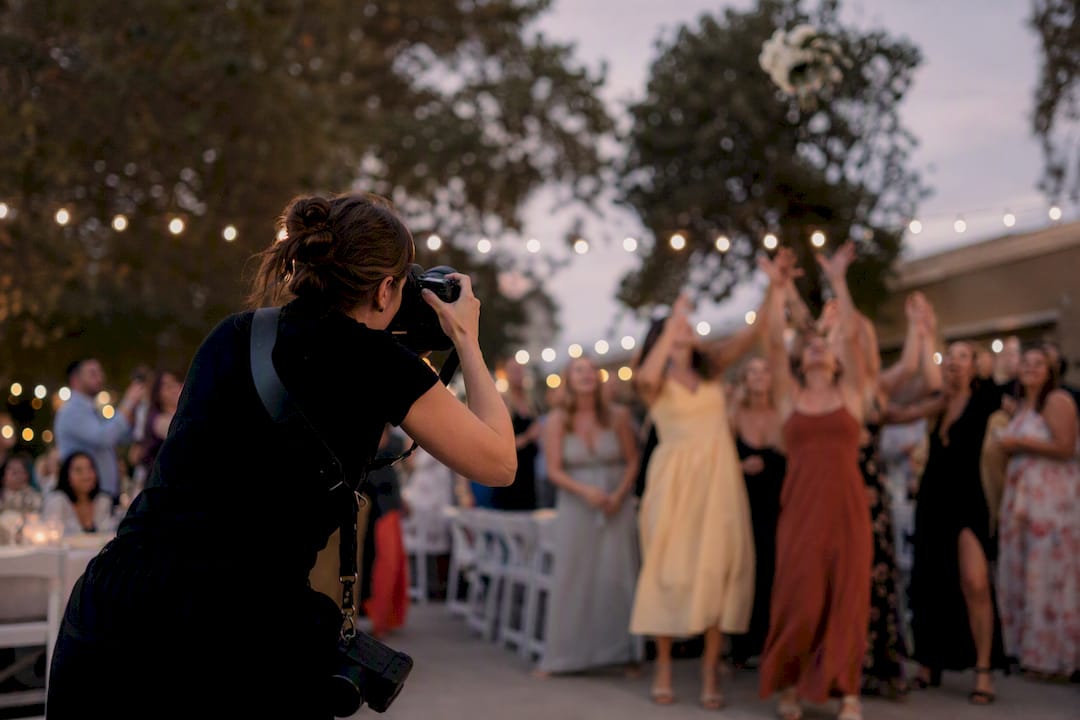
Fast, chaotic moments, first dances, bouquet tosses, a surprise conga line, consistently favour digital. Burst shooting and instant review let a photographer catch the exact peak moment repeatedly, something a limited roll of film simply can't match shot for shot. Quiet, composed moments, a couple's first look or a grandparent's reaction during vows, tend to reward film's slower, more deliberate approach.
None of this means one medium "wins" outright. It means the format should follow the moment, which is exactly why so many photographers land on a hybrid plan rather than picking a side.
Does the photographer matter more than the medium?
Yes, and this is the point most couples underestimate. A skilled photographer working entirely digitally will consistently outperform an inexperienced photographer shooting film, because exposure discipline, composition and timing matter more than the capture medium itself.
Film rewards experience in a way digital forgives more easily. There's no live histogram, no instant preview to catch a mistake, and no reshoot once the moment has passed. A photographer who has shot hundreds of rolls develops an instinct for metering tricky light that a newcomer to film simply hasn't built yet. That experience gap shows up directly in consistency across a full gallery, not just in a handful of standout frames.
Digital has a lower floor for competence but a high ceiling for craft. Anyone can get a technically sharp image with modern autofocus and exposure metering, but building a gallery with genuine emotional depth, well-timed candid moments, thoughtful composition, still requires real skill and a practised eye.
The honest advice for couples is to judge the photographer first and the medium second. Ask how long someone has shot weddings specifically, not just photography in general, and how long they've worked with film if that's part of their offering. A five-year track record shooting weddings on both formats tells you far more than a beautifully curated but thin portfolio from someone newer to the craft.
What I'd tell any couple weighing film against digital
Choose the photographer before the medium. Consistent portfolios and clear, confident answers about workflow matter more than which format someone shoots. If a hybrid approach feels right, ask to see full galleries, not highlights, and trust your own read on the tone.
Ready to plan your own film and digital wedding coverage?
Many photographers offer either film or digital, rarely both handled with equal care. Alex Gell shoots weddings across Berkshire, Oxfordshire and London with a documentary-led hybrid approach, reserving film for portraits and quiet ceremony moments while digital covers the reception and anything fast-moving, so your gallery reads as one consistent story rather than two mismatched sets.
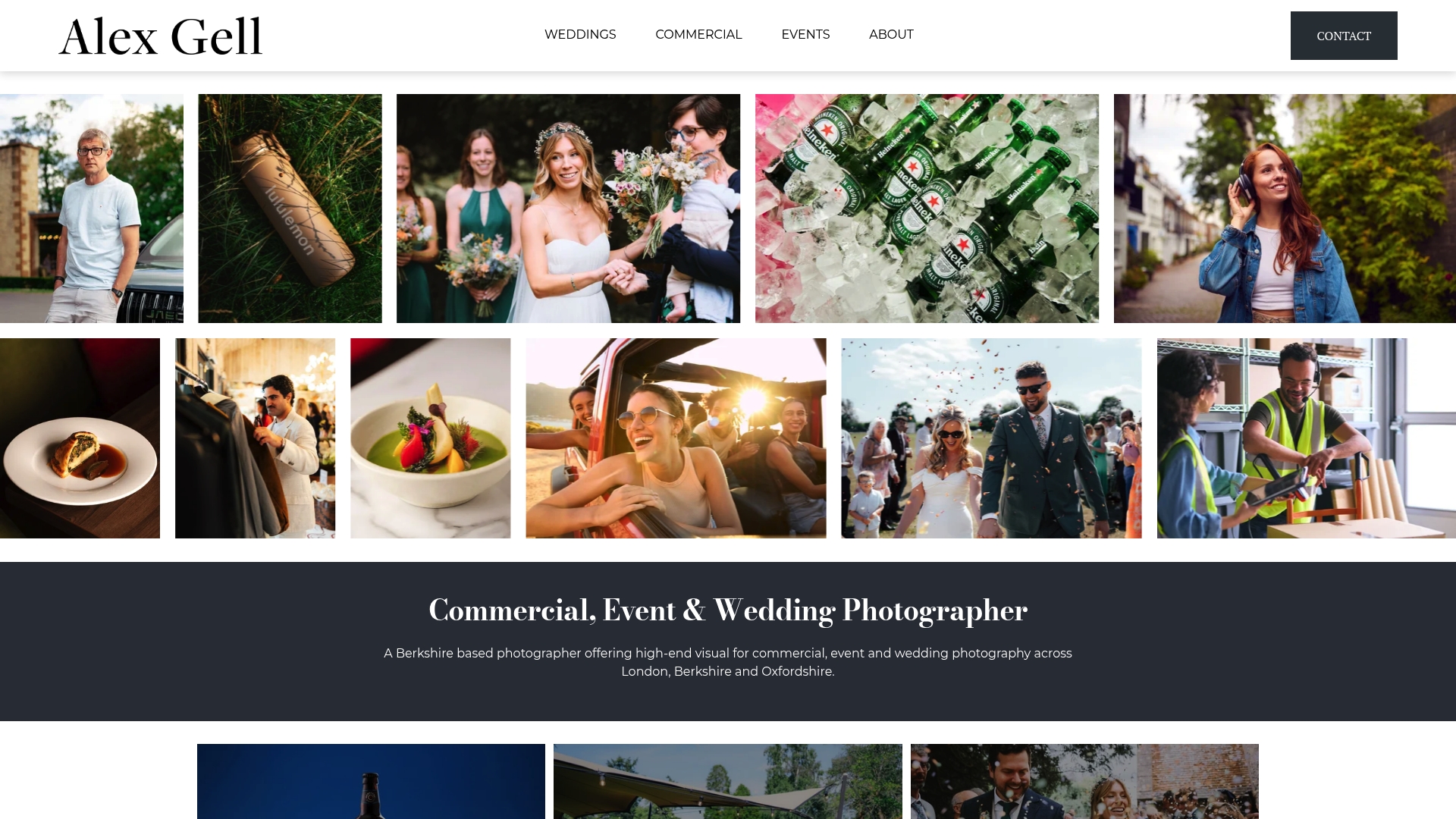
Every enquiry starts with a conversation about your day, your venue's light, and which moments matter most to you, followed by sample scans from previous weddings so you can judge the look for yourself before committing to a package. Browse the wedding photography portfolio to see hybrid galleries in full, then get in touch through the wedding enquiry page for a bespoke quote and availability check for your date.
Sources
- Vogue — wedding photography styles
- Eventifai — is film photography worth the extra cost for a 2026 wedding
- Lulan Studio — film vs digital wedding photography: what you actually get
